

You’ve probably watched an animated film and thought, "That character is hilarious," without realizing you’re actually watching a masterclass in audio engineering and psychological manipulation. Voice acting is the art of performing a character’s dialogue using only the human voice, often requiring exaggerated physical gestures to convey emotion that the audience cannot see. Unlike live-action, where your face does half the work, animators rely entirely on your breath, pitch, and pause to sell the joke or the tear. If you think it’s just reading lines into a microphone, you’re missing the intricate dance between sound and image that makes cartoons feel alive.
The Invisible Performance
Here’s the thing about animated cinema: it is a medium where the visual representation is entirely synthetic, meaning the voice actor provides the sole source of organic humanity for the character. In live-action, if you frown, the camera catches it. In animation, if you want the audience to feel a character’s sadness, you have to make them hear the crack in your voice so precisely that their brain fills in the visual cue before the animator even draws the tear drop. This is why directors often record voices first-a process known as pre-laying tracks-so animators can study the waveform and match lip movements and body language to the specific nuances of the delivery.
Consider the difference between a generic "angry" tone and a specific "frustrated but trying to hold it together" tone. A novice might just yell. A pro changes the tension in their jaw, alters their breathing pattern, and maybe adds a slight tremor. The animator then uses these audio spikes to create keyframes for eye twitches or clenched fists. It’s a symbiotic relationship. Without the vocal nuance, the animation looks flat. Without the animation, the voice might seem over-the-top. Together, they create character performance, which is the cohesive blend of vocal inflection and visual movement that convinces the viewer a non-human entity has genuine emotions.
Why Timing Is Everything
If performance is the soul of voice acting, comedic timing is its heartbeat. In stand-up comedy, timing is controlled by the performer’s pauses. In animation, timing is controlled by the frame rate. You are working within a rigid grid of 24 frames per second. A pause that lasts three frames too long kills the joke; one frame too short rushes the punchline.
Let’s look at a concrete example from modern classics like Shrek, which revolutionized animated comedy by blending adult humor with child-friendly visuals through precise vocal pacing. When Donkey speaks rapidly, he isn’t just talking fast; he’s hitting specific beats that allow Shrek’s silence to register as annoyance rather than confusion. The humor comes from the gap between the two performances. If the voice actor delivering the line doesn’t understand where the visual gag lands, they will speak over it, stepping on the visual punchline like a comedian interrupting themselves.
| Feature | Live-Action Dubbing | Original Animation Voice |
|---|---|---|
| Primary Constraint | Lip-sync to existing footage | Emotional truth drives animation |
| Timing Flexibility | Low (must match mouth shapes) | High (can adjust script length) |
| Physicality | Muted gestures | Full-body commitment required |
| Comedy Source | Often relies on translation wit | Relies on vocal rhythm and visual sync |

Building the Character from Sound Up
How do you build a personality when you don’t have a costume? You use your instrument. Every voice actor creates a "vocal mask." For a villain, this might mean lowering the larynx to create resonance and menace. For a sidekick, it might involve tightening the throat to sound eager and slightly anxious. But here’s the trap: consistency. Once you pick a voice, you have to maintain it across hundreds of takes, sometimes over months of recording sessions.
This requires muscle memory. Actors often describe finding a "home base" in their chest or head. If you drift out of that placement during a high-energy scene, the character feels different, breaking the illusion. Professional actors warm up specifically for these placements. They don’t just read; they inhabit. They might stand up, jump around, or act out the physical struggle of lifting a heavy object, because the strain in the muscles affects the diaphragm, which changes the sound. You can hear effort. You can hear weight. That’s what separates a cartoon voice from a character.
The Mechanics of Comedic Delivery
Comedy in animation is rarely about telling a funny story. It’s about the reaction. Think about the classic "double take." The character sees something absurd, freezes, then turns back. The voice actor’s job during that freeze is often silence or a small gasp. But the setup line before it must carry enough weight to justify the reaction. If the setup is weak, the silence feels awkward instead of funny.
There’s a technique called "playing against the beat." Instead of rushing to the punchline, you slow down the words leading up to it. This builds anticipation. Then, you deliver the punchline quickly or unexpectedly. In The Incredibles, which uses family dynamics to drive superhero action-comedy, many jokes land because Edna Mode delivers her lines with such abrupt finality that the other characters’ reactions become the joke. Her timing is sharp, staccato, and confident. It contrasts perfectly with the bumbling nature of Mr. Incredible. This contrast is the engine of animated comedy.
Another crucial element is the "rule of three." Setup, setup, punchline. In voice acting, the first two setups need similar tonal quality to establish a pattern. The third breaks it. If the first two lines are delivered with low energy and the third with high energy, the pattern is broken visually and audibly. But if all three are high energy, there’s no contrast. Voice actors analyze scripts to find these rhythmic patterns, ensuring they emphasize the break correctly.
Collaboration with Animators
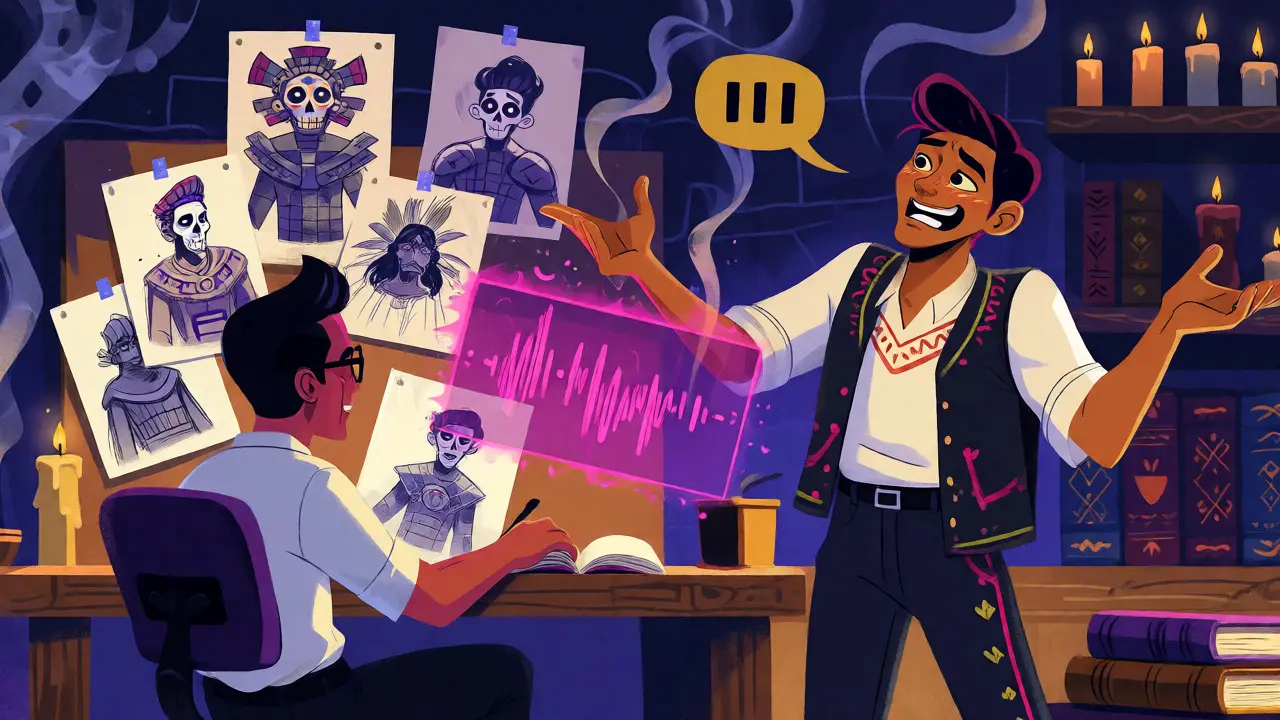
You might think the voice actor is done once they leave the booth. Wrong. In many major studios, the process is iterative. Animators watch the raw audio files. They look for unexpected ad-libs or natural hesitations. Sometimes, an actor’s mistake becomes the best part of the scene. Did you stumble over a word? Maybe the character should be nervous. The animator draws that stumble into the walk cycle.
This feedback loop is vital. Directors often encourage actors to improvise. Why? Because scripted dialogue can sound stiff. Real conversation is messy. People talk over each other. They trail off. Animation needs that messiness to feel real. However, improvisation has limits. If you go too far off-script, the lip-sync artist has to rework entire sequences. So, pros know how to stay close to the intent while adding personal flavor. They ask questions like, "Can I try this line as a question instead of a statement?" This collaborative spirit transforms a good performance into a great one.
Pitfalls to Avoid
Newcomers often fall into the "cartoonish" trap. They assume animated characters need to sound like cartoons. They pitch their voice up or down unnaturally, creating a caricature rather than a character. Look at recent hits like Spider-Man: Into the Spider-Verse, which blended comic book aesthetics with grounded, realistic vocal performances. Miles Morales sounds like a teenager, not a caricature of a teenager. His voice cracks, he mumbles, he sighs. These human imperfections make him relatable.
Another common error is ignoring the physical context. If your character is running up stairs, your voice should reflect exertion. Shorter breaths, higher pitch due to adrenaline. If you’re standing still, your voice projects differently. Failing to account for physical state makes the audio disconnect from the visual reality. Always ask: What is my body doing right now?
Do voice actors see the animation while recording?
Usually, no. Most original voice recording happens before the animation is complete. Actors often work with rough sketches or storyboards. However, for dubbing or fixing scenes later, they may watch the finished animation to match lip-sync and emotional beats precisely.
How important is physical movement during voice acting?
Extremely important. Physical gestures affect breath control and vocal tension. Jumping, waving arms, or making facial expressions-even unseen ones-changes the sound of your voice, adding authenticity to the performance.
What is the difference between comedic timing in animation vs. live-action?
In live-action, timing is flexible and edited post-production. In animation, timing is baked into the frame count during production. Voice actors must hit exact beats to align with pre-planned visual gags, leaving less room for post-editing adjustments.
Can anyone become a voice actor for animation?
While anyone can speak, successful voice acting requires training in vocal health, character development, and technical skills like microphone technique. Natural talent helps, but consistent practice and coaching are essential to master the craft.
How do voice actors handle multiple characters in one project?
They develop distinct vocal masks for each character, varying pitch, pace, accent, and resonance. They also keep detailed notes on each character’s backstory and mannerisms to ensure consistency across different recording sessions.
Key Takeaways
- Voice acting in animation is a primary driver of character identity, not just a supplement to visuals.
- Comedic timing relies on strict adherence to frame rates and rhythmic patterns like the rule of three.
- Physicality is crucial; actors must move their bodies to produce authentic vocal sounds.
- Collaboration with animators allows for iterative improvements, turning mistakes into character traits.
- Avoiding over-caricature in favor of grounded, human-like imperfections creates more relatable characters.