
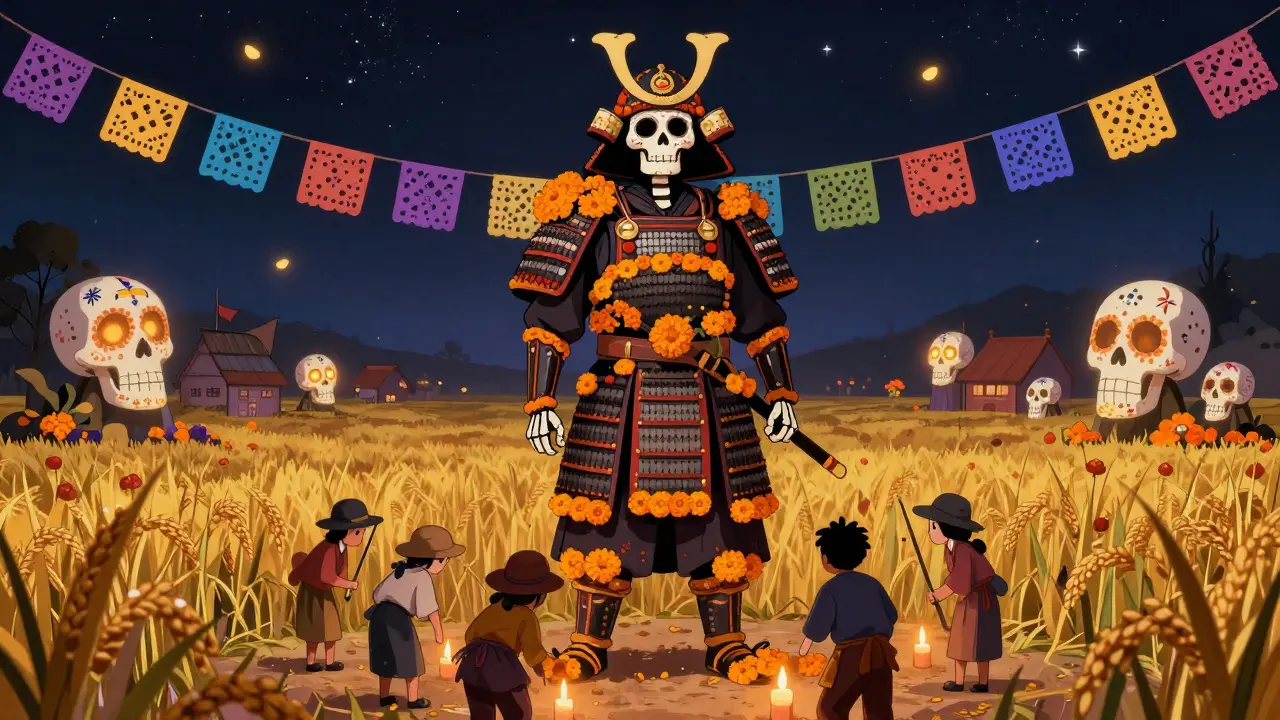
There’s a reason people still talk about Seven Samurai like it’s a religious text. Not because it’s old. Not because it’s in Japanese. But because it does something no other film has done quite the same way - it turns a simple story about farmers hiring warriors into a 207-minute epic about honor, sacrifice, and what it means to be human. That’s the power of international cinema. It doesn’t just show you another country. It shows you another way of seeing the world.
Why International Films Matter More Than Ever
When you watch a Hollywood movie, you’re seeing one version of reality. When you watch a film from Iran, Senegal, or South Korea, you’re seeing how people in those places process grief, joy, injustice, and love. These aren’t just stories with subtitles. They’re cultural documents. They capture the rhythm of daily life, the weight of history, the silence between words.
In 2025, streaming platforms have made it easier than ever to find these films. But quantity doesn’t equal quality. Thousands of foreign films exist. Only a handful change how you think about storytelling. This list isn’t about popularity. It’s about impact. These are the 100 films that reshaped cinema, challenged norms, and refused to be ignored.
The Foundational 10: Films That Redefined the Language of Cinema
Some films didn’t just get made - they invented new ways to make films. These 10 are the roots of modern world cinema.
- Seven Samurai (1954, Japan) - The blueprint for the ensemble action film. Every heist movie, every superhero team-up, owes something to Kurosawa’s warriors.
- Bicycle Thieves (1948, Italy) - A father searches for his stolen bike. The camera doesn’t cut away. It watches. And you feel every step of his despair.
- Persona (1966, Sweden) - Bergman’s psychological puzzle. Two women, one face. No dialogue for minutes. Just eyes. And silence.
- City of God (2002, Brazil) - A violent, poetic, fast-cut portrait of Rio’s favelas. No hero. No redemption. Just survival.
- La Strada (1954, Italy) - Fellini’s tragic clown story. The music, the dust, the way the wind moves through the scene - it’s poetry with a broken heart.
- Metropolis (1927, Germany) - The first sci-fi epic. Robots, class war, and a city that breathes. Still looks like the future.
- The Spirit of the Beehive (1973, Spain) - A girl in post-Civil War Spain sees Frankenstein on TV and believes the monster is real. It’s not horror. It’s grief made visible.
- Aguirre, the Wrath of God (1972, Germany) - Klaus Kinski screaming into the Amazon jungle. Madness isn’t a character here. It’s the landscape.
- Yi Yi (2000, Taiwan) - A family film that lasts three hours. Every moment feels real. A child takes photos of the backs of people’s heads. Why? Because that’s what we never see.
- Black Girl (1966, Senegal) - The first major African film to win international acclaim. A maid leaves Dakar for France. She never comes back.
The Modern Masters: Films That Changed the 21st Century
The 2000s and 2010s brought a new wave of filmmakers who didn’t wait for permission. They picked up cameras, told stories their governments tried to bury, and made films that won Oscars - and changed lives.
- Parasite (2019, South Korea) - The first non-English film to win Best Picture. It’s not just about class. It’s about how the rich don’t even notice the poor are breathing.
- Shoplifters (2018, Japan) - A family that steals to survive. They’re not criminals. They’re the only family these kids have ever known.
- The Lives of Others (2006, Germany) - A Stasi officer listens to a playwright’s conversations. He starts to change. Quietly. Without fanfare.
- Amour (2012, Austria) - An elderly couple. One falls ill. The other stays. No music. No dramatic speeches. Just hands holding hands.
- Incendies (2010, Canada/France) - Twins uncover their mother’s secret past in a war-torn Middle Eastern country. The twist isn’t shocking. It’s devastating.
- Waltz with Bashir (2008, Israel) - An animated documentary about a soldier who can’t remember his role in a massacre. The animation isn’t a style. It’s a shield.
- Departures (2008, Japan) - A cellist becomes a mortician. The ritual of preparing bodies for burial is treated with the same reverence as a symphony.
- The Handmaiden (2016, South Korea) - A con artist, a rich heiress, and a secret that unravels like silk. It’s erotic, clever, and deeply human.
- Portrait of a Lady on Fire (2019, France) - Two women fall in love in 18th-century Brittany. The painting they make becomes their only record of what happened.
- Roma (2018, Mexico) - A domestic worker’s life during political unrest. The camera never moves fast. It watches. Like a family member.
Hidden Gems: Films That Flew Under the Radar
Not every great film won awards. Some were too raw, too quiet, too strange. But they linger.
- Spring, Summer, Fall, Winter... and Spring (2003, South Korea) - A monk and a boy live on a floating temple. The seasons change. So do their sins.
- Leviathan (2014, Russia) - A fisherman fights a corrupt mayor. The film ends with a prayer. Then silence.
- Force Majeure (2014, Sweden) - A family on vacation. An avalanche. The husband runs. The wife never forgets.
- Mountains May Depart (2015, China) - A love triangle across 20 years. The last act takes place in 2025. The music? A Britney Spears song. It’s heartbreaking.
- The Wailing (2016, South Korea) - A man thinks a stranger is causing a deadly illness. The truth? It’s worse than he imagined.
- My Neighbor Totoro (1988, Japan) - Two girls meet forest spirits. No villain. No war. Just wonder.
- El Orfanato (2007, Spain) - A woman returns to her childhood orphanage. The ghosts aren’t what you think.
- Osama (2003, Afghanistan) - A girl disguises herself as a boy to support her family under the Taliban. The final scene? She’s crying. No one sees her.
- The Spirit of the Beehive (1973, Spain) - A girl in post-Civil War Spain sees Frankenstein on TV and believes the monster is real. It’s not horror. It’s grief made visible.
- Woman at War (2018, Iceland) - A choir director sabotages power lines to fight climate change. She sings while she climbs towers.
How to Watch These Films - Without the Fluff
You don’t need a subscription to 12 streaming services. You don’t need to join a film club. Start here:
- Use Kanopy - free with a library card in many countries. It has Criterion Collection, Arthouse, and rare foreign films.
- Check out MUBI - curated monthly selections. No algorithm. Just human taste.
- Visit your local arthouse cinema. Many show weekly international screenings.
- Download subtitles from OpenSubtitles.org. They’re accurate and free.
- Watch without distractions. No scrolling. No multitasking. Let the silence breathe.
Don’t watch these films to say you’ve seen them. Watch them to feel something you didn’t know you were missing.
Why This List Isn’t Perfect - And That’s the Point
There are no African films from Nigeria’s Nollywood here. No films from the Philippines, Pakistan, or Bolivia. Why? Because this list isn’t about representation. It’s about influence. These 100 films changed how stories are told, how cameras move, how silence speaks.
But the truth? The best international film you’ll ever see hasn’t been made yet. It’s being shot right now - maybe in a village in Ghana, a studio in Jakarta, or a basement in Buenos Aires. Someone’s holding a camera. Someone’s whispering a line. Someone’s filming a life that’s never been on screen.
That’s why this list doesn’t end here. It’s a starting point.
What’s the most important international film ever made?
There’s no single answer. But if you had to pick one that changed everything, it’s Seven Samurai. It didn’t just influence action films - it redefined how audiences connect with characters over time. Its structure is used in everything from The Magnificent Seven to The Avengers.
Are all these films in black and white?
No. The list includes films from every era - silent, color, digital. The oldest is from 1927 (Metropolis). The newest is from 2023. Color isn’t the point. Emotion is.
Do I need to read about the culture before watching?
No. The best international films work on instinct. You don’t need to know Japanese feudalism to feel the weight of Seven Samurai. You don’t need to understand Iranian politics to feel the love in A Separation. Watch with your heart first. Research later, if you want.
Why are there no Bollywood films on this list?
Bollywood has made hundreds of brilliant films. But this list focuses on films that broke global cinematic norms - not just popular ones. Films like Pather Panchali (India) or Naayi Neralu (Kannada) are masterpieces, but they didn’t reach the same global influence as the ones listed. That’s not a judgment - it’s a limitation of scope.
Can I show these to my kids?
Some can. My Neighbor Totoro is perfect for all ages. Parasite and Black Girl are not. Check ratings. But don’t avoid difficult films just because they’re heavy. The best lessons often come from the hardest stories.
What’s the best way to start if I’ve never watched a foreign film?
Start with Amour (Austria) or My Neighbor Totoro (Japan). Both are emotionally clear, visually beautiful, and don’t rely on cultural jargon. If you feel something after 20 minutes, you’re already getting it.
Where to Go Next
Once you’ve watched these 100, you’ll start noticing patterns. You’ll see how Japanese films use silence. How Iranian directors use children to tell adult truths. How African cinema turns everyday life into myth.
Then, start exploring on your own. Look up the winners of the Cannes Grand Prix. Watch films from the New Wave of Iran. Try a film from Georgia, Chile, or Mongolia. You’ll find stories that don’t fit in any box. And that’s the point.
The world has more stories than any one person can watch. But you only need one to change you.