
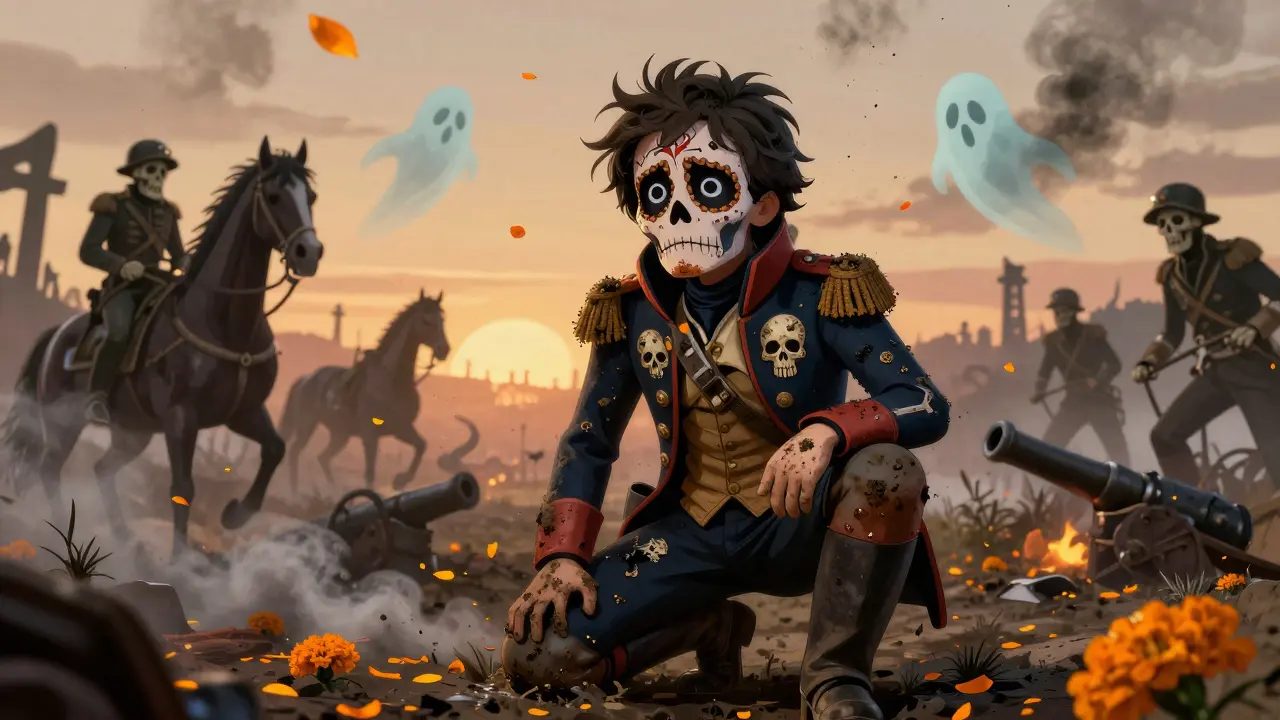
Napoleon isn’t just another war movie. It’s a raw, unflinching look at a man who rose from nothing to rule Europe-and tore himself apart in the process. Ridley Scott’s latest isn’t about battles alone, though there are plenty of them. It’s about power, obsession, and the quiet loneliness that comes with being the only one who thinks they can change the world.
What Makes This Napoleon Different?
Most biopics about Napoleon Bonaparte focus on his rise: the Italian campaigns, the coronation, the empire. This one starts with him as a young artillery officer in 1793, covered in mud, barely alive after a failed assault. It doesn’t glamorize him. It doesn’t excuse him. It shows him sweating, shouting, crying, and lashing out-not like a legend, but like a man who’s terrified of being forgotten.
Joaquin Phoenix doesn’t play Napoleon. He becomes him. His voice cracks with exhaustion. His posture shifts from rigid control to slumped defeat. When he talks to Josephine, he doesn’t flirt-he clings. When he commands troops, he doesn’t inspire-he demands. There’s no grand monologue about destiny. Just a man who believes if he doesn’t keep moving, he’ll vanish.
The Battles Aren’t Spectacle-They’re Chaos
Scott doesn’t use drone shots or slow-motion heroics. The battles in Napoleon look like hell caught on film. Horses stumble over corpses. Cannon smoke turns daylight into twilight. Men scream in languages no one understands. One scene, at Austerlitz, shows Napoleon standing on a hill as his own artillery accidentally kills a line of French soldiers. He doesn’t flinch. He just mutters, "They’ll be replaced."
This isn’t war porn. It’s war exhaustion. The film makes you feel the weight of every death-not because it shows gore, but because it shows how little it matters to the man in charge. The numbers don’t change. The land doesn’t heal. The survivors just keep marching.
Josephine: The Only One Who Saw Him
Vanessa Kirby’s Josephine isn’t a love interest. She’s the mirror. She knows Napoleon better than he knows himself. When he calls her his "only comfort," she doesn’t smile. She looks away. She knows he’s lying. Their relationship isn’t romantic-it’s transactional, emotional, and tragic. She loves him, but she also sees the hollow space inside him. He needs her to feel human. She needs him to feel real. Neither gets what they want.
There’s a moment after his coronation where he walks into her chambers, still wearing his crown, and asks, "Do you still love me?" She doesn’t answer. She just takes off her gloves. The silence lasts longer than any speech. That’s the film’s most powerful scene-not a battle, not a declaration-but a quiet question no one can answer.
The Cost of Power
Scott doesn’t blame Napoleon for being ambitious. He blames him for being alone. The film shows how power isolates. His generals become servants. His brothers become rivals. His son becomes a pawn. Even his own army stops believing in him. By 1812, the men who once cheered his name now march in silence. The camera lingers on their boots. No flags. No drums. Just cold ground and tired feet.
There’s no villain here. No British plot. No Russian winter as an enemy. The real enemy is time. Napoleon spends his life trying to outrun it. He builds empires. He writes laws. He names cities after himself. But none of it sticks. The people forget. The land changes. The world moves on.
How Accurate Is It?
The film takes liberties. Napoleon didn’t personally lead every charge. He didn’t shout at his men the way Phoenix portrays him. He was quieter, colder, more calculating. But the film isn’t trying to be a textbook. It’s trying to be true.
Historians agree: Napoleon was a genius at logistics, a monster at empathy. He reformed France’s legal system, but crushed dissent. He gave women fewer rights than before the revolution. He started schools for boys, but banned them for girls. He loved his son, but never let him near the throne. Napoleon doesn’t hide these contradictions. It leans into them.
One real moment the film gets right: his final letter to Josephine, written on Saint Helena. "I have never loved anyone as I loved you." It’s the only line in the film that’s pulled straight from history. And it’s the only one that hurts.
Why This Movie Matters Now
In 2026, we’re surrounded by leaders who promise greatness but deliver isolation. Napoleon doesn’t celebrate them. It warns us. It shows what happens when a person believes their own myth too hard. When they think power is a cure for loneliness. When they mistake control for love.
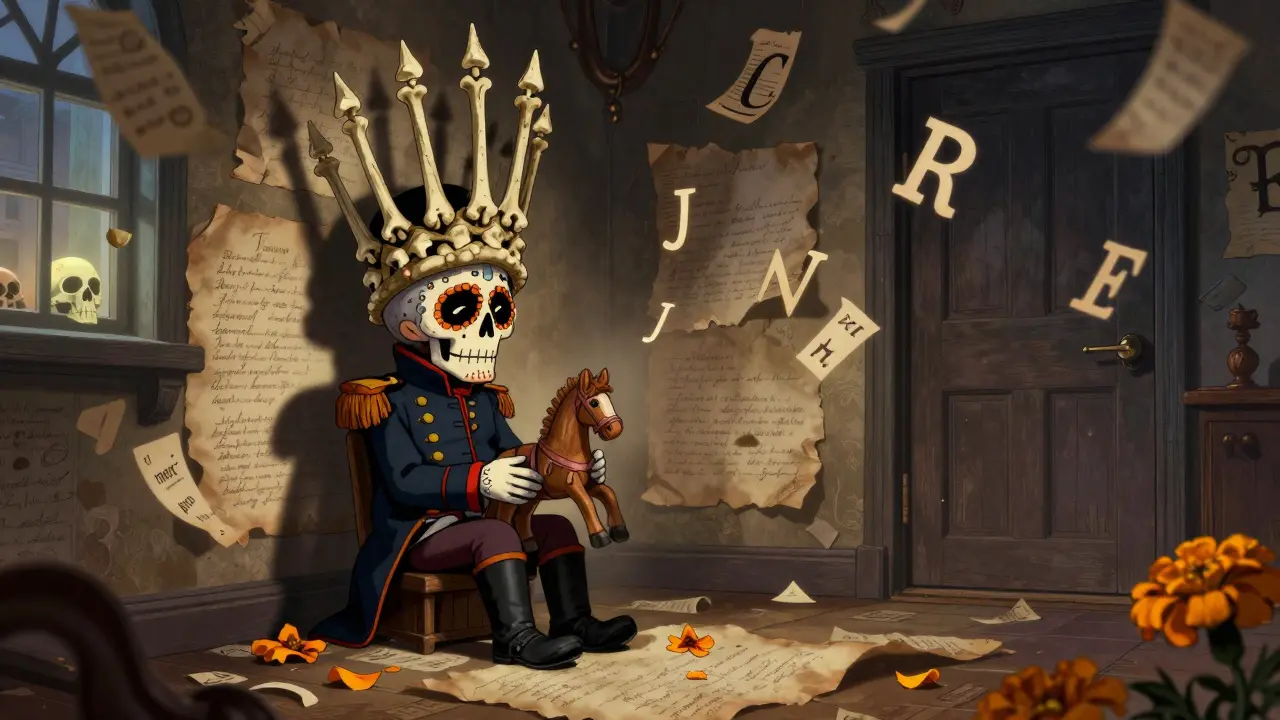
The film ends with Napoleon, old and broken, alone in a room. He’s not talking to soldiers. He’s not signing treaties. He’s holding a small wooden toy-a gift from his son, long gone. He stares at it. Then he puts it down. The camera pulls back. The door closes. No music. No voiceover. Just silence.
That’s not a defeat. It’s a confession.
What You’ll Walk Away With
- A new understanding of how power can destroy the very thing it tries to protect
- A performance by Joaquin Phoenix that will be remembered for decades
- One of the most brutally honest portrayals of war ever put on screen
- A love story that’s not about passion-but about the quiet, aching need to be seen
- A reminder that history doesn’t remember heroes. It remembers the cost.
Is Napoleon historically accurate?
The film takes creative liberties with Napoleon’s personality and some events, but it captures his core contradictions: brilliant strategist, emotionally isolated ruler, and self-made man who couldn’t escape his own loneliness. Major battles like Austerlitz and Waterloo are staged with attention to real tactics and terrain. His relationship with Josephine, his exile, and his final years are grounded in documented letters and memoirs. It’s not a documentary-but it’s emotionally true.
How does this compare to other Napoleon films?
Earlier films like Napoleon (1927) or Waterloo (1970) treated him as a heroic figure. This one doesn’t. Ridley Scott’s version is closer to a Shakespearean tragedy than a war epic. It’s less about glory and more about decay. The closest comparison might be The Last Emperor or House of Cards-a portrait of a man who built a throne, only to find himself sitting on it alone.
Is the film too violent?
There’s no blood-soaked gore, but the violence is relentless. You feel the noise, the cold, the fear. Soldiers die in silence. Horses collapse under weight. Cannon fire doesn’t look heroic-it looks random. If you’re sensitive to war’s brutality, this won’t feel like entertainment. It’ll feel like witness.
Who should watch this movie?
Anyone who’s ever wondered what it costs to be the strongest. Fans of character-driven dramas like The Godfather or Succession will find it gripping. History buffs will appreciate the details. But the real audience? People who’ve felt alone at the top. This movie speaks to them.
Did Ridley Scott use real locations?
Yes. Major battle scenes were filmed in Lithuania, Ukraine, and France-using real fields where Napoleon’s armies once fought. The interiors of the Tuileries Palace and Saint Helena were recreated with historical accuracy. Even the uniforms were stitched using original 18th-century techniques. Scott wanted every detail to feel lived-in, not staged.