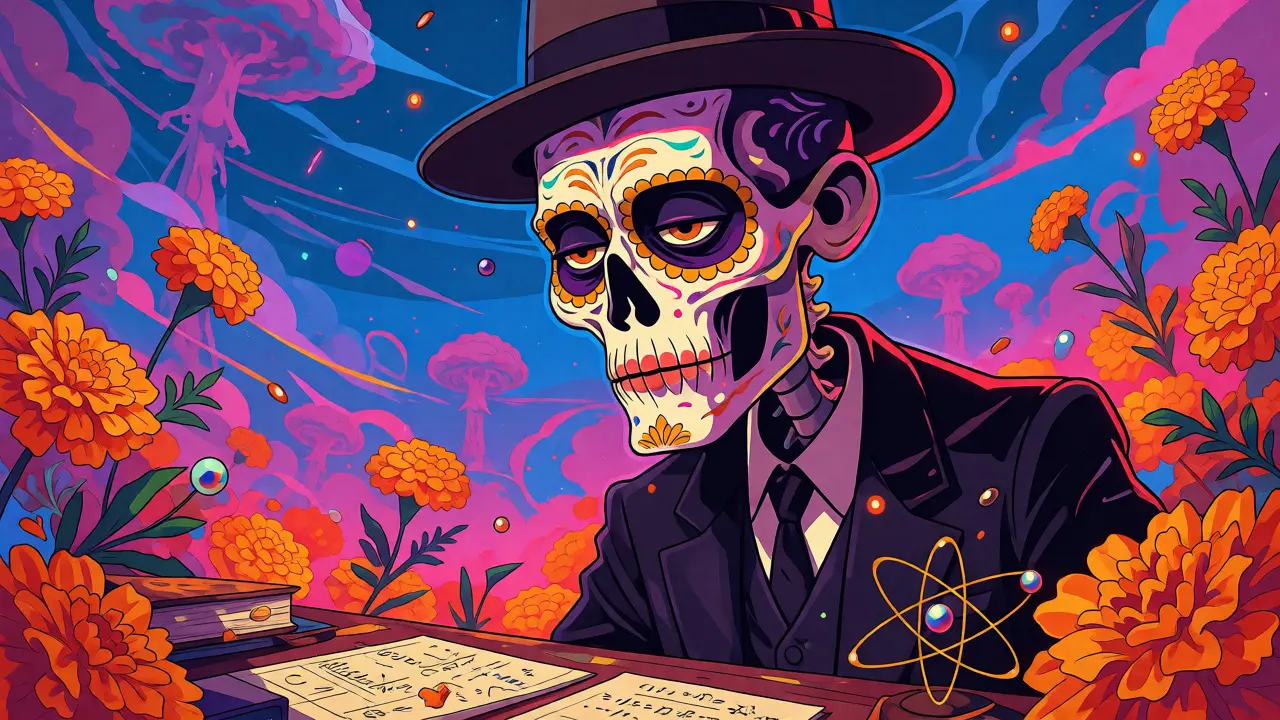
You sit down for a three-hour movie. No CGI explosions to save the day. No superheroes flying around. Just a man in a hat, talking about physics, while the world holds its breath. Sounds boring? It shouldn’t be. But that is exactly what Oppenheimer is up against. It is a biographical thriller about J. Robert Oppenheimer, the theoretical physicist who led the Manhattan Project. Most people expect a dry history lesson. What they get is a visceral, anxiety-inducing experience that feels less like watching a documentary and more like being trapped inside a panic attack.
Christopher Nolan didn’t just make a movie about the atomic bomb. He made a movie about the weight of knowing you changed everything forever. And honestly? It works. Here is why this film lands so hard, even if you don’t care about quantum mechanics.
The Structure Isn’t Just Fancy-It’s Necessary
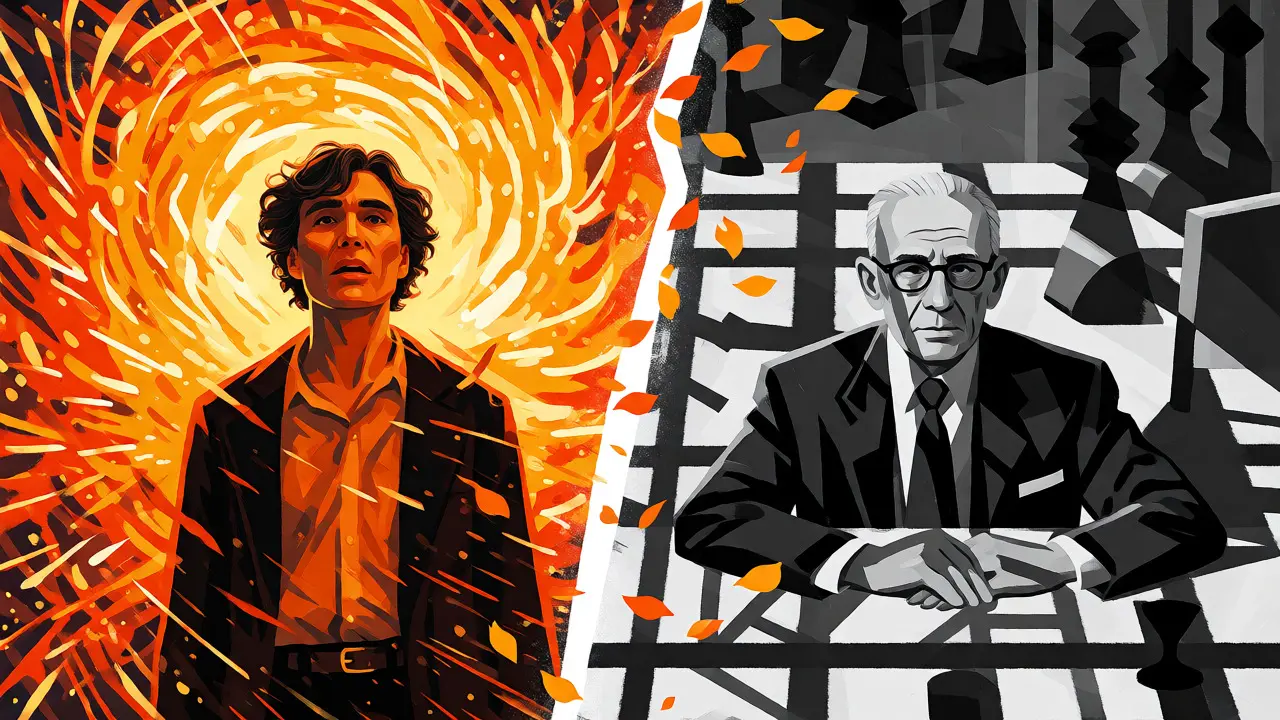
Nolan loves playing with time. In Memento, he reversed it. In Inception, he layered it. In Oppenheimer, he splits it into two distinct timelines: "Fission" (color) and "Fusion" (black-and-white). This isn’t just a stylistic gimmick. It serves a specific purpose. The color sections follow Oppenheimer’s subjective experience-his ambition, his guilt, his relationships. The black-and-white sections follow Lewis Strauss, played by Robert Downey Jr., representing an objective, political view of the same events.
This dual narrative keeps you engaged because you are constantly trying to piece together how these two perspectives collide. You see Oppenheimer’s internal turmoil in vivid color, then cut to the cold, bureaucratic reality of his security hearing in monochrome. It creates a tension that dialogue alone couldn’t sustain for three hours. If you find yourself confused early on, don’t panic. The puzzle pieces fit together by the end, but only if you pay attention to the details.
Cillian Murphy Disappears Into the Role
We have seen Cillian Murphy before. We know him from Peaky Blinders or Batman Begins. But here, he is unrecognizable. He doesn’t act big. He acts small. His eyes do most of the work. There is a scene where he watches the Trinity test-the first nuclear explosion-and the camera stays tight on his face. You don’t need sound effects to tell you what he is feeling. The silence says it all.
What makes his performance stand out is the physicality. He lost weight. He walks differently. He looks like a man who hasn’t slept in years. It’s not just imitation; it’s embodiment. You believe this man is carrying the burden of thousands of deaths on his conscience. That kind of commitment anchors the entire film. Without Murphy’s nuanced portrayal, the complex script might feel too intellectual. With him, it feels human.
Robert Downey Jr. Steals Every Scene He’s In
Let’s be real: Robert Downey Jr. has been typecast as charming heroes for decades. Playing Lewis Strauss was a risk. Strauss is petty, vindictive, and politically ruthless. He isn’t likable. But Downey brings a quiet intensity to the role that is terrifying. He smiles when he’s angry. He speaks softly when he’s threatening you.
The dynamic between Oppenheimer and Strauss drives the second half of the film. It’s a chess match played in boardrooms instead of battlefields. Downey’s performance proves he can shed the Iron Man persona completely. He earns every bit of buzz he received during awards season. If you go in expecting Tony Stark, you’ll be shocked. This is a character actor at his peak.
The Sound Design Is Physical, Not Just Auditory
Ludwig Göransson’s score is relentless. It uses violins and synthesizers to create a sense of impending doom. But the true star of the audio experience is the sound design. Nolan chose to use IMAX cameras for much of the film, which captures incredible detail, but the sound mix is where the magic happens.
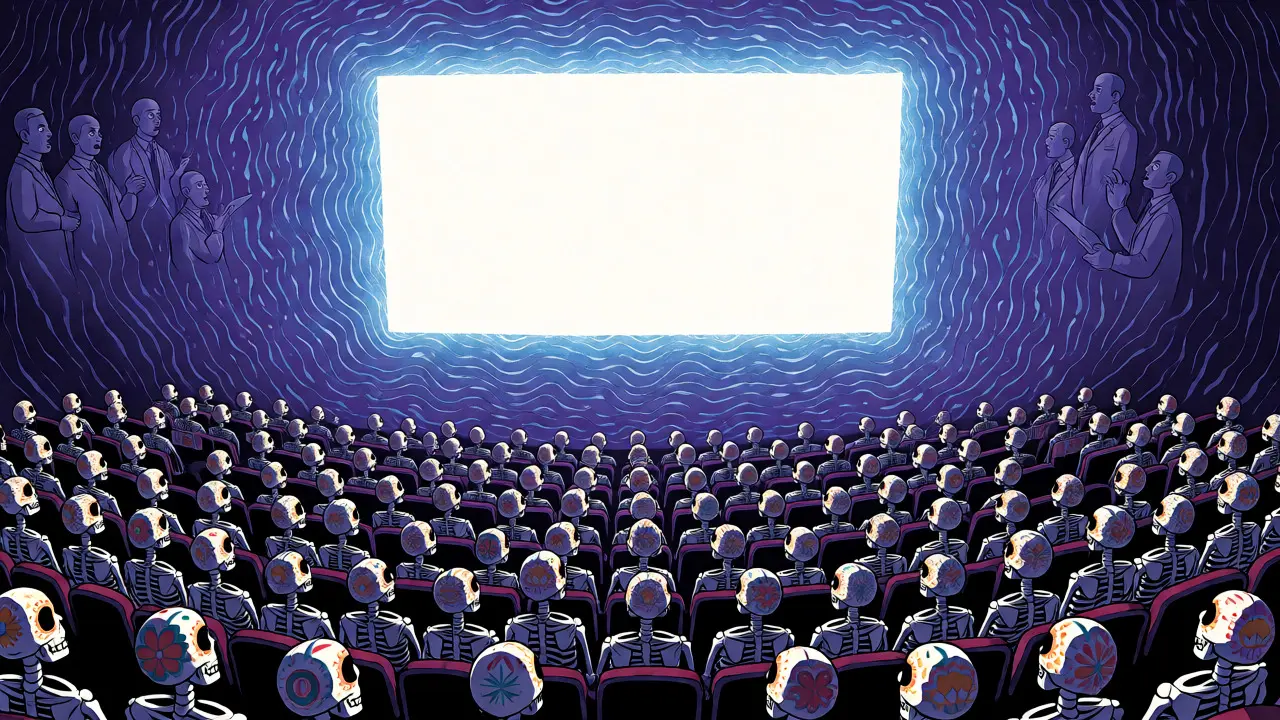
Consider the Trinity test scene again. When the bomb goes off, there is no immediate boom. For nearly a minute, there is silence. Just the visual spectacle of the fireball rising. Then, the shockwave hits. The theater shakes. Your chest vibrates. This delay mimics the actual speed of light versus the speed of sound. It forces the audience to wait, to hold their breath, just like the scientists did. It’s a masterclass in using silence as a tool. If you watch this on a laptop with tiny speakers, you miss half the impact. This is a theatrical experience.
Historical Accuracy vs. Dramatic License
How accurate is it? Mostly, yes. Nolan based the script on American Prometheus by Kai Bird and Martin J. Sherwin, which won the Pulitzer Prize. The key events-the Manhattan Project, the security hearings, the relationship with Jean Tatlock-are grounded in fact. However, some conversations are dramatized. We can’t know exactly what was said behind closed doors.
But does it matter? Not really. The film aims for emotional truth rather than strict factual rigidity. It captures the paranoia of the Cold War era and the moral ambiguity of scientific progress. Some historians argue the timeline is compressed for pacing, but that’s standard practice in biopics. The core message-that knowledge brings power, and power brings responsibility-remains intact.
| Element | Details | Impact |
|---|---|---|
| Director | Christopher Nolan | Ensures non-linear storytelling and practical effects focus |
| Lead Actor | Cillian Murphy | Provides introspective, subtle performance |
| Supporting Lead | Robert Downey Jr. | Adds dramatic tension through political antagonism |
| Format | IMAX 70mm Film | Delivers immersive visual scale and clarity |
| Runtime | 180 minutes | Allows deep character development despite density |
Why You Should Watch It (And Who Might Hate It)
This isn’t a popcorn movie. You can’t look at your phone. You can’t zone out. If you struggle with dense dialogue or fast-paced editing, you might find it exhausting. The film throws names, dates, and scientific concepts at you quickly. If you don’t keep up, you lose the thread.
But if you enjoy films that respect your intelligence, this is a must-watch. It challenges you to think about ethics, politics, and science simultaneously. It’s rare to find a blockbuster that asks difficult questions without offering easy answers. The ending doesn’t give you closure. It gives you a warning.
Watch it in a theater if you can. The scale matters. The sound matters. The collective gasp of an audience matters. Watching it at home is fine, but you’re missing the communal experience of witnessing something monumental unfold on screen.
Is Oppenheimer suitable for children?
The film is rated R for strong sexuality, partial nudity, and language. While there is no graphic violence, the themes are heavy and the runtime is long. It is generally recommended for teenagers and adults who can handle mature historical and political themes.
Do I need to know physics to understand the movie?
No. The film explains scientific concepts through dialogue and visuals in a way that is accessible to general audiences. You don't need to understand quantum mechanics to grasp the stakes: building a bomb that could end the world.
Why is part of the movie in black and white?
The black-and-white sequences represent the perspective of Lewis Strauss, providing an objective, external view of the events. The color sequences show Oppenheimer's subjective, internal experience. This distinction helps separate personal memory from political record.
Is the ending confusing?
The ending is intentionally ambiguous. It focuses on Oppenheimer's realization that he set in motion forces he cannot control. It is less about plot resolution and more about thematic closure regarding the nuclear arms race.
How historically accurate is the portrayal of J. Robert Oppenheimer?
The film is largely faithful to the biography 'American Prometheus.' Key events and relationships are based on historical records, though some dialogues are fictionalized for dramatic effect. Minor timelines may be compressed for pacing.