
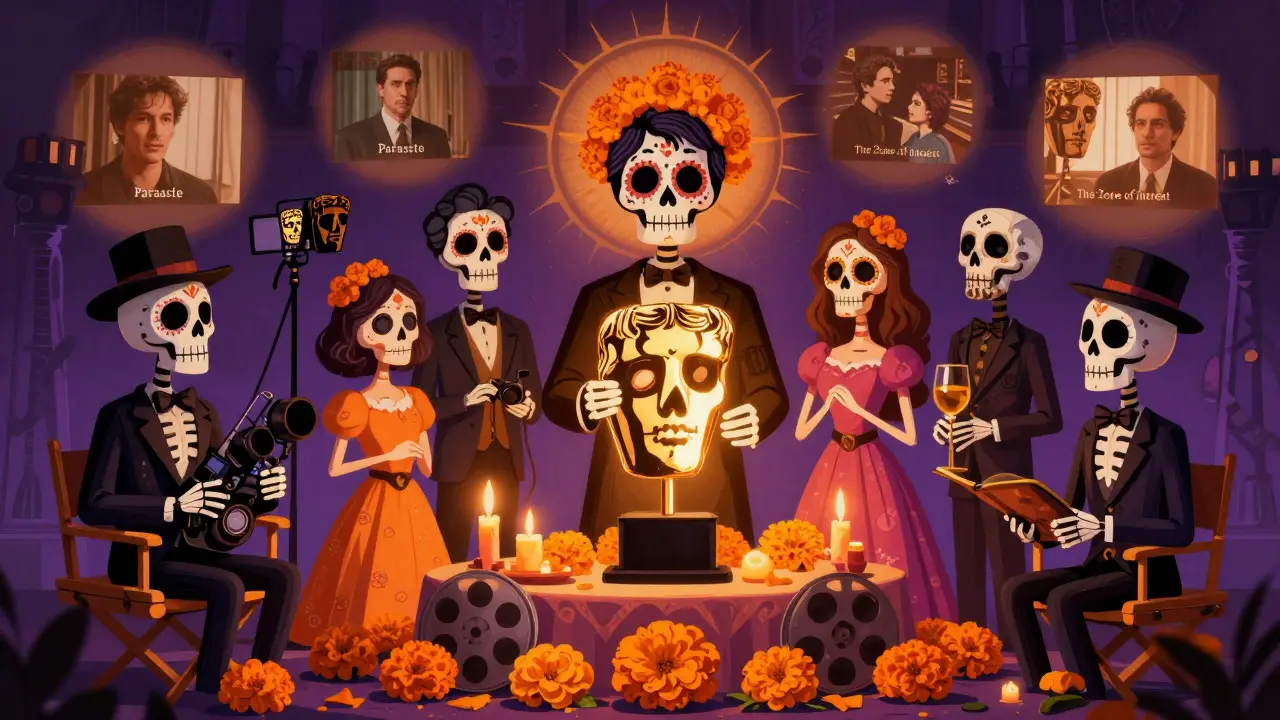
The BAFTA Awards aren’t just another night of fancy dresses and speeches. They’re the British film industry’s biggest moment - a chance for filmmakers, actors, and crews to be recognized by their peers in a way that carries real weight. Unlike the Oscars, which often feel like a global spectacle, BAFTA has always felt more like a family gathering of people who actually make movies. It’s where the quiet, brilliant performances get their due, where indie films from the UK and beyond break through, and where the craft behind the camera is celebrated just as loudly as the stars in front of it.
What Exactly Is the BAFTA?
The British Academy of Film and Television Arts - or BAFTA - was founded in 1947 by a group of filmmakers who wanted to honor excellence in cinema after World War II. Back then, British cinema was struggling to find its voice. The academy started small, with just 30 members, and handed out its first awards in 1949. Today, it’s one of the most respected film institutions in the world, with over 9,000 members across the UK and internationally. These aren’t just fans or critics - they’re working professionals: directors, editors, cinematographers, sound designers, and actors who vote on the winners.
The awards cover everything: feature films, documentaries, animated films, TV shows, video games, and even short films. But when most people say "BAFTA," they mean the main film ceremony held every February in London. It’s the one that kicks off the global awards season, right before the Oscars. And because so many BAFTA voters also vote for the Oscars, winning here often gives a film a serious boost on the international stage.
How the Voting Works
BAFTA’s voting system is different from most awards. There’s no public ballot. No fan votes. No social media trends. It’s all done by members - and only those who’ve worked in the industry for a certain number of years can join. That means the winners reflect what people who actually make movies think is good, not what’s trending on TikTok.
The process has two rounds. First, members nominate in their own categories. So a cinematographer votes for best cinematography, a writer votes for best original screenplay. Then, in the second round, all members vote across all categories - but only if they’ve seen all the nominated films. That’s a big deal. It means you can’t just vote for the biggest blockbuster if you haven’t watched the others. This forces voters to dig deeper, watch more, and actually compare.
That’s why you see films like Oppenheimer or The Power of the Dog win big - they’re not always the loudest, but they’re the ones that stick with people who’ve seen dozens of films that year.
Key Categories and What They Mean
There are over 20 award categories, but a few stand out as the real indicators of a film’s success:
- Best Film: The top prize. It’s not just about popularity - it’s about overall excellence in storytelling, direction, acting, and production. Past winners include 1917, Parasite, and Slumdog Millionaire.
- Best Director: Often a predictor of Best Film. Directors who win here usually have a clear, bold vision. Think Kenneth Branagh for Belfast or Jane Campion for The Power of the Dog.
- Best Actor and Best Actress: BAFTA has a history of rewarding subtlety. A quiet, internal performance often beats a big, showy one. Cillian Murphy’s win for Oppenheimer in 2024 was a perfect example - no grand monologues, just chilling restraint.
- Best Original Screenplay: This is where British cinema shines. Writers like Paul Greengrass, Phoebe Waller-Bridge, and Tony Kushner have all won here. The category often rewards sharp dialogue, emotional depth, and original structure.
- Best British Film: This one’s unique to BAFTA. It’s not about nationality of the cast, but where the film was made, funded, and developed. It’s a celebration of homegrown talent. Films like Fish Tank, Four Lions, and The Favourite have all taken this award.
There’s also a category you won’t find anywhere else: Outstanding British Contribution to Cinema. It’s given to people who’ve shaped the industry over decades - directors like Ridley Scott, actors like Judi Dench, or studios like Working Title. It’s not an award for one film. It’s a lifetime tribute.
Why BAFTA Matters More Than You Think
Some people think BAFTA is just a stepping stone to the Oscars. But that’s missing the point. BAFTA has its own identity - and it’s one that’s fiercely proud of British cinema while still being open to the world.
Look at the 2024 winners. Oppenheimer swept the board - but so did The Zone of Interest, a quiet, haunting Holocaust drama from the UK. It didn’t have a single A-list star. It had no big marketing budget. But it won Best Film, Best Director, and Best Sound. Why? Because BAFTA voters saw something real. Something brave.
BAFTA also has a strong track record of lifting up international films. In 2020, Parasite won Best Film - the first non-English language film ever to do so. That wasn’t an accident. It was a statement. BAFTA doesn’t just want the biggest Hollywood hits. It wants the best films, no matter where they come from.
And it’s not just about prestige. Winning a BAFTA can change a film’s life. A small indie film might get picked up by a global distributor after a win. A first-time director might land their next project because of the credibility. A cinematographer might get hired for a $100 million movie because BAFTA noticed their work on a $2 million film.
The Ceremony Itself
The BAFTA ceremony is held at the Royal Festival Hall on London’s South Bank. It’s not as glitzy as the Oscars - no giant stage, no celebrity-led musical numbers. It’s elegant, understated, and warm. The host often makes self-deprecating jokes. The winners usually thank their crew first, not their agent. It feels human.
There’s no red carpet parade. Instead, there’s a quiet walk up the stairs, a few flashes, and then you’re inside. The atmosphere is more like a film school reunion than a Hollywood party. You’ll see directors hugging editors, actors whispering to sound mixers. It’s the only major awards show where the people who clean the set are often invited to the after-party.
And the speeches? They’re real. No corporate scripts. No "I want to thank my team" - then listing only the producers. BAFTA winners talk about the crew who worked 18-hour days. They mention the location manager who found the perfect abandoned hospital. They thank the child actor who showed up every day with a smile, even when they were sick.
How to Watch and What to Look For
The ceremony airs live on BBC One in the UK and is streamed globally on BAFTA’s YouTube channel. It usually happens on the second or third Saturday of February. In 2026, expect it around February 15.
Here’s what to watch for:
- Who gets nominated for Best British Film - it’s often a sign of where UK cinema is headed.
- Whether a foreign-language film wins Best Film - that’s a signal that BAFTA is still pushing boundaries.
- How many first-time nominees win - it means the industry is still opening doors.
- Who’s missing - sometimes, the biggest snubs tell you more than the winners.
If you’re a film lover, don’t just watch for the winners. Watch for the moments between. The hugs, the tears, the quiet nods. That’s where the real story of cinema lives.
BAFTA and the Future of Film
BAFTA has been pushing for change for years. It launched the BAFTA Breakthrough program to support emerging talent from underrepresented backgrounds. It’s increased diversity in its voting membership - now over 40% of voters are women, and nearly 20% are from ethnic minority backgrounds. It’s also expanded its categories to include video games - recognizing interactive storytelling as a legitimate art form.
It’s not perfect. There are still gaps. But BAFTA is one of the few major awards bodies that actually listens to criticism and tries to fix it. It doesn’t just hand out trophies. It tries to shape the future of film.
That’s why, even in a world of streaming algorithms and TikTok trends, BAFTA still matters. It’s a reminder that film isn’t just entertainment. It’s craft. It’s courage. It’s connection. And sometimes, it’s the quietest moments that last the longest.
When are the BAFTA Awards held each year?
The BAFTA Film Awards typically take place in February, usually on the second or third Saturday of the month. In 2026, the ceremony is expected around February 15. It’s held in London at the Royal Festival Hall and is broadcast live on BBC One in the UK and streamed globally via BAFTA’s official YouTube channel.
How is BAFTA different from the Oscars?
BAFTA is voted on by industry professionals based in the UK, while the Oscars are decided by the larger, global Academy of Motion Picture Arts and Sciences. BAFTA places more emphasis on British cinema and often rewards subtler performances and smaller films. It also has a unique category, Best British Film, and doesn’t have a global fan vote. The ceremony itself is more low-key and intimate compared to the Oscars’ big-budget spectacle.
Can international films win BAFTA?
Absolutely. BAFTA has no nationality restrictions for its main categories like Best Film or Best Director. Non-English language films like Parasite (2020) and The Zone of Interest (2024) have won Best Film. The only category with a nationality requirement is Best British Film, which honors films made primarily in the UK.
Who can vote for BAFTA winners?
Only members of the British Academy of Film and Television Arts can vote. Membership is by invitation and requires professional experience in the industry - you must have worked on at least two credited productions in your field. This ensures votes come from people who understand the craft, not the public or media.
What does winning a BAFTA do for a filmmaker’s career?
Winning a BAFTA can open doors globally. For indie filmmakers, it often leads to international distribution deals. For actors, it boosts their profile in Hollywood and beyond. For directors, it can secure funding for their next project. Even a nomination can significantly increase a film’s visibility and streaming numbers. Many BAFTA winners go on to win Oscars, but the real value is in the credibility it brings from peers in the industry.