
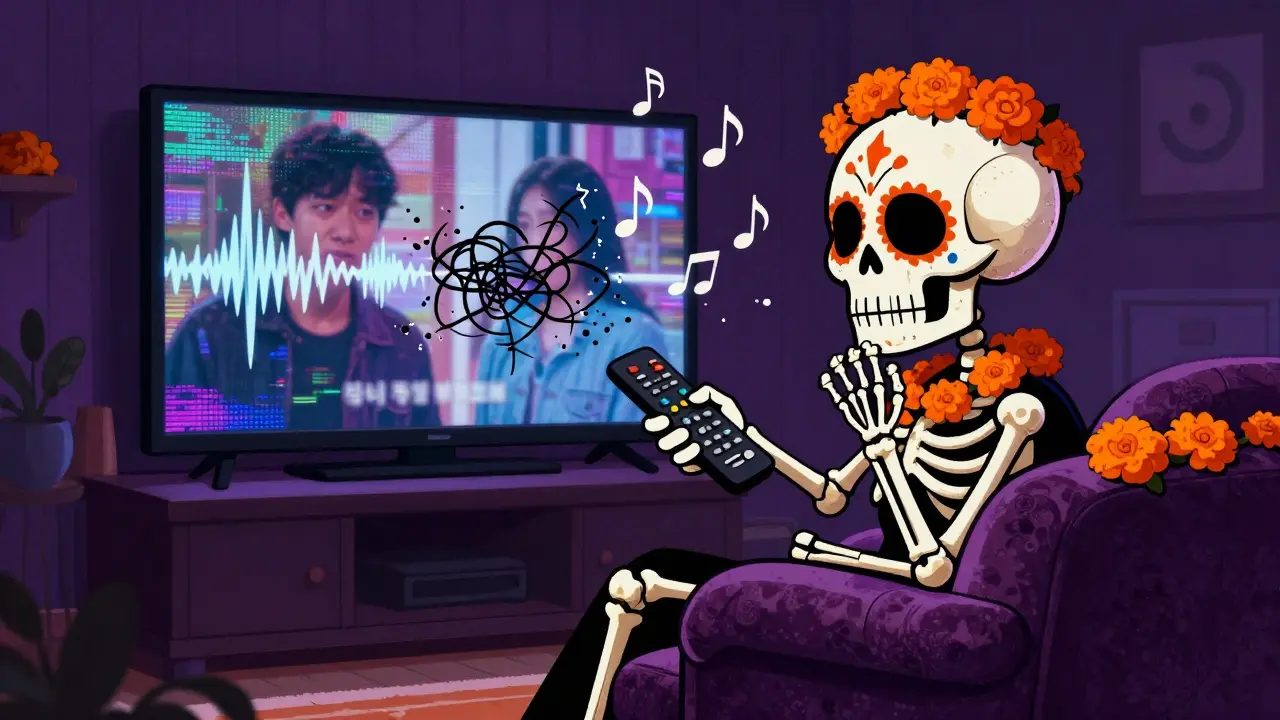
Imagine this: you’re halfway through a gripping Korean thriller or a tense Spanish drama. The plot is thick, the stakes are high, and then-silence. Or worse, garbled audio. You fumble with your remote, trying to find the right track, only to realize the platform has defaulted to English again. It’s frustrating. It breaks the immersion instantly.
If you consume content from around the globe, you know that international streaming isn’t just about having a library of foreign films. It’s about how easily you can access them in your preferred way. Whether you prefer the raw emotion of original dialogue with subtitles or the comfort of professional dubbing, mastering your audio and subtitle settings is key to enjoying global content without friction.
Understanding Your Device’s Language Hierarchy
The biggest hurdle most viewers face isn’t the streaming service itself; it’s their TV or smart device. Most modern smart TVs and streaming sticks (like Roku, Fire TV, or Apple TV) have a rigid hierarchy for language selection. They prioritize the system language over the app settings.
If your TV is set to English, Netflix, Disney+, or Amazon Prime Video will default to English audio and English subtitles, even if the show was filmed in Japanese. To fix this, you need to dig into your device settings, not just the app.
- Smart TVs (Samsung/LG/Sony): Go to Settings > General > System Manager > Language. Here, you can often set a specific "Subtitle Language" separate from the display language.
- Streaming Sticks: On devices like Roku or Fire Stick, navigate to Profile & Parental Controls > Account Settings > Audio & Subtitles. This overrides the TV’s default behavior for those specific apps.
- Mobile Devices: iOS and Android handle this differently. In the Netflix app on iPhone, go to Account > App Settings > Audio & Subtitles. You can select "Original" for audio and your preferred language for subtitles.
Pro tip: If you frequently switch between languages, consider creating a second profile on your streaming account dedicated to a different language preference. Some platforms allow per-profile audio defaults.
Dubbing vs. Subtitles: Choosing Your Battle
This is the eternal debate among international streamers. There is no objectively "better" option, but there are practical reasons to choose one over the other depending on the content and your environment.
| Feature | Dubbing | Subtitles |
|---|---|---|
| Immersion | High (if quality is good); allows you to watch facial expressions | Medium; requires reading while watching, which can distract from visuals |
| Authenticity | Low; loses original vocal performance and nuance | High; preserves original actors' performances and tone |
| Accessibility | Excellent for children, visually impaired users, or multitaskers | Requires literacy and focus; challenging for slow readers |
| Availability | Limited to major markets (English, German, Spanish, etc.) | Widely available for almost all international titles |
For example, animated series like Studio Ghibli films or One Piece often have high-quality dubs that are culturally adapted and widely accepted. However, live-action dramas like Squid Game or Money Heist rely heavily on the actors’ vocal delivery for emotional impact. In these cases, subtitles are usually the superior choice for purists.
Navigating Platform-Specific Quirks
Every major streaming platform handles language options slightly differently. Knowing where to look saves time.
Netflix is the largest global streaming service with extensive localization features. Netflix offers a feature called "Auto-Play Next Episode" which respects your language preferences, but you must manually set the default audio/subtitle combination in your profile settings. Note that some older titles may lack certain language tracks due to licensing restrictions.
Disney+ is a family-focused streaming service known for its Marvel, Star Wars, and Pixar libraries. Disney+ is particularly strong in dubbing, offering high-quality voice acting in over 30 languages. However, its interface can be confusing when switching languages mid-playback. You often need to pause the video, click the speech bubble icon, and scroll through a long list of options.
Amazon Prime Video is a versatile streaming platform included with Amazon Prime memberships. Prime Video’s language settings are tied closely to your Amazon account region. If you travel internationally, you might find that certain dubbed tracks disappear because they aren’t licensed for your current IP location. Always check the "Audio & Subtitles" menu before starting a movie.
Troubleshooting Common Audio Issues
Even with the best settings, technical glitches happen. Here are the most common issues and how to fix them quickly.
- No Sound / Muted Audio: Check if your device is in "Mono" mode or if the audio output format is set to something your TV doesn’t support (like Dolby Atmos on an older speaker). Switch to Stereo or PCM.
- Subtitles Out of Sync: This is rare on major platforms but happens with user-generated content. Try refreshing the page or restarting the app. If it persists, report it to the platform’s help center.
- Wrong Default Language: If the app keeps reverting to English, clear the app cache (on mobile) or log out and back in. Sometimes, the token storing your preference expires.
- Missing Tracks: Not every country gets every language track. If you don’t see German audio, it might not be available in your region. Try accessing the same title from a different device or browser to see if the metadata differs.
Optimizing for Different Viewers
Your household likely has diverse needs. A child learning English might benefit from English subtitles on an American show, while an adult learner might want native-language subtitles on a foreign film. Tailor your setup accordingly.
For families with young children, dubbing is often essential. Kids struggle to read fast-moving subtitles, so ensuring high-quality dubs are available is crucial. For teenagers and adults who are bilingual, using "forced subtitles" (which only appear when non-native speakers are talking) can be a great compromise. Many platforms offer this option under "CC" or "SDH" (Subtitles for the Deaf and Hard of Hearing).
Also, consider font size and style. Most apps allow you to customize subtitle appearance. Larger fonts with high contrast backgrounds make reading easier, especially in dark rooms. Don’t settle for tiny white text on black-it strains your eyes and ruins the experience.
The Future of AI-Powered Translation
We’re standing on the brink of a revolution in international streaming. Artificial Intelligence is beginning to change how we perceive foreign language content. Real-time AI translation is moving beyond simple text subtitles to include synthetic voice dubbing.
Services like YouTube already use AI to generate multi-language audio tracks for creators. While these early versions sound robotic, advancements in deepfake voice technology are making them increasingly natural. Imagine watching a French interview in real-time, hearing it spoken in perfect English by the original speaker’s voice. This technology could eliminate the cost barrier of traditional dubbing, making niche languages more accessible than ever.
However, until AI becomes flawless, human-crafted subtitles and professional dubs remain the gold standard for emotional accuracy. Use these emerging tools as supplements, not replacements, for now.
Why does my streaming app keep defaulting to English audio?
This usually happens because your TV or streaming device’s system language is set to English. Streaming apps prioritize the device’s primary language. To fix this, go into your device’s settings and change the "Audio Language" or "Subtitle Language" preference specifically for that app. Alternatively, create a new profile on the streaming service with a different language setting.
What is the difference between CC and SDH subtitles?
CC stands for Closed Captions, which primarily transcribe spoken dialogue. SDH stands for Subtitles for the Deaf and Hard of Hearing. SDH includes additional information like sound effects ([door creaks], [music playing]) and identifies speakers ([Man], [Woman]). SDH is generally more useful for understanding context in foreign language films.
Can I change the audio language after the movie starts?
Yes, on most platforms like Netflix, Disney+, and Amazon Prime Video, you can change the audio and subtitle language at any time during playback. Look for the speech bubble or audio icon on the control bar, pause the video if necessary, and select your preferred language. The change takes effect immediately.
Are dubbed versions always lower quality than originals?
Not necessarily. Major studios invest heavily in high-quality dubbing, especially for popular franchises like anime or Marvel movies. Professional voice actors match lip movements and emotional tone. However, budget productions or less popular languages may have rushed or poorly translated dubs. Always listen to the first few minutes to judge the quality.
How do I enable subtitles on a Roku or Fire Stick?
On Roku, go to Settings > Accessibility > Captions On Demand and ensure it’s enabled. Then, within the streaming app, use the speech bubble icon to turn on subtitles. On Fire Stick, go to Settings > Display & Sounds > Subtitle Settings to enable closed captions globally, or adjust settings within individual apps like Netflix or Prime Video.