
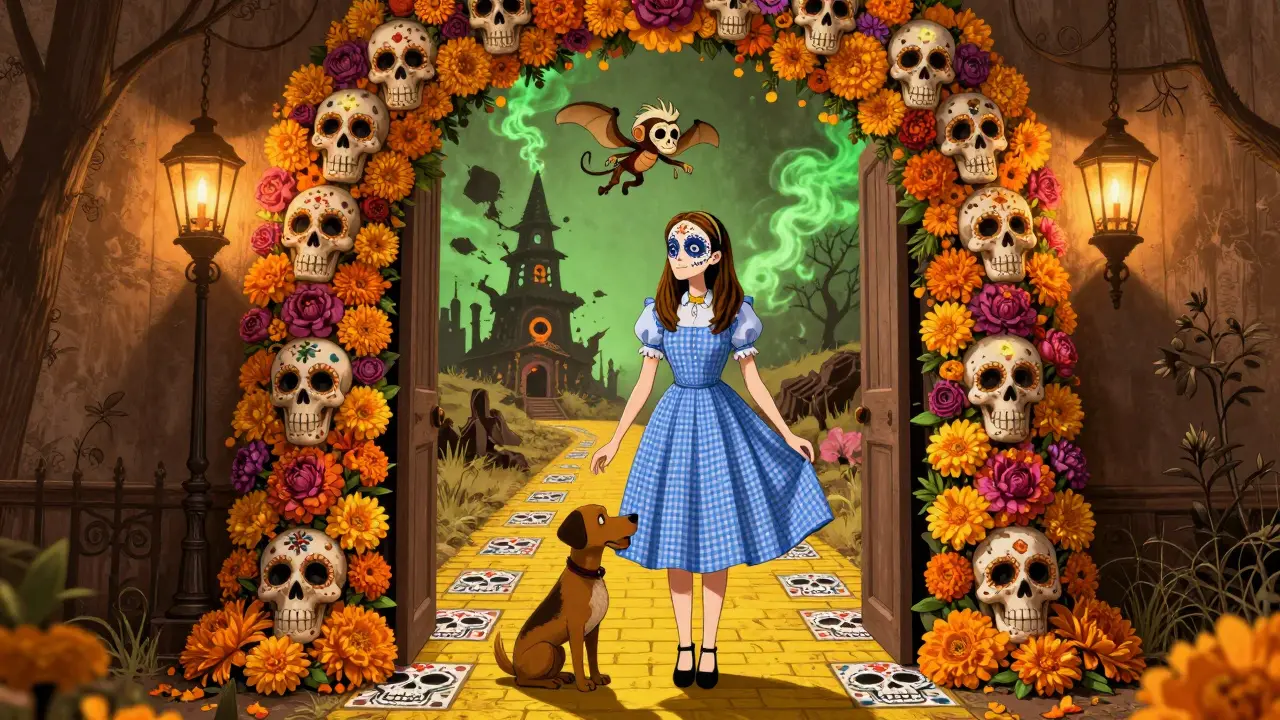
It’s been 85 years since Dorothy clicked her heels and stepped into a world of emerald cities, flying monkeys, and a scarecrow who wanted a brain. The Wizard of Oz is a 1939 American musical fantasy film produced by Metro-Goldwyn-Mayer, directed by Victor Fleming, and based on L. Frank Baum’s 1900 novel The Wonderful Wizard of Oz. Also known as The Wizard of Oz (1939), it was the first major Hollywood film to use three-strip Technicolor extensively in its fantasy sequences, and it became the blueprint for how movies could blend reality and imagination.
Why Technicolor Was a Game-Changer
Before The Wizard of Oz, most films were shot in black and white. Even when color was used, it was often dull, inconsistent, or limited to brief scenes. But MGM didn’t just add color-they built a whole new visual language. The transition from Kansas to Oz wasn’t just a change of scenery. It was a shock to the system. One moment, Dorothy’s world was drained of life, shot in sepia tones with muted lighting. The next, the screen exploded with emerald greens, ruby reds, and gold-leafed streets. The effect wasn’t just pretty-it was emotional. Color became a character. It signaled hope, wonder, and escape.
The three-strip Technicolor process was expensive and technically brutal. Cameras weighed over 1,000 pounds. Lighting had to be blindingly bright to capture enough light for the film stock. Actors sweated through long takes under heat lamps. Judy Garland, just 16 during filming, had to wear tight corsets and padded shoes to make her look smaller next to the Munchkins. Yet the result was worth it. The color wasn’t just decorative. It defined the tone of each world. Kansas felt real, almost grim. Oz felt like a dream you could reach out and touch.
By 1939, Technicolor had been around for over a decade, but The Wizard of Oz was the first film to use it as a narrative tool, not just a gimmick. It didn’t just show color-it made you feel the difference between the dullness of home and the magic of possibility. That’s why, even today, when you see the opening credits of the film, the moment the screen shifts to color, you still feel it in your chest.
Fantasy as a Mirror to Real Life
At first glance, The Wizard of Oz looks like a simple fairy tale. A girl, a dog, a tornado, and three odd companions on a yellow brick road. But underneath that simplicity is a story about identity, fear, and what we think we’re missing.
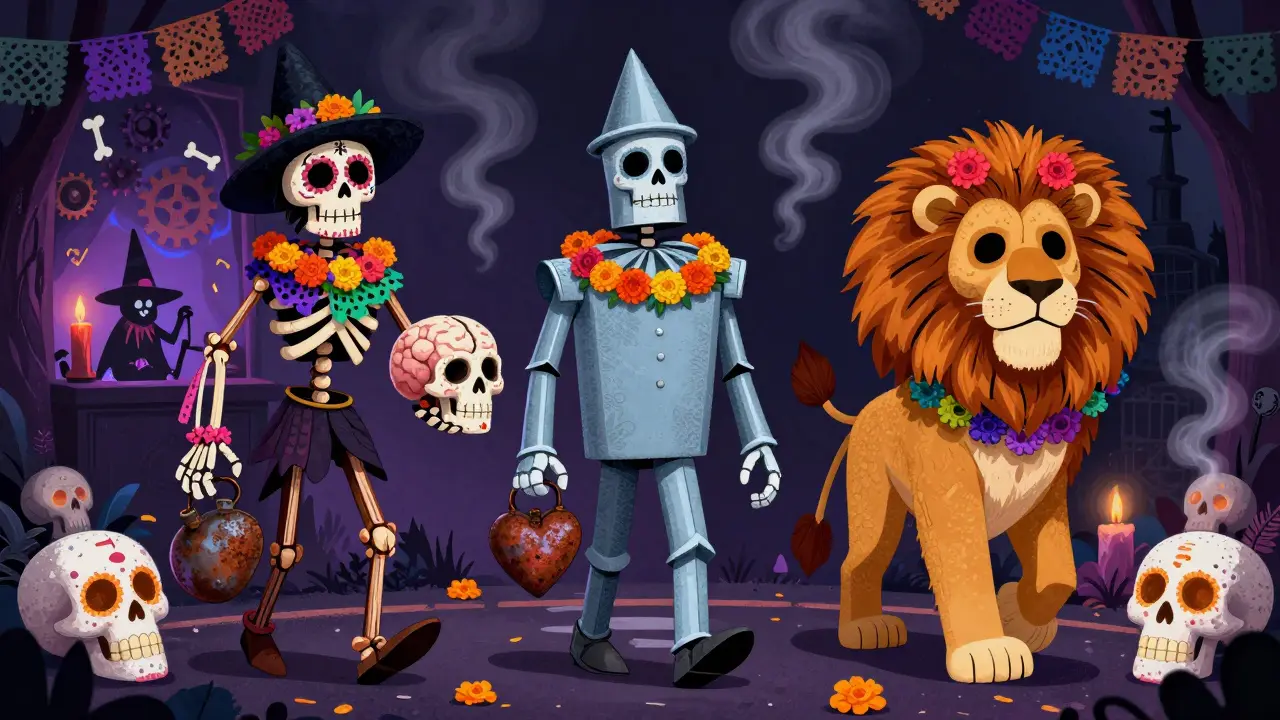
The Scarecrow believes he’s stupid because he has no brain. The Tin Man thinks he’s broken because he has no heart. The Cowardly Lion carries the weight of his fear like a heavy coat. And Dorothy? She spends the whole movie searching for a way home, only to learn she had the power to return all along. That’s not just fantasy. That’s psychology dressed up in glitter.
Each character represents a part of the human condition we’ve all felt. The Scarecrow? That’s the voice in your head when you second-guess every decision. The Tin Man? That’s the loneliness you feel when you think you’re not allowed to care. The Lion? That’s the fear that keeps you from speaking up, from trying, from stepping forward. And Dorothy? She’s us-trying to fix something outside ourselves, when the answer was inside all along.
Even the Wizard himself is a mirror. He’s not a god. He’s a man hiding behind a curtain, using smoke and mirrors to look powerful. He’s the boss who talks big but has no real answers. The teacher who pretends to know everything. The politician who promises change but never delivers. The film doesn’t mock him. It shows how we build idols, then crush them when we see the truth.
American Mythmaking and the Road Home
What makes The Wizard of Oz more than a movie is how deeply it’s woven into American culture. It didn’t just reflect the times-it shaped them. Released in 1939, the year before World War II, it offered a fantasy of escape at a moment when the world felt unstable. Families were struggling. The Dust Bowl had emptied entire towns. People were looking for meaning, for reassurance, for a belief that things would get better.
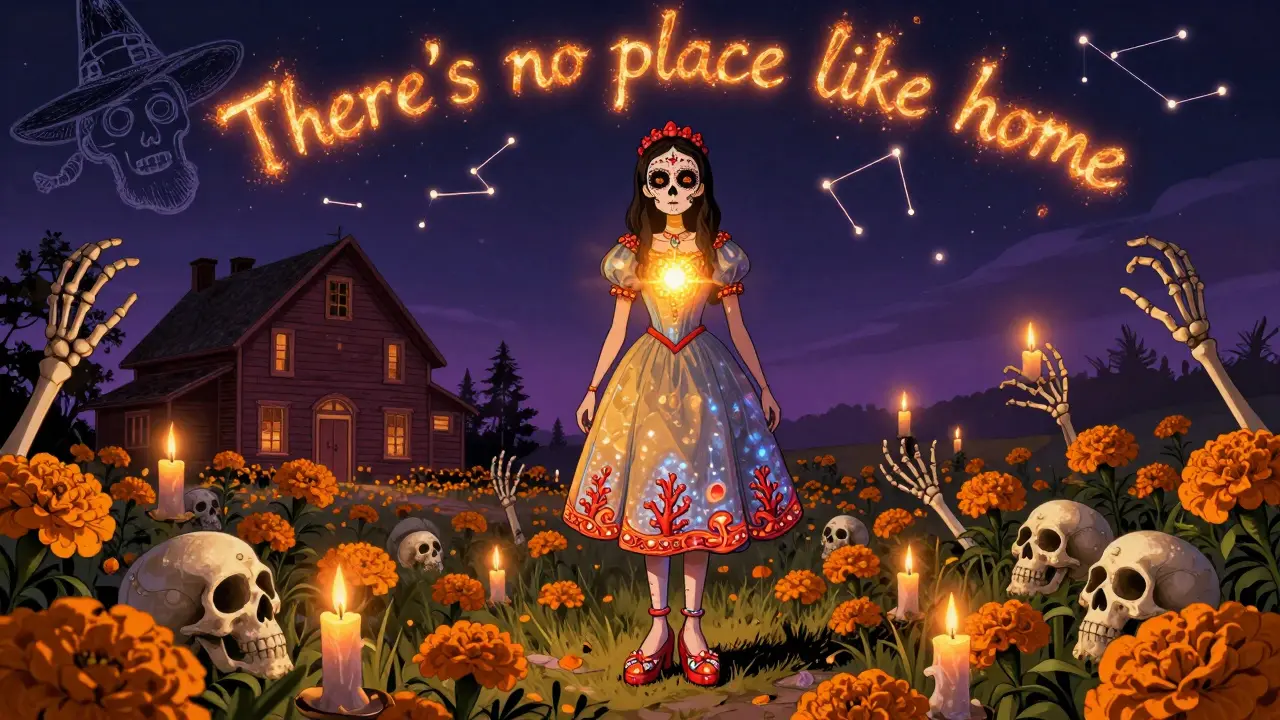
The film’s message-there’s no place like home-wasn’t just about Kansas. It was about belonging. In a country built by immigrants, by wanderers, by people chasing something better, the idea that home wasn’t a place but a feeling was revolutionary. Dorothy didn’t need magic. She didn’t need a wizard. She just needed to remember what she already had.
That’s why it stuck. It became a story parents told their kids. A song sung in school plays. A reference in political speeches. A symbol of resilience. When President Roosevelt spoke of the “American dream,” he wasn’t talking about wealth. He was talking about safety, about family, about the quiet strength of ordinary people. The Wizard of Oz gave that dream a face, a yellow brick road, and a pair of ruby slippers.
Even today, when the U.S. feels divided, when people are searching for connection, the film still plays. It’s shown every year on network TV. It’s screened in schools. It’s quoted in ads, in songs, in movies that try-and fail-to capture its magic. No other American film has become a cultural touchstone quite like it.
The Legacy: Beyond the Screen
The impact of The Wizard of Oz goes far beyond box office numbers. It changed how movies were made. After its success, studios poured money into color films. Gone with the Wind, released the same year, used the same Technicolor process. Both films became benchmarks for visual storytelling.
Its music, too, was revolutionary. “Over the Rainbow” wasn’t just a ballad-it was a prayer. Harold Arlen and E.Y. Harburg wrote it as a plea for peace, for escape, for a world where dreams come true. It won the Academy Award for Best Original Song. Decades later, it was named the #1 song of the 20th century by the American Film Institute. Even today, when you hear it, you don’t just hear a song. You feel something.
The film also launched careers. Judy Garland became a legend. Ray Bolger, Jack Haley, and Bert Lahr became icons. The Munchkins, though often forgotten, were real people-some as young as 10, others in their 70s-brought together from across the country to play a world that didn’t exist. Their performances, awkward and charming, gave the film its heart.
And then there’s the slippers. The ruby slippers. Originally silver in Baum’s book, they were changed to ruby for Technicolor. Only a few pairs survive. One sold at auction in 2000 for $1.5 million. Another is permanently displayed at the Smithsonian. They’re not just props. They’re relics.
Why It Still Matters Today
There are thousands of fantasy films now. CGI, 3D, streaming platforms, endless reboots. Yet none of them have the same quiet power as The Wizard of Oz. Why? Because it didn’t try to impress you. It didn’t need explosions or special effects. It trusted the story. It trusted the actors. It trusted the audience to feel.
When you watch it today, you don’t just see a movie. You see your childhood. You see your parents watching it with you. You see the moment you realized that magic wasn’t out there-it was in how you saw the world. That’s why it still plays on TV every spring. That’s why kids still sing “Ding-Dong! The Witch Is Dead” at school. That’s why, when you’re feeling lost, you still find yourself thinking: There’s no place like home.
It’s not just a film. It’s a mirror. And for 85 years, it’s kept showing us who we are.
Why was Technicolor so important in The Wizard of Oz?
Technicolor was crucial because it wasn’t just used for decoration-it was used to tell the story. The shift from sepia-toned Kansas to vibrant Oz created an emotional contrast that made the fantasy feel real. The three-strip Technicolor process was expensive and technically demanding, but it allowed for rich, saturated colors that had never been seen in film before. This visual transformation helped audiences feel Dorothy’s journey from boredom to wonder, making the fantasy world tangible and emotionally powerful.
Is The Wizard of Oz based on a true story?
No, it’s not based on a true story, but it was inspired by real cultural and economic struggles of early 20th-century America. Author L. Frank Baum wrote the original 1900 novel during a time of financial panic and political unrest. Some scholars believe characters like the Scarecrow (representing farmers), the Tin Man (industrial workers), and the Wizard (politicians) were symbolic critiques of American society. The 1939 film kept those themes alive, turning them into a universal story about self-discovery and belonging.
Why are the ruby slippers so iconic?
The ruby slippers became iconic because they were the key to Dorothy’s power-and the only thing that could bring her home. Changed from silver in Baum’s book to ruby for Technicolor, they glowed on screen like magic. Only a handful of pairs exist today, and they’ve been auctioned for millions. More than a prop, they symbolize the idea that the answers we seek are often already within us. Their visual brilliance and narrative importance made them unforgettable.
Did Judy Garland really sing "Over the Rainbow" in one take?
No, she didn’t sing it in one take, but she did record the final version in a single session on January 13, 1939. It took multiple rehearsals and over 20 takes to get the emotional tone right. The version used in the film was the 14th take, which MGM’s sound engineers later edited to remove a slight cough. Despite the effort, the performance feels effortless-raw, tender, and haunting. That’s why it still moves people 85 years later.
Why does The Wizard of Oz still air on TV every year?
It airs annually because it’s become a shared cultural ritual. Since 1956, CBS (and later Turner networks) have broadcast it every spring, often around Easter or Mother’s Day. It’s one of the few films that brings together generations-parents watch with their kids, grandparents remember seeing it as children. The broadcast tradition started because networks needed a reliable ratings draw, but it stuck because the story still speaks to universal human experiences: longing, courage, and the quiet power of home.