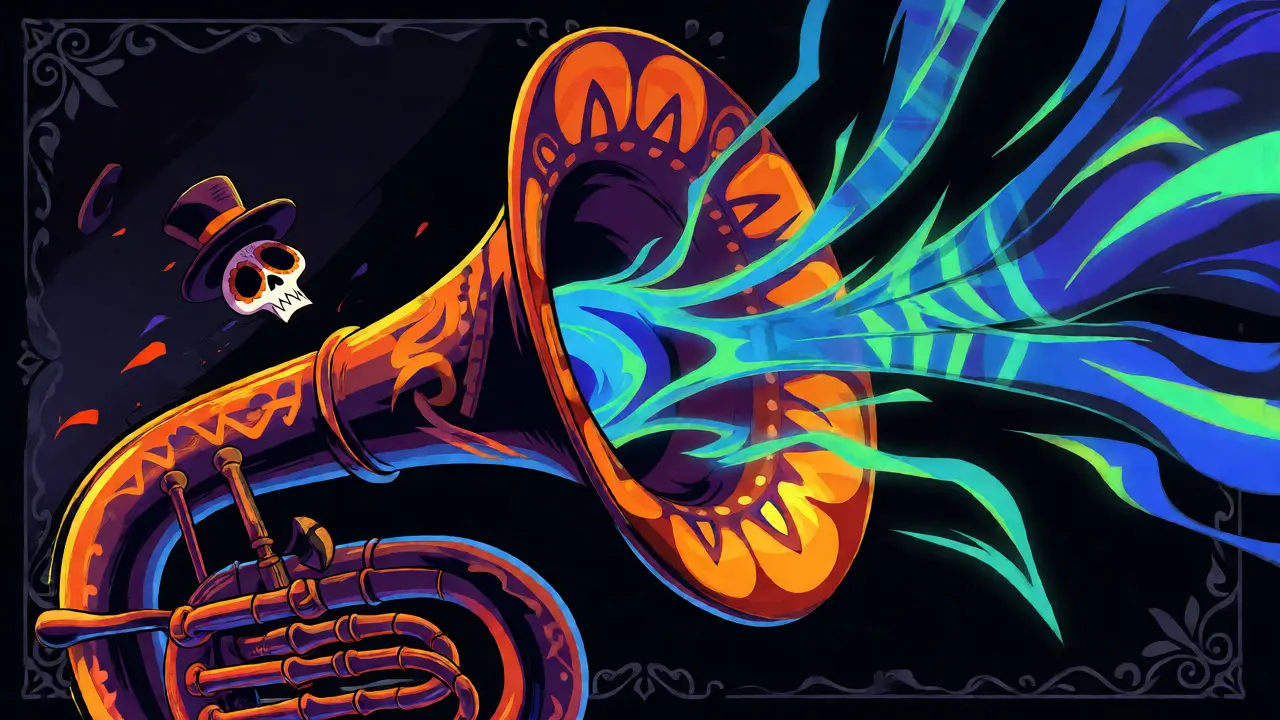
You know the feeling. The lights in the cinema dim, the screen goes black, and suddenly your chest vibrates. It’s not just a sound; it’s a physical assault of bass that tells you something massive is coming. That specific noise? It has a name: the Braam. And if you’ve ever wondered why modern movie trailers feel like they’re trying to punch you in the gut before the film even starts, you’re looking at the wrong thing. You need to listen.
Trailer music isn’t background noise. It’s a highly engineered psychological tool designed to manipulate your heartbeat and anticipation levels. While composers for actual films aim for emotional continuity, trailer composers have one job: sell the ticket in two minutes flat. To do that, they rely on a strict anatomy of sounds. Let’s break down the three pillars that make up 90% of what you hear in theaters today: the Braam, the Build, and the Button Ending.
The Braam: The Sound of Impact
If there is one sound that defines the last fifteen years of action cinema, it’s the Braam. Think of the roar from Inception or the heavy hits in Mad Max: Fury Road. But what actually is it?
A Braam is essentially a low-frequency brass note, heavily processed. It usually combines a trombone or tuba with synthesized sub-bass frequencies. The magic isn’t in the pitch-it’s in the distortion and the slide. Composers often use a "glissando," sliding the note up or down rapidly while adding saturation. This creates a sense of immense weight and danger without needing a melody.
| Component | Function | Typical Source |
|---|---|---|
| Sub-Bass Layer | Physical vibration (felt more than heard) | Synthesizer (e.g., Serum, Massive) |
| Mid-Range Growl | Aggression and texture | Distorted Brass (Trombone/Tuba) |
| High-Frequency Sizzle | Clarity and "air" | Noise Sweeps / Cymbals |
| Processing | Compression & Saturation | Plugins (FabFilter Pro-MB, Soundtoys) |
The term itself likely originated from the sound design team at Remote Control Productions, the studio founded by Hans Zimmer. While Zimmer didn't invent the low brass hit, his team popularized the extreme processing techniques that turned a standard orchestral stab into the earth-shaking Braam we know today. If you’re an audio engineer, you’ll recognize this as a mix of frequency masking and dynamic compression. For everyone else, it’s the sonic equivalent of a jump scare.
The Build: Manipulating Time and Tension
Between the Braams lies the architecture of tension: the Build. A trailer build isn’t just getting louder; it’s a calculated manipulation of rhythm and harmony. The goal here is simple-make the audience hold their breath.
Most builds follow a predictable pattern known as the "riser." This involves taking a short musical phrase and repeating it at increasing speeds. Start with a cello playing a single note every four seconds. Then, switch to eighth notes. Then sixteenth notes. Finally, thirty-second notes. Your brain interprets this acceleration as urgency. Combine this with a rising pitch-a Shepard Tone illusion-and you create a sensation of infinite ascent.
- Rhythmic Acceleration: Doubling the tempo every few bars to increase perceived energy.
- Pitch Ascension: Moving the key center upward to lift the mood.
- Layering: Adding percussion elements (taiko drums, metallic hits) one by one to fill the frequency spectrum.
- Silence Drops: Abruptly cutting all sound for half a second before the climax. This resets the listener's ear and makes the next impact hit harder.
Notice how horror trailers use this differently. Instead of major chords rising, they use dissonant clusters. They might layer high-pitched strings screeching against low, grinding drones. The build here isn’t about excitement; it’s about dread. The faster the rhythm gets, the more panicked you feel. It’s biological. When your heart rate syncs with the beat, you’re no longer watching a movie; you’re experiencing it.
The Button Ending: The Final Hook
You’ve had the Braams. You’ve held your breath through the Build. Now, the trailer ends. Or does it? Enter the Button Ending.
A Button Ending is a final, distinct audio-visual cue that occurs after the title card appears. It’s named after the theatrical practice of adding a final joke or twist after the curtain falls. In trailers, it serves two purposes: branding and lingering intrigue.
There are three common types of Button Endings:
- The Stinger: A sharp, singular sound effect (like a knife sharpening or a gun cocking) paired with a quick visual flash. This reinforces the genre. Action movies use mechanical clicks; thrillers use whispers.
- The Dialogue Snippet: A single line of dialogue delivered out of context. "You can't handle the truth" works because it promises conflict. It leaves the viewer asking, "What did he do?"
- The Musical Motif Resolution: A brief return to the main theme, but played softly or on a different instrument. This provides emotional closure to the two-minute journey, leaving the viewer with a feeling of satisfaction rather than abruptness.
Without a Button Ending, a trailer feels unfinished. It’s like telling a joke and walking away before the punchline. The Button ensures that when the lights come up, that last image is burned into your retina.
Why Does It Work? The Psychology of Sound
Why do we tolerate the Braam? Why do we get anxious during the Build? It comes down to psychoacoustics. Low frequencies travel further and resonate with our internal organs. We associate deep, rumbling sounds with large objects-earthquakes, predators, explosions. Our evolutionary wiring screams "danger," which releases adrenaline.
Meanwhile, the Build exploits the Zeigarnik Effect. This psychological principle states that people remember uncompleted or interrupted tasks better than completed ones. By building tension and then cutting to black (or to the logo), the composer leaves the narrative loop open. Your brain desperately wants to close that loop, and the only way to do so is to buy a ticket and watch the movie.
This isn’t accidental. Studios spend millions testing these edits. They track eye movement and heart rates. If a certain combination of risers and Braams causes a spike in engagement metrics, it becomes the template for the next blockbuster. It’s data-driven art.
Evolving Trends: Beyond the Braam
For a long time, the Braam dominated. But audiences are getting tired of being punched in the chest. Recent trends show a shift toward minimalism and diegetic sound. Look at trailers for Dune or Everything Everywhere All At Once. These use silence and organic instruments more effectively than synthetic growls.
We’re also seeing the rise of "anti-trailers." These clips avoid the traditional structure entirely. They might start with the Button Ending, work backward, or use pop songs instead of original scores. This reflects a broader change in consumer behavior. People are savvy. They know the tricks. So, composers have to innovate to keep them guessing.
However, the core anatomy remains. Whether it’s a synth growl or a solo violin, the principles of impact, tension, and resolution still apply. The tools change, but the human ear stays the same.
Frequently Asked Questions
Who invented the Braam sound?
While no single person holds a patent on the concept, the modern Braam was popularized by the sound design team at Remote Control Productions, led by Hans Zimmer, particularly during the marketing campaigns for Christopher Nolan's Batman trilogy and Inception in the late 2000s and early 2010s.
Is trailer music written specifically for the trailer?
Yes. While some cues are lifted from the film's score, most trailer music is composed separately by specialized agencies like Two Steps From Hell, Audiomachine, or Immediate Music. These tracks are designed to fit the precise edit points of the trailer, which often differs significantly from the final film's pacing.
What is a 'Shepard Tone' in trailer music?
A Shepard Tone is an auditory illusion that creates the impression of a tone continually ascending in pitch without ever actually getting higher. It is used in trailer builds to create a sense of endless rising tension that never resolves until the cut, keeping the listener in a state of heightened anticipation.
Why do horror trailers use different sounds?
Horror trailers prioritize dissonance and unpredictability over rhythmic drive. Instead of the heroic major chords and steady beats of action trailers, horror uses atonal strings, sudden silences, and irregular rhythms to trigger anxiety and fear responses rather than excitement.
Do all movies use the same trailer music?
No, but many use stock libraries. Major blockbusters commission custom scores, but mid-budget films often license pre-made tracks from production music libraries. This leads to similarities where multiple unrelated movies might feature the exact same epic choral track during their climaxes.