
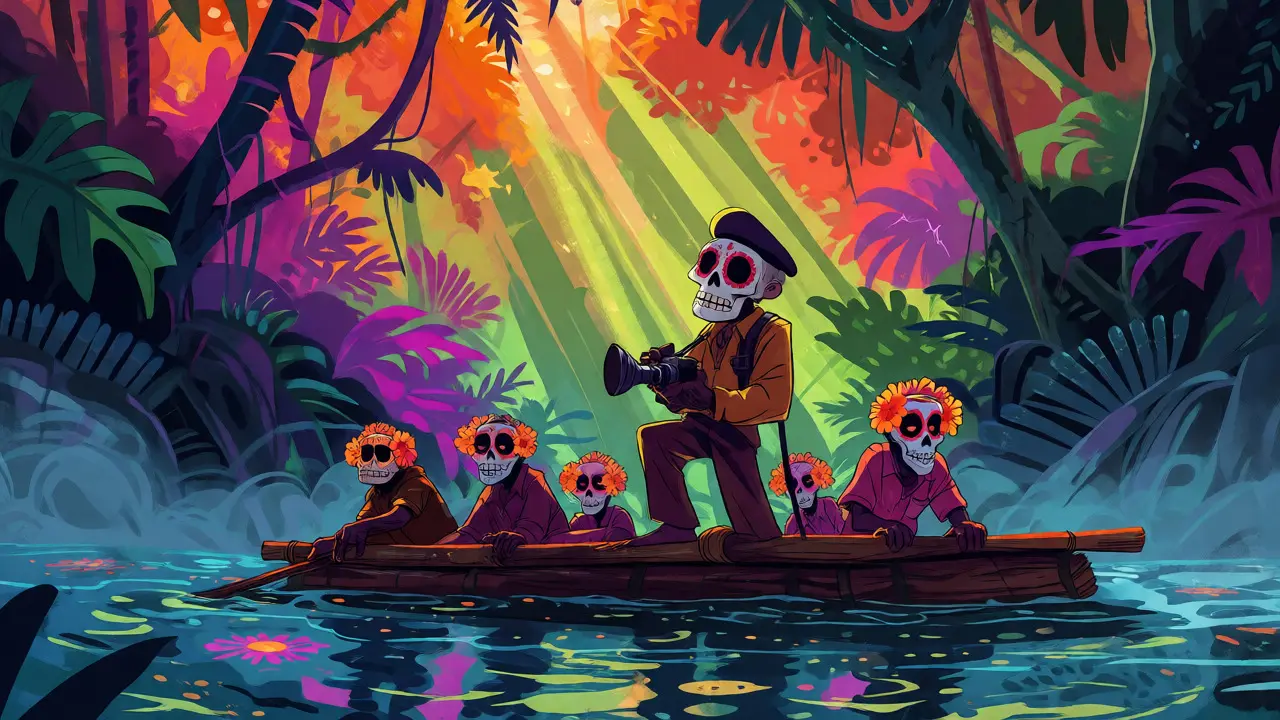
Imagine standing in a canoe on a mist-shrouded river in the Peruvian Amazon. You are not filming a movie; you are surviving one. The air is thick with humidity and malaria. Your lead actor has just threatened to kill the entire crew because he dislikes the way they set up his lighting. This wasn't a behind-the-scenes anecdote from a Hollywood blockbuster. This was the actual production environment for Aguirre, the Wrath of God, a 1972 masterpiece by director Werner Herzog that redefined what cinema could be through sheer, unhinged will.
If you’ve ever felt like your job was driving you insane, or if you’ve wondered how far an artist will go to capture a vision, this film is your bible. It’s not just a story about a Spanish conquistador searching for El Dorado. It’s a documentary of madness. And it remains one of the most powerful arguments for why art sometimes requires suffering.
The Man Who Would Not Die (Or Stop)
To understand the film, you have to understand the man who made it. Werner Herzog is a German filmmaker known for his extreme methods and philosophical approach to documentary and fiction. He didn’t write a script in the traditional sense. He wrote a fever dream. In 1971, Herzog claimed he wrote the screenplay for Aguirre in two and a half days while suffering from a severe fever. Whether that’s literal truth or myth-making doesn’t matter. The energy on screen feels improvised, raw, and dangerously close to breaking point.
Herzog wanted to make a film that felt ancient, almost biblical. He rejected the polished look of 1970s cinema. Instead, he chose to shoot on location in the jungle, using natural light and real danger. No studio sets. No fake rain. If the actors got bitten by insects, that was part of the performance. This commitment to "authenticity" over comfort created a texture in the film that digital effects simply cannot replicate today.
Klaus Kinski: The Engine of Chaos
You can’t talk about Aguirre without talking about Klaus Kinski. Kinski was a volatile German actor whose intense, often terrifying performances became synonymous with Herzog’s early work. Their partnership is legendary in film history, mostly because it was toxic. Kinski was difficult, narcissistic, and prone to violent outbursts. During the shooting of Aguirre, he allegedly fired shots into the air at the crew members who annoyed him. At one point, he reportedly held a knife to the throat of a local guide.
Why did Herzog keep him? Because Kinski was perfect for the role of Lope de Aguirre. Aguirre is a megalomaniac, a man who believes he is chosen by God to rule the world, even as the world collapses around him. Kinski didn’t need to act crazy. He just had to be himself. His eyes, wide and bloodshot, convey a terror that feels genuine. When he screams, "I am the wrath of God!" you believe him because you know he might actually try to burn down the jungle if he gets bored.
| Element | Detail | Impact on Film |
|---|---|---|
| Director | Werner Herzog | Established the "New German Cinema" aesthetic of raw realism. |
| Lead Actor | Klaus Kinski | Brought unpredictable intensity and physical danger to the set. |
| Location | Peruvian Amazon | Provided authentic claustrophobia and environmental hostility. |
| Music | Popol Vuh | Created a hypnotic, spiritual soundscape that contrasts with visual chaos. |
| Cinematography | Thomas Mauch | Used long lenses and natural light to isolate characters in vast landscapes. |
The Soundtrack That Haunts You
While Kinski provides the visual chaos, the audio provides the spiritual dread. The score was composed by Popol Vuh, a German electronic music band that pioneered the use of synthesizers and ethnic instruments in ambient music. Frontman Florian Fricke created a sound that feels less like music and more like a hallucination.
Listen closely to the track "Aguirre I (Lacrema de Reye)." It uses organ drones and tribal rhythms to create a sense of impending doom. It’s not dramatic in the way a John Williams score is dramatic. It’s oppressive. It sits in the back of your mind, reminding you that these men are lost. They are small. The jungle is big. And the gods are silent. This sonic landscape is crucial to the film’s success. Without Popol Vuh, Aguirre would just be a guy yelling on a boat. With them, it becomes a meditation on human futility.
Cinema Verité Meets Mythology
Most historical epics from the 1960s and 70s were grand productions with thousands of extras and massive sets. Think Lawrence of Arabia or Spartacus. Herzog flipped the script. He used a technique called cine-verite, a style of filmmaking that aims for realism through handheld cameras, natural lighting, and non-professional actors. But he applied it to a mythical subject.
The camera rarely moves smoothly. It shakes. It struggles to focus. Sometimes, the actors seem unaware of the lens, glancing off-camera as if checking if the crew is still alive. This creates a strange dissonance. We are watching a stylized story about a 16th-century conquest, but it looks like a news report from hell. Herzog calls this "ecstatic truth." He isn’t interested in historical accuracy. He’s interested in emotional truth. Did Aguirre really say those words? Probably not. Does it feel true? Absolutely.
This approach influenced generations of filmmakers. Christopher Nolan cited Aguirre as a major inspiration for Dunkirk and Apocalypse Now. Francis Ford Coppola admitted that the jungle sequences in Apocalypse Now owe a debt to Herzog’s work. The idea that you can shoot a war film (or a conquest film) without glorifying the violence, but rather showing its absurdity, started here.
Why It Still Matters Today
In 2026, we live in an era of CGI-heavy blockbusters where nothing feels real. Everything is rendered. Every explosion is calculated. Aguirre reminds us of the power of limitation. Herzog had no money. He had a broken-down raft. He had a sick crew. He turned these constraints into artistic choices.
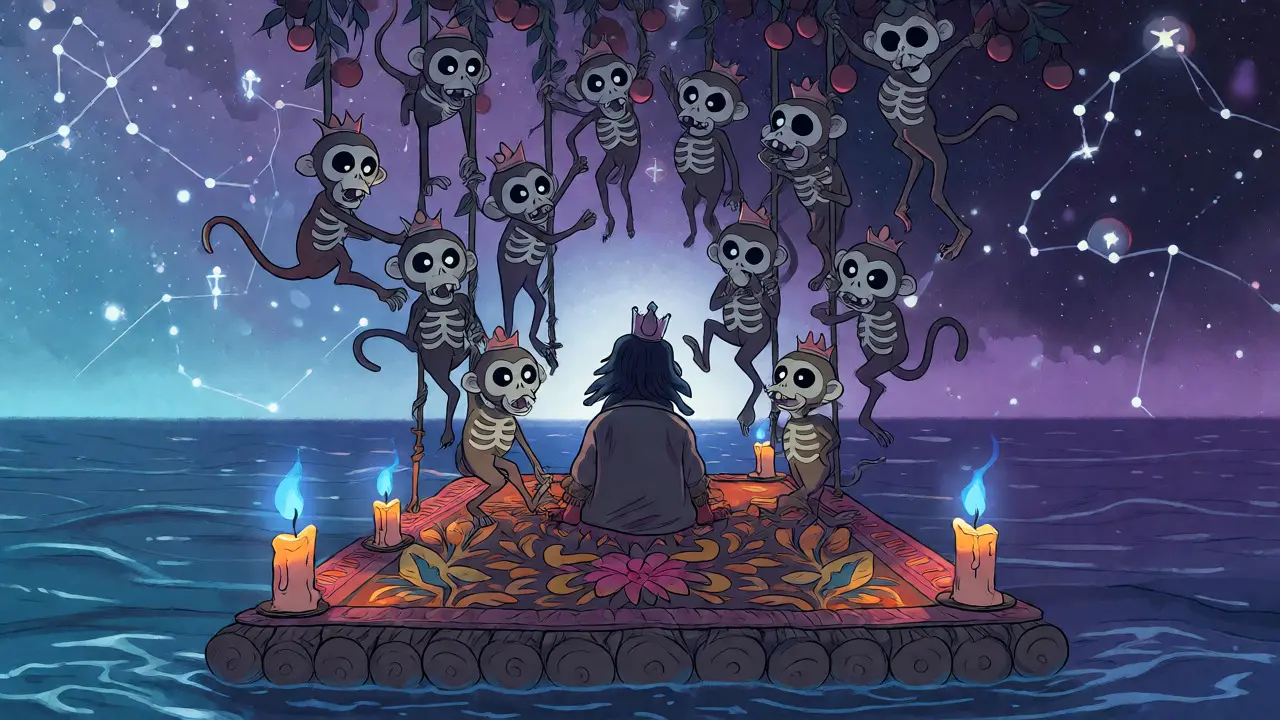
The film ends with Aguirre alone on a raft, surrounded by monkeys, declaring himself Emperor of the Universe. It’s pathetic. It’s hilarious. It’s tragic. It’s the ultimate critique of colonialism and ego. We watch a man destroy everything he touches because he cannot accept that he is mortal. Isn’t that relevant now? Look at tech billionaires trying to colonize Mars. Look at politicians promising utopias while the planet burns. Aguirre never died. He just changed costumes.
If you haven’t seen it, don’t wait for a streaming service to recommend it. Seek it out. Watch it on the biggest screen you own. Turn off the lights. Let the jungle swallow you. You won’t just watch a movie; you’ll experience a warning.
Is Aguirre, the Wrath of God based on a true story?
Yes and no. Lope de Aguirre was a real Spanish conquistador who led a rebellion against the Spanish Crown in the 1560s. However, Herzog took significant liberties with the historical record. The film is not a biographical drama but a psychological interpretation of Aguirre's ambition and madness. Many events in the film are fictionalized or exaggerated for thematic effect.
Why is the film considered so dangerous to watch?
The film is considered "dangerous" primarily due to its production history. Director Werner Herzog and actor Klaus Kinski pushed themselves and the crew to physical and mental extremes during filming in the Peruvian Amazon. Crew members suffered from disease, accidents, and Kinski's violent temper. This real-life tension bleeds into the screen, creating an atmosphere of genuine unease and unpredictability that viewers often find unsettling.
What is the significance of the ending scene?
The final shot shows Aguirre alone on a drifting raft, surrounded by hundreds of monkeys, as he declares himself "the wrath of God." This scene symbolizes the total isolation and delusion of his character. He has destroyed his entire expedition, yet he refuses to acknowledge failure. The monkeys represent nature reclaiming the space, indifferent to his imperial ambitions. It underscores the theme that human ego is insignificant against the backdrop of nature and time.
How does the soundtrack contribute to the film?
The soundtrack, composed by the band Popol Vuh, is essential to the film's mood. Using synthesizers and ethnic instrumentation, the music creates a hypnotic, trance-like state. It contrasts sharply with the chaotic visuals, providing a spiritual counterpoint to the physical struggle. The music suggests that Aguirre's journey is not just geographical but metaphysical, descending into a personal hell.
Should I watch Aguirre before Apocalypse Now?
While not strictly necessary, watching Aguirre first provides valuable context for understanding the evolution of war and jungle narratives in cinema. Francis Ford Coppola was heavily influenced by Herzog's work. Seeing Aguirre helps you appreciate the stylistic choices in Apocalypse Now, particularly regarding the depiction of madness and the surreal quality of the jungle environment. It highlights the lineage of "psychological horror" within the epic genre.