
Two movies. Two London neighborhoods. Two very different kinds of love stories. If you’ve ever wondered why British romantic comedies feel so different from American ones, you’re not alone. Notting Hill and Love Actually came out just a year apart - 1999 and 2003 - and both became global hits. But they didn’t just make us laugh or cry. They showed us how British charm works in romance: quiet, awkward, deeply human, and full of small moments that stick with you.
Notting Hill: When Love Finds You in a Bookstore
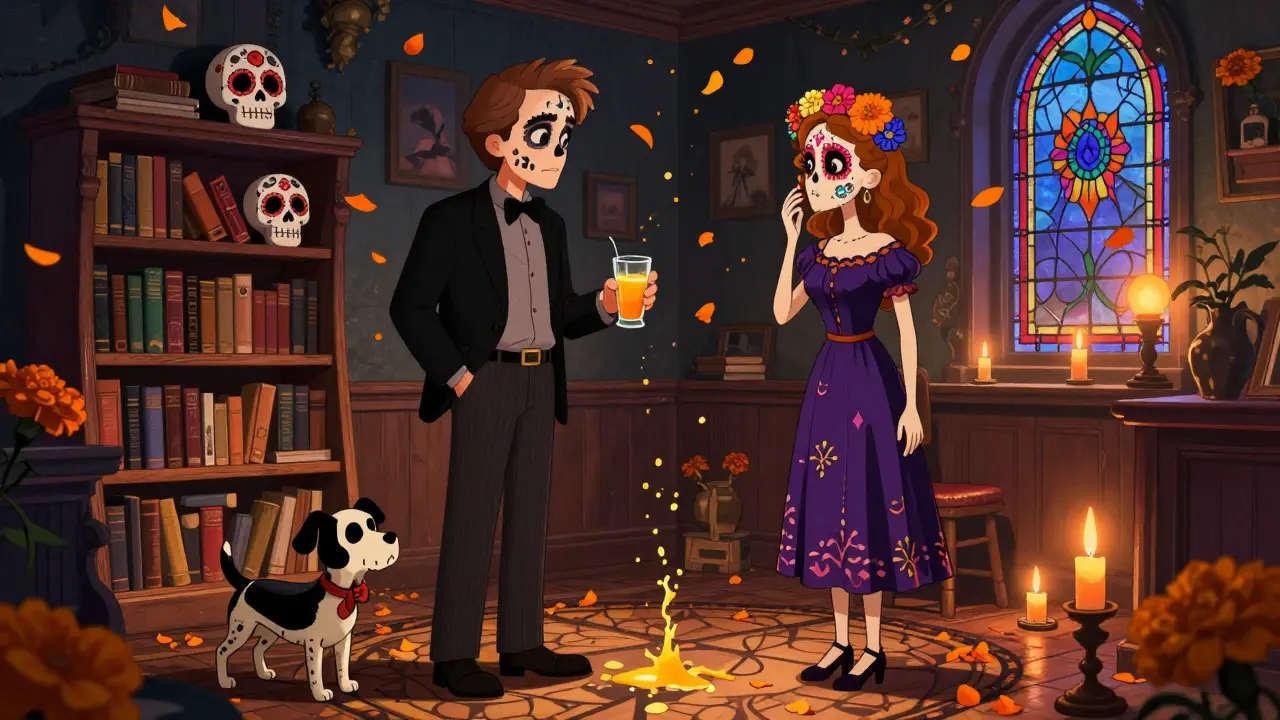
Notting Hill is a 1999 romantic comedy directed by Richard Curtis, starring Julia Roberts as Anna Scott, a world-famous Hollywood actress, and Hugh Grant as William Thacker, a humble bookstore owner living in Notting Hill, London. It’s not about grand gestures. It’s about a guy who spills orange juice on a movie star and then spends the rest of the movie trying to be normal around her. He doesn’t have a mansion. He doesn’t fly her to Paris. He has a tiny flat, a secondhand sofa, and a dog named Bambi.
The magic of Notting Hill is in its realism. Anna doesn’t magically become a regular person just because she’s in love. She’s still famous. She’s still scared. She still has bodyguards and paparazzi. William doesn’t suddenly become a millionaire. He’s just a guy who reads books, cooks bad pasta, and believes in love even when it seems impossible. Their first kiss? It happens after a long, quiet conversation in a garden. No music swells. No slow-motion. Just two people finally letting go.
And then there’s the line: "I’m just a girl, standing in front of a boy, asking him to love her." It’s not poetic. It’s raw. And that’s why it works. British rom-coms don’t need fireworks. They just need honesty.
Love Actually: The Web of Love in London
Love Actually is a 2003 ensemble romantic comedy also written by Richard Curtis, featuring ten interwoven love stories set across London during the Christmas season. Hugh Grant plays the British Prime Minister. Colin Firth falls for his Portuguese housekeeper. Liam Neeson comforts his stepson after his mother’s death. And Mark (played by Andrew Lincoln) silently loves his best friend’s wife, writing her notes and staring out the window with a boombox.
Where Notting Hill is a single thread, Love Actually is a tapestry. It shows love in all its messy forms: unrequited, late-blooming, forbidden, platonic, and even awkwardly political. The film doesn’t pretend love is perfect. It shows a man crying in the mirror because he’s too scared to confess. It shows a teenager pretending to be in love just to feel something. It shows a couple rebuilding after betrayal.
The famous "I love you" scene? It’s not dramatic. It’s quiet. Eleven people whisper "I love you" to each other in a single room - no music, no camera tricks. Just voices. Real voices. That’s the British way: love isn’t shouted. It’s whispered.
What Makes British Romantic Comedy Different?
American rom-coms often rely on big reveals: the airport chase, the speech at the wedding, the million-dollar gesture. British ones? They’re more like a cup of tea left on the counter - warm, simple, and meant to be savored.
Take Notting Hill. The climax isn’t a helicopter landing in the street. It’s William reading Anna’s letter in his kitchen, then walking to the airport. He doesn’t stop her. He doesn’t beg. He just says, "I’ll always be here if you want me." And she comes back - not because he changed, but because she finally saw him.
In Love Actually, the most powerful moment isn’t the Prime Minister dancing with a dancer. It’s the scene where he tells his assistant, "I think I’m falling in love with you." She doesn’t say anything. She just smiles. That’s it. No kiss. No promise. Just a quiet understanding.
British rom-coms don’t fix love. They find it in the cracks. In the silence. In the way someone remembers how you take your coffee. In the way a man cries because he’s too afraid to say what he feels.
Why These Two Movies Still Matter
Both films came out before smartphones, before social media, before everyone was constantly connected. And that’s why they still feel real. In Notting Hill, William can’t text Anna. He can’t DM her. He has to show up. He has to wait. He has to be brave enough to be vulnerable.
In Love Actually, people write letters. They stare across rooms. They sit in silence. There’s no app to fix a broken heart. You just have to sit with it. And that’s the lesson these films teach: love isn’t about grand plans. It’s about showing up, again and again, even when you’re scared.
Today, we’re used to love being curated - filtered, staged, edited. These movies remind us that real love is messy. It’s awkward. It’s in the small things: a shared umbrella, a forgotten birthday, a note left on the fridge.
Which One Should You Watch?
If you want a story about one person finding love in the most unlikely place - and learning that fame doesn’t make you happy - then watch Notting Hill. It’s intimate. It’s tender. It’s about being seen.
If you want to see love in all its forms - the good, the ugly, the quiet, the loud - then watch Love Actually. It’s a celebration of how love connects us, even when we don’t know how to say it.
Neither movie is perfect. Notting Hill has its moments of fantasy. Love Actually has a few too many subplots. But together, they form a portrait of British romance that’s still unmatched: understated, sincere, and full of heart.
They don’t make movies like this anymore. Not because we lost the talent. But because we forgot what love really looks like. It doesn’t need a soundtrack. It just needs someone who shows up - even if they’re late. Even if they’re scared. Even if they spill orange juice all over you.
Why do British romantic comedies feel more realistic than American ones?
British rom-coms focus on quiet, everyday moments instead of big, dramatic gestures. Characters don’t fly across the world or propose with fireworks. They talk over tea, write notes, and hesitate before saying "I love you." This realism comes from British culture - where emotions are often held back, and love is shown through small, consistent actions rather than grand declarations.
Is Hugh Grant the king of British romantic comedy?
He’s one of them, yes. Hugh Grant became iconic playing charmingly awkward men in Notting Hill and Love Actually. His characters are nervous, self-deprecating, and endearing - not because they’re perfect, but because they’re deeply human. He didn’t play the suave lover. He played the guy who trips over his own feet trying to say the right thing. That’s why audiences connected. He made vulnerability look like strength.
Do these movies still hold up in 2026?
Absolutely. While modern rom-coms rely on viral trends or influencer aesthetics, Notting Hill and Love Actually feel timeless because they’re grounded in real emotion. The lack of smartphones, social media, and flashy visuals actually helps - it forces you to pay attention to facial expressions, pauses, and silence. These films remind us that love doesn’t need filters. Just presence.
What’s the biggest difference between the two films?
Notting Hill is a single love story between two people. Love Actually is a mosaic of ten different relationships - from teenage crushes to middle-aged marriages. One is intimate; the other is expansive. But both share the same soul: love isn’t about perfection. It’s about showing up, even when you’re scared.
Are there any modern films that capture the same charm?
Films like Jojo Rabbit (2019) and The Half of It (2020) carry some of that quiet emotional honesty, but few have matched the British tone. About Time (2013), also by Richard Curtis, comes closest - with its focus on small, repeated moments of love. But even then, nothing quite replaces the original duo: Notting Hill and Love Actually.