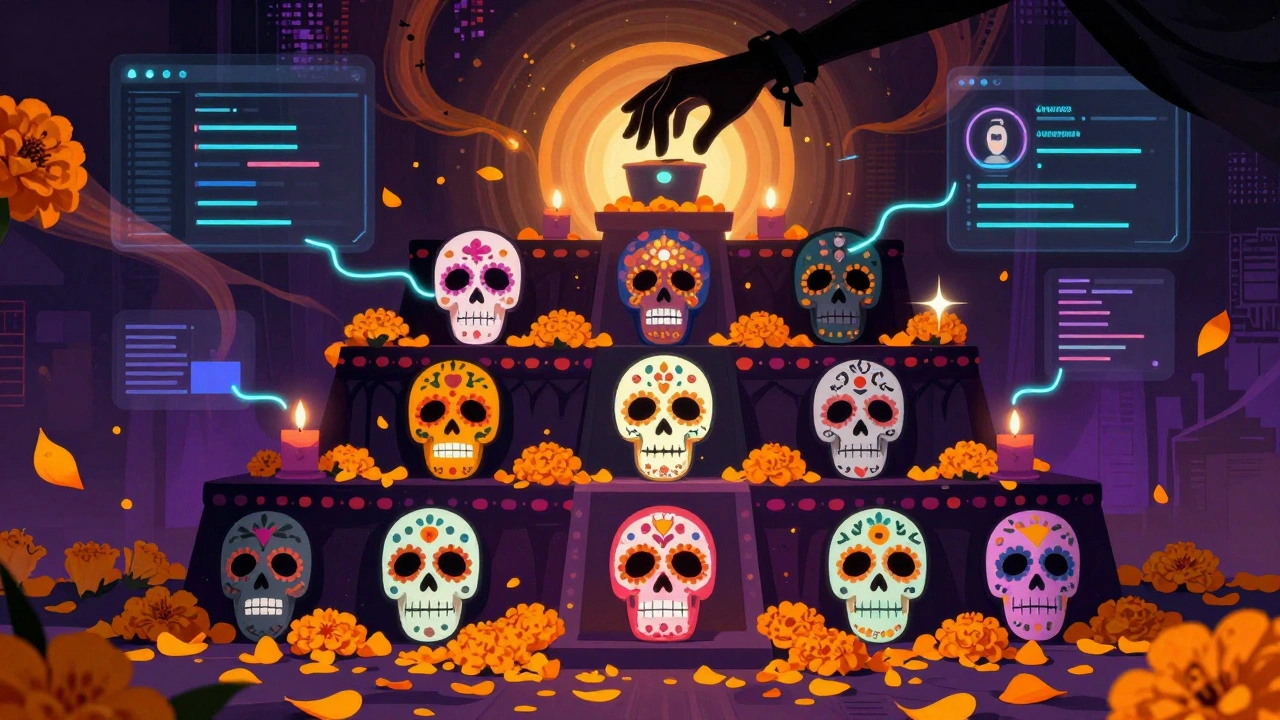
When you open Netflix, Hulu, or Disney+, you don’t just pick a movie-you accept a suggestion. The system already knows what you’ll like, or so it claims. But behind that seamless "You might also like" row lies something deeper: a quiet revolution in how cinema is seen, valued, and even made. This isn’t just about convenience. It’s about algorithmic culture rewriting the rules of film discovery, turning audiences into data points and movies into products optimized for engagement, not art.
What Algorithmic Culture Really Means for Movies
Algorithmic culture isn’t a buzzword. It’s the system where machines decide what stories reach us, how often, and in what order. These aren’t random suggestions. They’re built from millions of data points: how long you watched, when you paused, what you skipped, whether you scrolled past a title, even the time of day you clicked. Platforms like Netflix track over 200 million user profiles, each with unique behavioral fingerprints. The result? A movie doesn’t succeed because it’s good-it succeeds because it keeps you watching.
Think about it: when was the last time you chose a film because a friend recommended it? Or because you read a review? For most people, the answer is never. According to a 2024 study by the University of Southern California, 78% of viewers on major streaming platforms discovered their most recent film through an algorithmic recommendation-not a trailer, not a critic, not a social post. The algorithm doesn’t just guide choices; it replaces intention.
The Curation Crisis: Who Gets Seen?
Algorithms don’t care about diversity. They care about patterns. And patterns are built on what’s already popular. This creates a feedback loop: if a genre or style performs well, the system pushes more of it. Independent films, foreign language cinema, documentaries, or experimental narratives rarely fit those patterns. So they disappear.
Take the case of the 2022 Oscar-nominated film The Quiet Girl. It won Best International Feature, but before its award, it had less than 50,000 views on global streaming platforms. Why? Because it didn’t match the algorithm’s profile for success: no big stars, no English dialogue, no fast pacing. It only gained traction after critics and awards buzz forced platforms to manually promote it. That’s not discovery-that’s intervention.
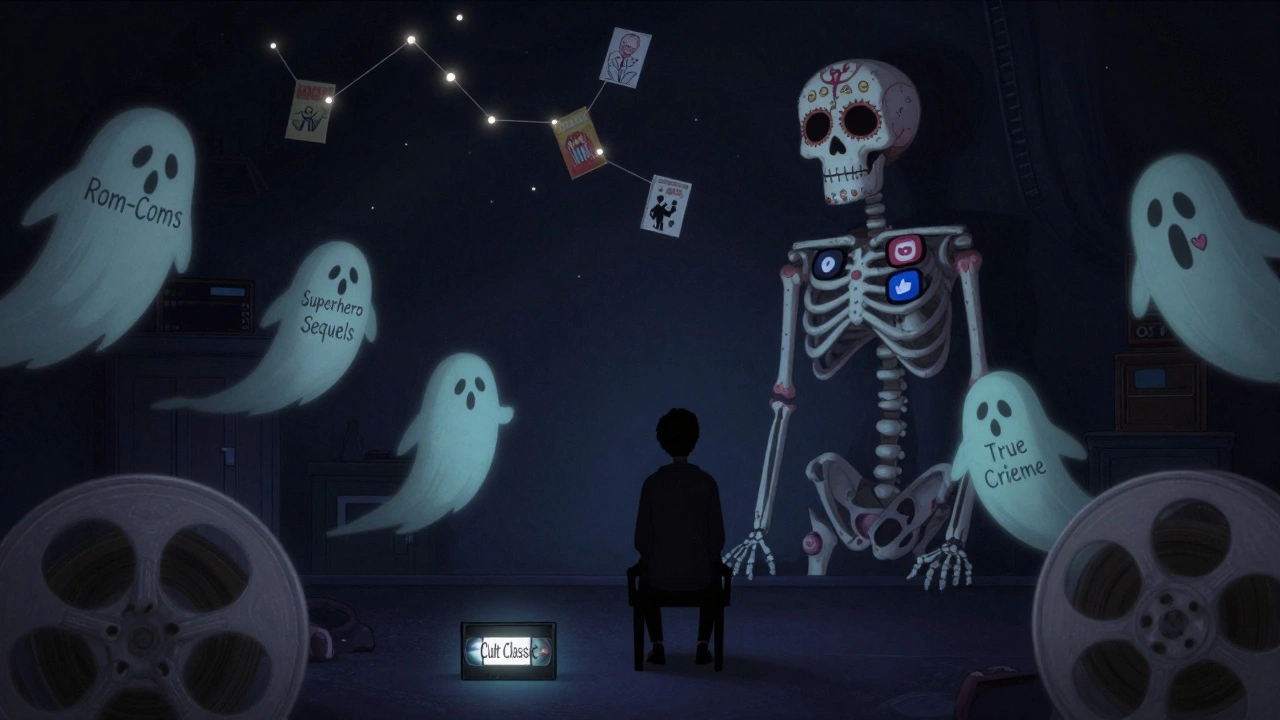
Meanwhile, formulaic content thrives. The same three types of rom-coms, the same superhero sequels, the same true-crime thrillers keep appearing because they keep people hooked. Algorithms don’t reward originality. They reward predictability. And cinema is becoming a mirror of its own repetition.
Discovery Is Dead. Or Is It?
People still want to find something new. But the system makes it harder. Platforms call it "discovery," but what they mean is "controlled exposure." You’re not stumbling upon a hidden gem-you’re being nudged toward something similar to what you’ve already watched.
Try this: open your streaming app and search for "cult classic" or "underground film." You’ll get a list of titles that have been algorithmically tagged as "cult" because enough people clicked on them after watching Reservoir Dogs or Donnie Darko. But the real underground-films that never got a digital release, that played once at a film festival, that exist only on VHS copies in someone’s basement-those are invisible. The algorithm has no way to surface them. It can’t recommend what it can’t measure.
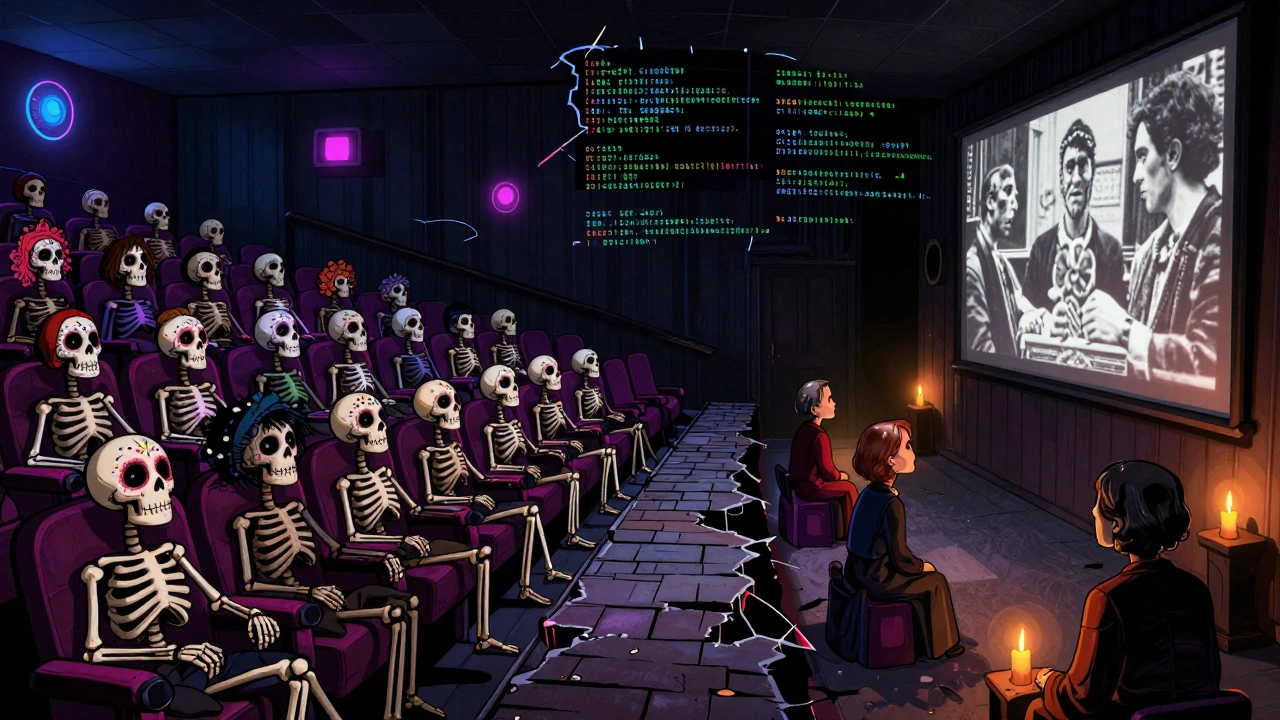
There’s a quiet rebellion forming. Subreddits like r/TrueFilm and r/MovieSuggestions still thrive because users manually share obscure titles. YouTube channels like Every Frame a Painting and Screen Education built audiences by talking about films no algorithm would ever promote. These aren’t just fan communities-they’re alternative curation networks, built on human taste, not data.
How Filmmakers Are Adapting (or Surrendering)
Directors and writers aren’t blind to this shift. Some have learned to game the system. Screenplays now include "algorithm-friendly" beats: a clear three-act structure, a twist before the 20-minute mark, a character arc that ends with redemption. Even cinematography is changing. Brighter colors, higher contrast, and faster cuts are becoming standard because they increase retention rates.
Netflix’s own internal guidelines for filmmakers, leaked in 2023, advised directors to "ensure the first 90 seconds contain a clear emotional hook" and to "avoid slow buildups that cause drop-off." It’s not about storytelling anymore-it’s about survival in a metric-driven ecosystem.
But not everyone plays along. Directors like Kelly Reichardt and Apichatpong Weerasethakul still make slow, contemplative films. Their work doesn’t trend. It doesn’t get recommended. But they still get funded-because festivals and art-house distributors still exist outside the algorithm. The divide is growing: one cinema for the masses, shaped by data; another for the few, shaped by vision.
The Loss of Serendipity
Remember when you walked into a video store and found a movie you never knew existed? You picked it up because the cover looked strange, or the title sounded intriguing, or the poster reminded you of something you loved. That was serendipity. That’s gone.
Streaming platforms don’t want you to wander. They want you to stay. So they remove the unknown. No more rows labeled "New Releases" or "Hidden Gems" unless they’re algorithmically validated. The interface is designed to eliminate choice, not expand it. You don’t discover films anymore-you confirm preferences.
And that’s dangerous. Cinema thrives on surprise. On the unexpected. On films that challenge, confuse, or unsettle us. Algorithms optimize for comfort. They favor the familiar. They silence the quiet voices. And over time, we forget what cinema can be when it’s not being curated for clicks.
What Can You Do About It?
You’re not powerless. The algorithm doesn’t control you-it responds to you. Here’s how to break free:
- Turn off personalized recommendations for a week. Watch something random.
- Use external tools like Letterboxd or MUBI to find films outside your feed.
- Follow critics who don’t work for platforms-like Jonathan Rosenbaum or B. Ruby Rich.
- Watch films from countries with smaller streaming markets. Their catalogs are less polluted by algorithmic homogenization.
- Support indie distributors. Buy or rent films directly from sites like Cinema Guild or Kino Lorber.
Every time you watch something outside your algorithm’s prediction, you weaken its grip. You send a signal: I don’t just want what’s easy. I want what’s true.
Will Cinema Survive the Algorithm?
It already has. But it’s fractured. One version of cinema is thriving: the one that feeds the machine. The other is fading: the one that asks questions, takes risks, and lingers in silence.
The future won’t be decided by studios or streaming giants. It’ll be decided by viewers. Do you want to be guided by data? Or do you want to be surprised by art? The answer isn’t in your watch history. It’s in your hands.
How do streaming algorithms decide what movies to recommend?
Streaming algorithms analyze your viewing history, how long you watch, when you pause or skip, what you search for, and even the time of day you watch. They compare your behavior to millions of other users with similar patterns. If people who watched Parasite also watched Oldboy, you’ll see Oldboy recommended-even if you’ve never heard of it. The system doesn’t care about quality. It cares about patterns that keep you engaged.
Why are foreign films so hard to find on streaming platforms?
Foreign films often don’t fit the algorithm’s profile for success. They usually have slower pacing, subtitles, or unfamiliar cultural references, which lead to higher drop-off rates. Algorithms prioritize content that keeps viewers watching longer. Unless a foreign film gets enough organic views or is manually promoted by a curator, it gets buried. That’s why many award-winning international films have tiny streaming numbers until they win Oscars or are pushed by critics.
Do algorithms favor certain genres over others?
Yes. Action, romance, crime thrillers, and superhero films dominate because they have high retention rates. Documentaries and arthouse films rarely appear in main feeds unless they’ve already gone viral. Algorithms are trained on what keeps people watching, not what’s critically acclaimed. A 2023 internal Netflix report showed that films with fast pacing and clear emotional arcs had 40% higher completion rates than slower, ambiguous ones.
Can independent filmmakers work around algorithmic bias?
Some do. Filmmakers now write scripts with algorithmic metrics in mind-like placing a key moment before the 20-minute mark to reduce drop-off. Others bypass platforms entirely, using film festivals, direct-to-consumer sales, or niche platforms like MUBI. The most successful indie films today aren’t the ones that fit the algorithm-they’re the ones that build communities outside it, through social media, film clubs, and word-of-mouth.
Is there a way to reset my recommendations and start fresh?
Yes. On most platforms, you can clear your watch history. On Netflix, go to your account settings, select "Viewing Activity," and click "Remove All." Then, manually search for films you’ve never seen before-avoid using the homepage. Watch something completely outside your usual genre. Over time, the algorithm will start to adjust. But it takes consistency. One random watch won’t change anything. A month of intentional viewing will.
What you watch matters-not just for you, but for the future of cinema. The algorithm doesn’t decide what films get made. But it decides what gets seen. And what gets seen, gets repeated. Choose wisely.