
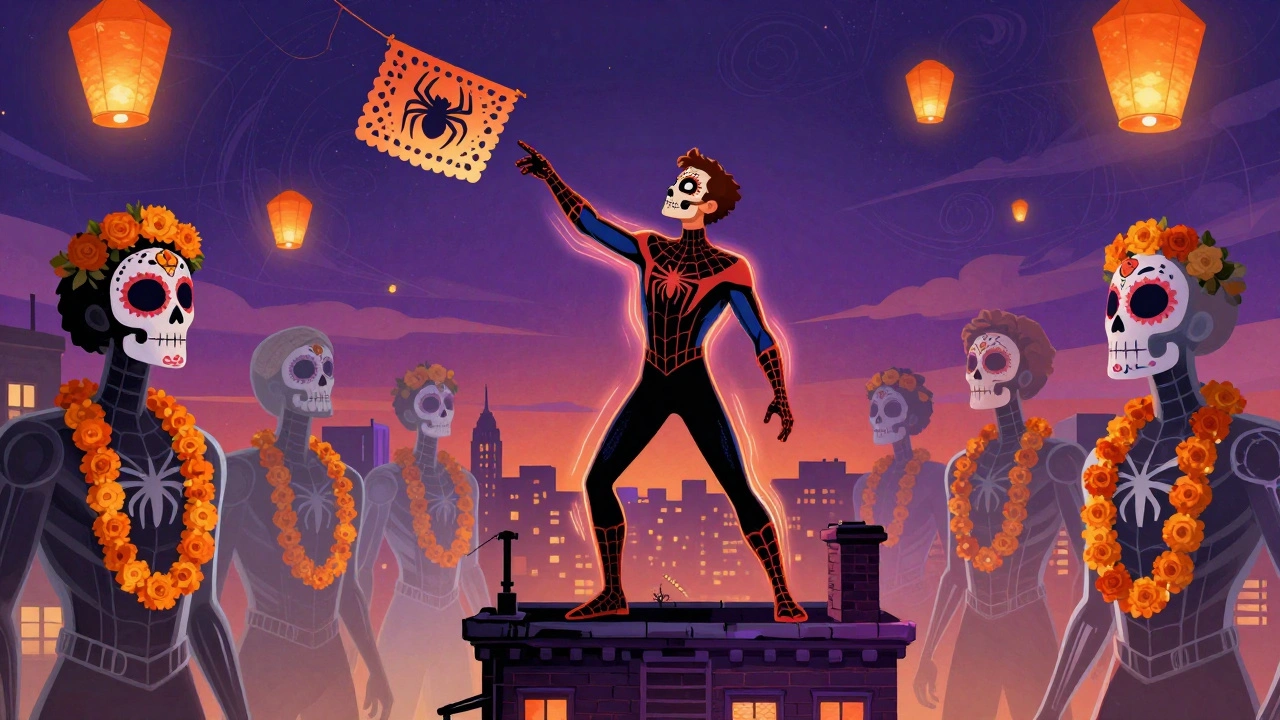
Multiverse storytelling isn’t just a trend-it’s become the defining narrative engine of modern cinema. What started as a comic book loophole has exploded into a cinematic language that lets filmmakers explore identity, regret, choice, and chaos in ways no single universe ever could. From the kaleidoscopic chaos of Everything Everywhere All At Once to the emotionally grounded heroism of Spider-Man: Into the Spider-Verse, these films don’t just show you other worlds-they make you feel what it’s like to live in them.
How Spider-Verse Changed the Rules
Spider-Man: Into the Spider-Verse didn’t just introduce Miles Morales to the big screen. It rewrote how animated films could look, move, and feel. Instead of mimicking traditional animation, it blended hand-drawn ink lines, comic book halftones, and glitchy digital effects to mimic the experience of flipping through a comic. But the real innovation was in its storytelling. This wasn’t just about multiple Spider-People coexisting. It was about how one person’s doubt can echo across infinite versions of themselves.Miles isn’t the chosen one. He’s the reluctant one. And that’s why his journey hits so hard. When he meets Peter B. Parker-a jaded, overweight, divorced Spider-Man from another universe-he doesn’t see a hero. He sees a failure. That’s the core of the multiverse here: every version of you is real, and every version of you has scars. The film’s climax isn’t about defeating a villain. It’s about Miles choosing to believe in himself, even when every other version of him failed.
The film’s success wasn’t just critical. It proved audiences would embrace nonlinear, emotionally dense stories if they were told with heart and visual boldness. It earned the Oscar for Best Animated Feature in 2019, beating out heavyweights like Toy Story 4. More importantly, it gave filmmakers permission to think bigger-not just in scale, but in emotional depth.
Everything Everywhere All At Once: When the Multiverse Becomes Therapy
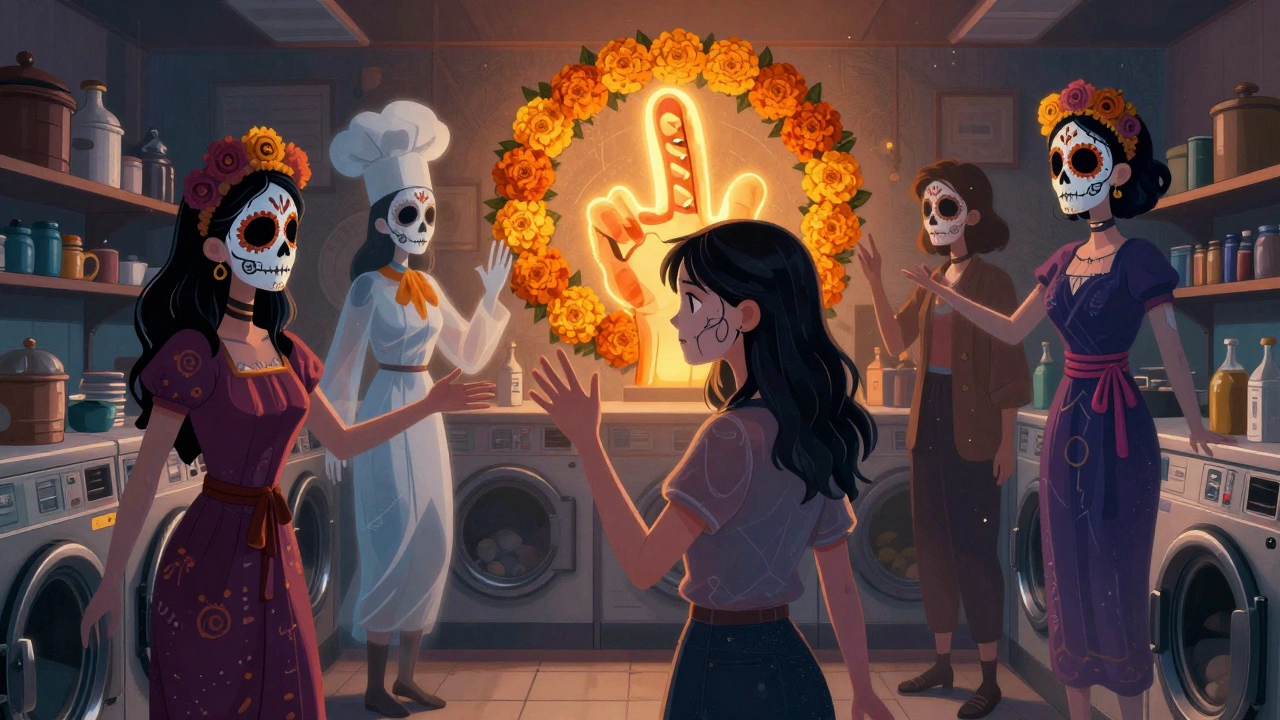
If Spider-Verse used the multiverse to tell a coming-of-age story, Everything Everywhere All At Once used it as a mirror for middle-aged despair. Released in 2022, the film follows Evelyn Wang, a laundromat owner drowning in debt, marital tension, and a strained relationship with her daughter. Then, she discovers she can access the memories and skills of her alternate selves across the multiverse.Here, the multiverse isn’t a place you travel to-it’s a mental state. Every choice you didn’t make? There’s a version of you who did. The version who became a famous actress. The one who married your rival. The one who turned into a rock. The one who gave up on everything. The film doesn’t romanticize these lives. It shows how exhausting it is to imagine them. Evelyn doesn’t want to be a chef, a movie star, or a martial arts master. She just wants to be heard.
The film’s genius is in how it ties chaos to grief. The villain, Jobu Tupaki, isn’t evil-she’s broken. She’s seen every possible version of her life and decided none of them matter. That’s the dark side of the multiverse: when you know every choice leads to something, nothing feels meaningful. The resolution isn’t about winning a battle. It’s about Evelyn choosing to love her daughter, not because she can fix her, but because she finally sees her.
It won seven Oscars, including Best Picture. Critics called it a masterpiece. But what made it resonate wasn’t the googly eyes or the hot dog fingers. It was the quiet truth at its center: in a world of infinite possibilities, the only thing that matters is the one you’re in right now.
Why the Multiverse Works Now
You can’t talk about multiverse films without mentioning Marvel. The MCU has thrown dozens of alternate realities into its storylines, from Doctor Strange in the Multiverse of Madness to Loki on Disney+. But those stories often feel like plot devices-tools to bring back dead characters or set up sequels.The real power of multiverse storytelling isn’t in the spectacle. It’s in the intimacy. In films like Spider-Verse and Everything Everywhere, the multiverse isn’t a backdrop. It’s the emotional core. It turns abstract ideas-regret, identity, choice-into something you can see, feel, and touch.
Why now? Because people are tired of linear stories. We live in a world where we’re constantly comparing ourselves to others-on social media, at work, in our families. We wonder: What if I’d taken that job? What if I’d moved? What if I’d said no? The multiverse gives us a way to explore those questions without the guilt of living them.
These films don’t promise that other lives are better. They show that they’re just different. And sometimes, that’s enough.
The Rise of the Non-Hero Multiverse
Early multiverse stories-like Sliders or Star Trek: The Next Generation’s “Mirror Universe”-were about heroes in evil worlds. The good guy fights the bad version of himself. Classic.Modern multiverse films reject that. Miles Morales isn’t fighting a dark Spider-Man. He’s trying to become one. Evelyn Wang isn’t battling an evil alternate self-she’s trying to understand her. The villain isn’t another version of you. It’s the weight of all the versions you could’ve been.
This shift reflects a deeper cultural change. We’re less interested in perfect heroes. We want flawed, tired, confused people who are still trying. That’s why Spider-Verse’s Peter B. Parker is more relatable than any clean-cut, muscle-bound Spider-Man. That’s why Evelyn’s chaotic, exhausted energy feels more real than any superhero’s calm confidence.
The multiverse isn’t about power anymore. It’s about presence.
What Comes Next
The next wave of multiverse films won’t just show more universes. They’ll dig deeper into the people inside them. We’re already seeing hints: Spider-Man: Across the Spider-Verse introduced hundreds of Spider-People, but focused on one question-what if your destiny isn’t yours to choose?Upcoming projects like Deadpool & Wolverine and The Marvels are leaning into the multiverse for nostalgia. But the real innovation will come from indie filmmakers who use it to tell stories about loneliness, aging, immigration, or mental health. Imagine a film where every universe represents a different stage of grief. Or one where each version of the protagonist is from a different country, speaking a different language, yet all are trying to connect with the same child.
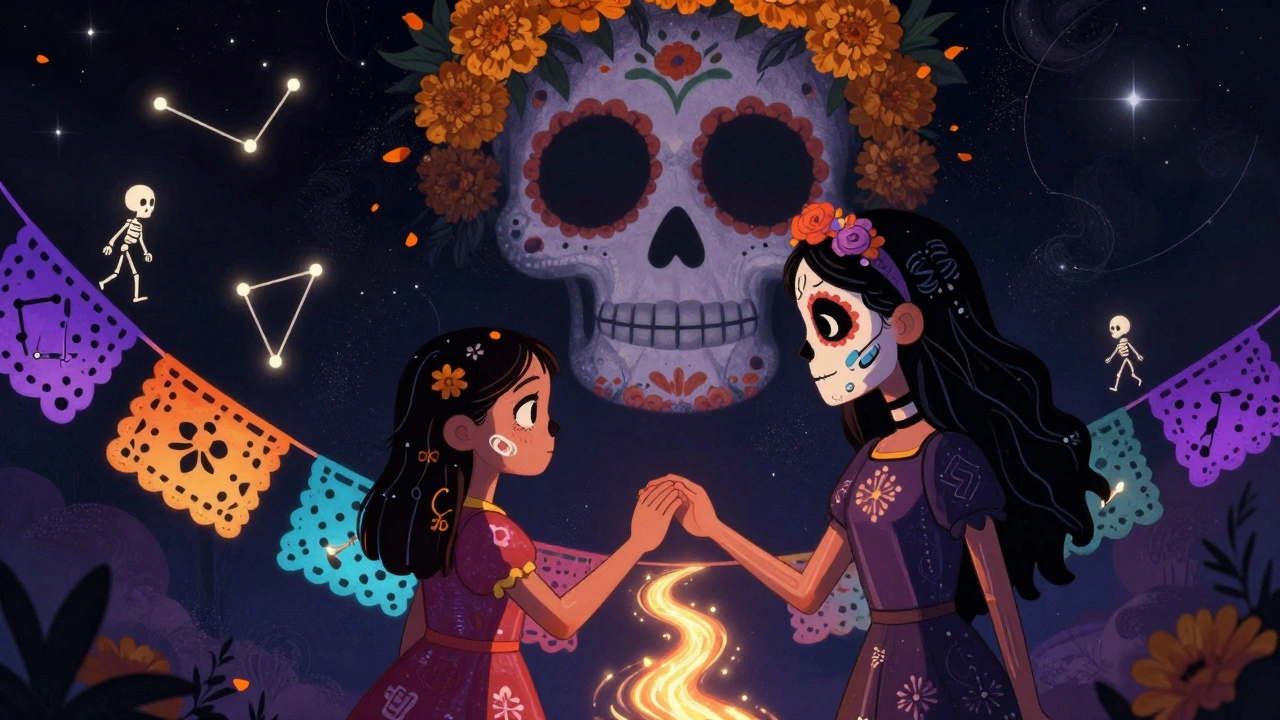
The multiverse isn’t going away. But its future won’t be in CGI explosions. It’ll be in quiet moments-a mother holding her daughter’s hand, a teenager choosing to believe in himself, a person deciding that this world, flawed as it is, is the one worth fighting for.
Why These Films Stick With You
You don’t forget Spider-Verse because of the animation. You remember it because of the moment Miles looks at his dad and says, “I’m not ready.” You don’t forget Everything Everywhere because of the hot dog fingers. You remember it because Evelyn finally says, “I’m sorry,” and it’s the first honest thing she’s said in years.These films work because they use the infinite to make the personal feel universal. They don’t ask, “What if there are other worlds?” They ask, “What if this one isn’t enough?” And then they give you an answer-not with a punchline, but with a hug.