

Have you ever pushed yourself to the brink just to prove a point? Maybe you stayed up all night for an exam, ran until your lungs burned, or rehearsed a speech until your voice gave out. Now imagine doing that every single day under the watchful, cruel eye of someone who believes pain is the only path to greatness. That is the world of Whiplash, the 2014 psychological drama directed by Damien Chazelle. It is not just a movie about jazz; it is a brutal examination of ambition, abuse, and the terrifying cost of excellence.
This film took the world by storm, earning Academy Award nominations for Best Picture, Best Director, and three acting categories. But beyond the accolades, it sparked a fierce debate. Is Terence Fletcher a visionary mentor pushing students to their limits, or is he a toxic abuser destroying young lives? There is no easy answer, which is exactly why this movie remains so compelling years after its release.
The Setup: A Drummer’s Dream in New York
The story follows Andrew Neiman, played with intense vulnerability by Miles Teller. Andrew is a teenager at Shaffer Conservatory, a prestigious music school in New York City. He doesn’t want to be good enough; he wants to be one of the greats, like his idol Buddy Rich. This isn’t a hobby for him. It is an obsession that consumes every waking moment.
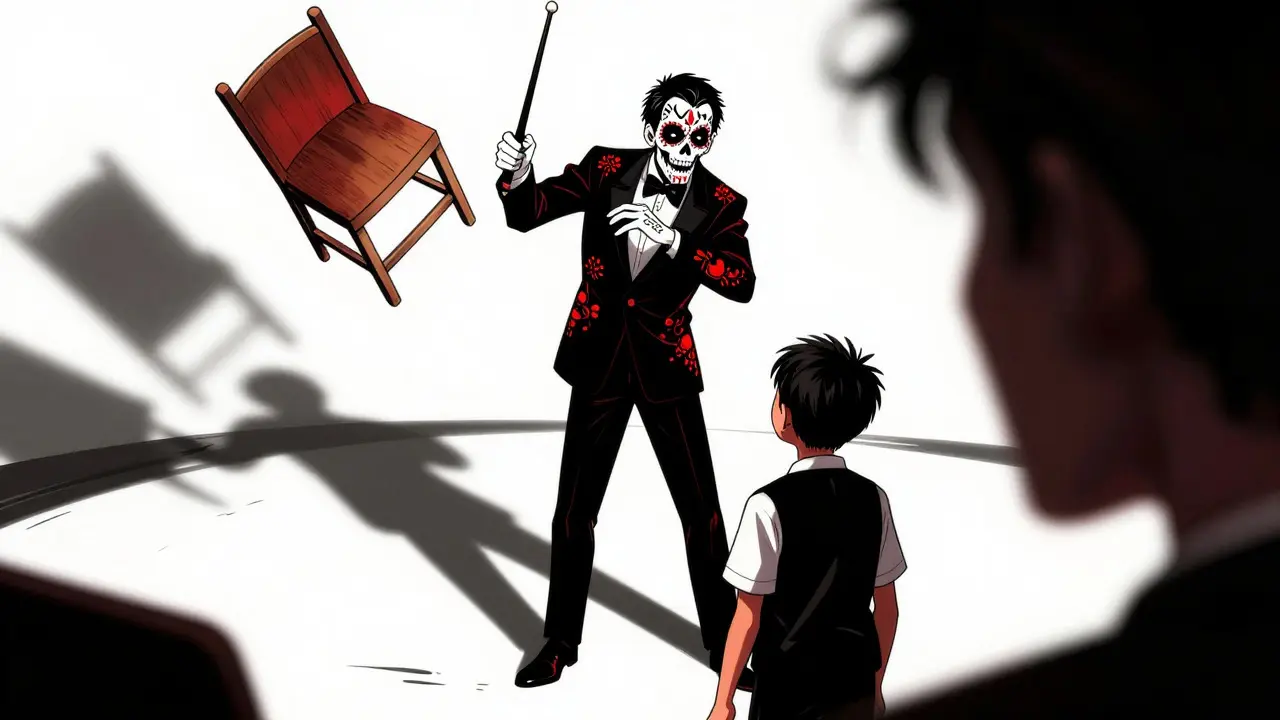
Enter Terence Fletcher, portrayed with chilling precision by J.K. Simmons. Fletcher teaches a master class in jazz drumming where he tears apart students with verbal abuse, physical intimidation, and psychological warfare. He throws chairs, screams insults, and humiliates kids in front of their peers. When Andrew catches Fletcher’s eye, he thinks he has found his ticket to stardom. Instead, he walks into a nightmare.
The dynamic between these two characters drives the entire narrative. It is a classic master-apprentice relationship gone wrong. You see Andrew’s desperation mirrored in Fletcher’s cruelty. Both are obsessed with perfection, but they express it in opposite ways. Andrew tries to earn approval through skill; Fletcher demands submission through fear.
Is Fletcher a Mentor or a Monster?
This is the question that haunts viewers long after the credits roll. Fletcher argues that traditional teaching methods produce mediocrity. He claims that only by breaking students down can he build them back up as legends. "Good job" is the most dangerous phrase in the English language, he says. Why? Because it makes people complacent.
On paper, his philosophy sounds harsh but logical. History remembers the outliers-the Mozart, the Beethoven, the Buddy Rich-not the thousands of competent musicians who played well but never transcended. Fletcher believes he is hunting for that one in a million talent. The problem is his method. He doesn’t care if he destroys ten thousand boys along the way. To him, they are expendable.
J.K. Simmons delivers a performance that is both terrifying and mesmerizing. You hate what he does, but you understand why he does it. He genuinely believes he is saving jazz from dying on the vine. This complexity prevents Fletcher from being a simple villain. He is a flawed, broken man projecting his own failures onto his students.
The Physical and Psychological Toll
One of the most striking aspects of Whiplash is how visceral it feels. Director Damien Chazelle uses close-ups, rapid editing, and intense sound design to put you inside Andrew’s head. You feel the sweat dripping from his brow. You hear the thunderous crash of cymbals. You sense the panic when he misses a beat.
The physical toll on Andrew is severe. His hands bleed from practicing too hard. He collapses from exhaustion. He gets into a car accident because he was too focused on his drumsticks to notice the road. Yet, he keeps going. Why? Because Fletcher has convinced him that anything less than greatness is failure.
The psychological damage is even deeper. Andrew isolates himself from friends and family. He breaks up with his girlfriend, Nicole, because she threatens his focus. He lies to his mother. He loses his identity outside of drumming. By the end of the film, you wonder if Andrew is still a person or just a vessel for Fletcher’s ambition.
| Character | Actor | Motivation | Outcome |
|---|---|---|---|
| Andrew Neiman | Miles Teller | To become a legendary jazz drummer like Buddy Rich | Achieves technical mastery but loses personal relationships and sanity |
| Terence Fletcher | J.K. Simmons | To find the next Charlie Parker by any means necessary | Remains isolated and abusive, yet succeeds in creating a moment of brilliance |
| Nicole | Melissa Benoist | To have a healthy, balanced relationship | Leaves Andrew when his obsession becomes destructive |
The Climax: A Battle of Wills
The final scene of Whiplash is one of the most electrifying moments in modern cinema. After a public humiliation where Fletcher sabotages Andrew during a gig, Andrew quits. He leaves the conservatory, seemingly free from Fletcher’s grip. But freedom feels empty without purpose. So, he goes back.
He finds Fletcher at a club, watching a mediocre band. Andrew asks to sit in. Fletcher initially refuses, then relents, smiling wickedly. What follows is a drum solo that defies logic. Andrew plays with a ferocity that borders on self-destruction. He ignores the other musicians, ignores the audience, and focuses solely on Fletcher’s reaction.
At first, Fletcher looks bored. Then intrigued. Finally, he nods. That nod is everything. It is validation. It is acceptance. It is the reward Andrew has bled for. But look closely at Fletcher’s face. Is it pride? Or is it satisfaction that his experiment worked? The ambiguity is deliberate. Chazelle leaves us wondering if this moment is triumph or tragedy.
Why This Movie Still Matters
Whiplash resonates because it taps into a universal fear: the fear of being average. We live in a culture that celebrates hustle, grind, and extreme dedication. From Silicon Valley startups to elite sports, we glorify those who sacrifice everything for success. Whiplash holds up a mirror to this mindset and asks: Is it worth it?
The film challenges the romantic notion of the tortured artist. Usually, stories show suffering leading to beauty. Here, suffering leads to more suffering. Andrew becomes technically flawless, but at what cost? He has no life, no love, and no peace. He is trapped in a cycle of abuse that he now perpetuates.
For students, parents, and teachers, Whiplash serves as a cautionary tale. It reminds us that pressure can produce diamonds, but it can also shatter glass. The line between high standards and toxic behavior is thinner than we think. Recognizing that line is crucial for anyone involved in competitive fields.

Technical Mastery Behind the Scenes
Beyond the script and acting, Whiplash is a technical marvel. The cinematography by Sharone Meir uses tight framing to create claustrophobia. The camera often feels like another character, hovering over Andrew’s shoulders, judging his every move. The lighting is stark, with deep shadows that reflect the moral ambiguity of the story.
The sound design is equally important. Jazz is an auditory art form, and the film treats it with reverence. You hear the click of sticks, the breath of saxophonists, and the subtle mistakes that Fletcher exploits. The score by Justin Hurwitz blends seamlessly with the diegetic music, blurring the line between performance and narrative.
Damien Chazelle’s direction is precise and energetic. He understands rhythm, both in music and in filmmaking. The edits are sharp, matching the tempo of the drums. This creates a viewing experience that is physically engaging. You don’t just watch Whiplash; you feel it in your bones.
Conclusion: The Price of Greatness
Whiplash does not offer easy answers. It forces you to confront your own values. Do you believe that ends justify means? Can true artistry exist without sacrifice? These questions linger long after the final note fades. Whether you view Fletcher as a hero or a villain depends on what you value more: the masterpiece or the human soul.
In the end, Andrew Neiman achieves his dream. He stands on stage, playing with godlike intensity, and earns the respect of the man who broke him. But as the screen cuts to black, you are left with a hollow feeling. Was it victory? Or was it just another step in an endless cycle of obsession? That uncertainty is what makes Whiplash a masterpiece.
Is Whiplash based on a true story?
No, Whiplash is not based on a specific true story. However, director Damien Chazelle drew inspiration from his own experiences growing up in a musical family and studying dance. He wanted to explore the intense pressure faced by young artists striving for perfection. While the characters are fictional, the dynamics reflect real-world issues in elite arts education.
Who plays Terence Fletcher in Whiplash?
Terence Fletcher is played by J.K. Simmons. His performance earned him widespread critical acclaim, including the Academy Award for Best Supporting Actor. Simmons brought a unique blend of menace and charisma to the role, making Fletcher one of the most memorable antagonists in recent cinema.
What is the meaning of the title Whiplash?
The title refers to multiple concepts. First, it describes the physical injury Andrew suffers from excessive drumming. Second, it symbolizes the sudden, jarring shifts in power and emotion between Andrew and Fletcher. Finally, it evokes the fast-paced, aggressive style of bebop jazz that Fletcher champions. The word captures the violence and speed inherent in their relationship.
Did Miles Teller actually play the drums in the movie?
Yes, Miles Teller underwent extensive training to perform many of his own drum scenes. He practiced for hours daily to achieve the technical proficiency required for the role. While some complex passages were performed by professional drummers, Teller’s dedication ensured that his movements and expressions were authentic, adding to the film's realism.
Is Terence Fletcher a good teacher?
This is subjective and central to the film's debate. Proponents argue that Fletcher’s harsh methods produced exceptional results, pushing Andrew beyond his perceived limits. Critics contend that his abuse caused lasting psychological harm and destroyed other students' confidence. Most educators agree that while high standards are necessary, respect and encouragement are essential for sustainable growth.
What song is played in the climax of Whiplash?
The climactic scene features the song "Caravan," composed by Duke Ellington and Juan Tizol. It is a standard in the jazz repertoire known for its complex structure and dramatic flair. The choice of this piece underscores the tension and virtuosity displayed by Andrew, serving as the ultimate test of his skills and resolve.