

Seeing the Invisible Hand in Hollywood
You watch a blockbuster. The hero saves the day. The villain is defeated. You feel good. But have you ever stopped to ask who paid for that rescue? Who built the city he saved? And why does the movie make it seem like individual bravery solves systemic problems?
This is where Marxist film criticism comes in. It is not just about complaining that rich people are bad in movies. It is a rigorous method for analyzing how cinema reflects, reinforces, or challenges the economic structures of our society. When we look at films through this lens, we stop seeing just entertainment. We start seeing a battlefield of ideas about class consciousness, labor exploitation, and ideological control.
In 2026, as streaming giants consolidate power and AI reshapes production, understanding these dynamics is more crucial than ever. This guide breaks down how to spot the hidden messages in your favorite films, from the way workers are portrayed to the very economics of who gets to tell the story.
The Core Premise: Base and Superstructure
To understand Marxist film theory, you first need to grasp Karl Marx’s concept of "base and superstructure." The base is the economic foundation of society-who owns the factories, the land, and the means of production. The superstructure includes everything else: culture, law, religion, art, and yes, cinema.
Marxists argue that the superstructure isn't independent. It largely serves to justify and maintain the base. So, when a movie glorifies the self-made billionaire or frames strikes as chaotic disruptions caused by agitators, it is performing an ideological function. It keeps the audience comfortable with the status quo. As cultural theorist Louis Althusser noted, institutions like media act as "Ideological State Apparatuses" that interpellate us-calling us into specific social roles without us realizing it.
| Concept | Definition | Example in Cinema |
|---|---|---|
| Ideology | The system of beliefs that legitimizes the ruling class's power. | Movies suggesting poverty is a personal failure rather than a structural issue. |
| Commodity Fetishism | Hiding the human labor behind products to focus only on their exchange value. | Fashion films that showcase luxury goods without showing the factory workers who made them. |
| False Consciousness | When the working class adopts values that harm their own interests. | A worker character cheering for a corporate takeover because it promises "efficiency." |
| Reification | Treating social relationships between people as if they were relationships between things. | Characters defined solely by their job titles or wealth, lacking complex humanity. |
Class Struggle on Screen
One of the most visible aspects of Marxist criticism is how class conflict is depicted-or erased. In many mainstream Hollywood narratives, class is invisible. Everyone looks middle-class, lives in spacious apartments, and solves problems through dialogue or action. The gritty reality of wage labor, rent burdens, and healthcare costs is sanitized.
Consider the superhero genre. These films often feature protagonists who are either billionaires (Bruce Wayne) or beneficiaries of extraordinary accidents that grant them god-like powers. The narrative suggests that saving the world requires exceptional individuals, not collective action. Meanwhile, the collateral damage to urban infrastructure is treated as a temporary inconvenience, quickly repaired by faceless crews. The working class is literally background noise.
Contrast this with films like Parasite (2019) or Sorry to Bother You (2018). Bong Joon-ho’s Parasite explicitly maps the vertical geography of class-the wealthy live above ground in sunlight, while the poor dwell in semi-basements flooded by rain. The film doesn’t just show inequality; it shows the violence inherent in maintaining that hierarchy. Similarly, Boots Riley’s Sorry to Bother You uses surrealism to critique late-stage capitalism, showing how labor is commodified down to the point of dehumanization.
When analyzing a film, ask yourself: Who has agency? Who is acted upon? If the working characters are only present to serve the emotional journey of the wealthy protagonist, the film is likely reinforcing bourgeois ideology.
The Politics of Production: Who Makes the Movies?
Marxist criticism isn’t limited to what happens inside the frame. It also examines the material conditions of filmmaking itself. Cinema is an industry, and like any industry, it is driven by profit motives. This shapes every decision, from script development to casting to distribution.
In the current landscape dominated by major studios and streaming platforms, risk aversion is high. Franchises and sequels dominate because they guarantee returns. This leads to a homogenization of content. Unique voices, particularly those from marginalized communities, are often sidelined unless they fit into a pre-existing commercial formula. This is what Fredric Jameson called the "cultural logic of late capitalism"-where even rebellion is packaged and sold back to consumers.
Think about the rise of the "prestige TV" era. Shows like Squid Game or The Bear gained massive popularity by depicting intense workplace stress and economic desperation. Yet, these shows are produced by multi-billion dollar corporations. There is an irony here: capital funds the critique of capital. Does this neutralize the message? Or does it allow radical ideas to reach a wider audience? Marxist critics debate this tension constantly.
Furthermore, consider the labor conditions behind the scenes. For decades, the film industry has relied on precarious labor. Crew members work long hours for low pay, often without benefits. Strikes, such as the 2023 WGA and SAG-AFTRA walkouts, highlighted the growing disconnect between executive compensation and worker wages. A truly Marxist analysis would examine how the exploitation of film workers mirrors the exploitation depicted in the films themselves.
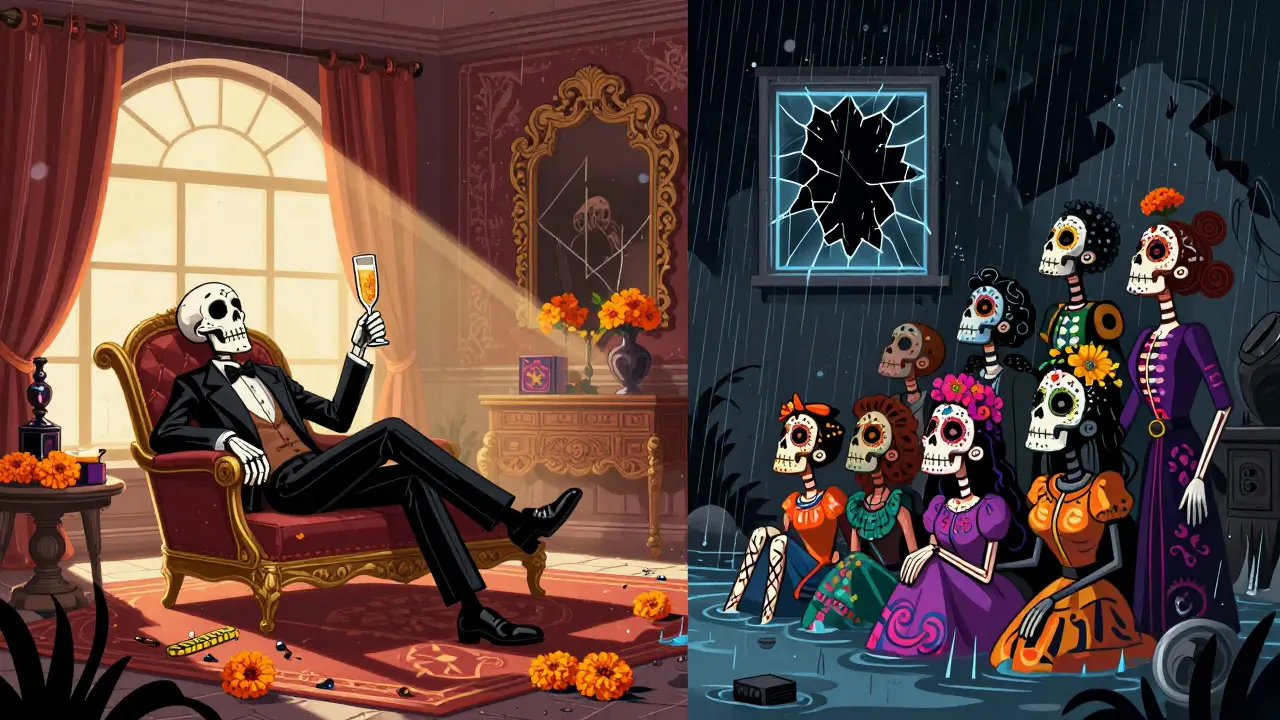
Ideology and Spectacle
Guy Debord’s concept of the "Society of the Spectacle" is vital here. He argued that in modern capitalist societies, social life is mediated by images. We don’t experience reality directly; we experience representations of it. Cinema is the ultimate spectacle.
Blockbusters create a sense of awe and immersion that can distract viewers from real-world issues. The sheer scale of visual effects, the adrenaline of action sequences, and the emotional manipulation of scores all serve to keep audiences engaged in a fantasy world. While this isn’t inherently bad, it can foster passivity. If you spend three hours marveling at CGI battles, you might be less inclined to engage with local politics or community organizing.
However, cinema can also break the spectacle. Italian neorealism in the 1940s and 50s offered a counter-example. Films like Bicycle Thieves used non-professional actors, shot on location, and focused on the daily struggles of ordinary people. They stripped away the gloss of studio production to reveal raw social truth. This approach influenced later movements, including the Direct Cinema of the 1960s and contemporary documentary practices.
Today, independent filmmakers continue this tradition. Low-budget productions often rely on authenticity over polish. By focusing on specific, localized experiences, they challenge the universalizing tendencies of mainstream cinema. They remind us that there are many realities, not just the one sold by global conglomerates.
Gender, Race, and Intersectionality
Traditional Marxist criticism has been criticized for focusing too narrowly on class, ignoring other axes of oppression. Feminist and Black Marxist theorists have expanded the framework to include intersectionality. Thinkers like bell hooks and Angela Davis have shown how race, gender, and class intersect to shape lived experiences.
In film, this means looking at how women and people of color are represented within class structures. For example, the trope of the "magical negro" or the subservient maid often intersects with class and racial stereotypes. These characters exist primarily to support white protagonists, reinforcing both racial hierarchies and class divisions.
Similarly, feminist Marxist critics examine the sexual division of labor. Domestic work, caregiving, and emotional labor are often unpaid or undervalued in capitalist economies. Films that ignore this contribution reinforce the idea that only paid, public work matters. Conversely, films like Wendy and Lucy (2008) highlight the precarious position of women in the gig economy, showing how lack of social safety nets disproportionately affects female-headed households.
An intersectional Marxist approach asks: How do systems of power overlap? Who bears the brunt of economic crises? And whose stories are told, and whose are silenced?

How to Apply Marxist Criticism Today
You don’t need a PhD in philosophy to use these tools. Here is a practical checklist for your next movie night:
- Identify the Protagonist’s Class: Is the main character wealthy, middle-class, or working-class? How does their class position drive the plot?
- Look for the Erasure of Labor: Are service workers invisible? Do characters eat food without acknowledging who prepared it? Is technology presented as magic rather than the result of engineering and manufacturing?
- Analyze the Resolution: Does the problem get solved through individual action, or does it require collective change? Does the ending restore the status quo, or does it propose an alternative?
- Examine the Setting: Is the environment realistic, or is it a stylized version that hides social decay? Are slums romanticized or demonized?
- Question the Message: What values does the film promote? Consumerism? Meritocracy? Conformity? Rebellion?
For instance, take a typical rom-com. The couple meets, faces obstacles (often miscommunication), and ends up together. Rarely do they discuss finances, career instability, or housing costs. The resolution implies that love conquers all, distracting from the material pressures that actually strain relationships. A Marxist reading reveals how this genre sells an idealized vision of intimacy that ignores economic reality.
Counter-Arguments and Limitations
No critical theory is perfect. Critics of Marxist film analysis argue that it can be reductive. Not every film is a political statement. Sometimes, a movie is just meant to entertain. Over-intellectualizing can strip art of its joy and emotional resonance.
Additionally, some argue that Marxist frameworks are outdated in post-industrial societies where service and knowledge work dominate. However, proponents counter that the fundamental dynamics of capital accumulation and inequality remain unchanged. The forms may shift-from factories to app-based gig work-but the core relationship between labor and capital persists.
Another limitation is the potential for cynicism. If everything is seen as ideological manipulation, nothing retains genuine meaning. The goal of Marxist criticism shouldn’t be to destroy enjoyment but to deepen it. By understanding the forces shaping the images we consume, we become more active, critical viewers rather than passive recipients.
Conclusion: Becoming a Critical Viewer
Marxist film criticism offers a powerful toolkit for decoding the visual culture around us. It invites us to look beyond the surface, to question the assumptions embedded in storytelling, and to recognize the economic forces that shape our entertainment.
In an age of algorithmic curation and concentrated media ownership, this awareness is essential. It empowers you to choose what you watch, to seek out diverse perspectives, and to demand better representation. Cinema has the power to reflect the world as it is, and to imagine what it could be. By applying a Marxist lens, you help ensure that the latter possibility remains alive.
So, the next time you sit down to watch a film, don’t just relax. Engage. Ask questions. Look for the cracks in the facade. You might just see something entirely new.
What is the main goal of Marxist film criticism?
The primary goal is to analyze how films reflect, reinforce, or challenge the economic and social structures of capitalism. It seeks to uncover hidden ideologies related to class, labor, and power dynamics that influence audience perceptions.
Can a film be both entertaining and critically Marxist?
Yes. Many films successfully blend entertainment with critical social commentary. Examples include Parasite, Mad Max: Fury Road, and Capitalism: A Love Story. The key is whether the film invites critical thinking while providing engaging narrative elements.
How does Marxist criticism differ from other film theories?
Unlike formalist approaches that focus on camera techniques or psychoanalytic theories that explore subconscious desires, Marxist criticism centers on material conditions, economic relations, and class struggle. It views art as part of the broader socio-economic context.
Why is the concept of 'commodity fetishism' important in film analysis?
Commodity fetishism explains how films often hide the labor behind products and services, presenting them as magical or self-existent. Recognizing this helps viewers understand how consumer culture is constructed and maintained through media.
Does Marxist criticism apply to streaming services like Netflix?
Absolutely. Streaming platforms are capitalist enterprises driven by data and profit. Analyzing their content strategies, algorithmic recommendations, and labor practices provides rich ground for Marxist critique regarding control, consumption, and inequality.