
Your Fire TV is a popular streaming media player developed by Amazon that allows users to stream video, music, and other content over the internet. It comes in various models including the Fire TV Stick 4K Max and the newer Fire TV Cube (3rd Generation). These devices typically offer between 8GB and 16GB of internal storage. Sounds like plenty until you start installing apps.
Here is the reality: once you add Netflix, Prime Video, Disney+, HBO Max, and a few niche apps for live sports or retro gaming, your device hits a wall. You get that dreaded "Storage Full" notification. Apps stop updating. The interface starts lagging. It feels like your living room tech has aged ten years overnight.
The good news? You are not stuck. While Fire TV does not let you just plug in a hard drive and magically double your space like a PC, there are specific workarounds involving USB drives are portable data storage devices that connect via Universal Serial Bus ports. When paired with smart app management habits, you can reclaim gigabytes of wasted space and keep your system running smoothly.
Understanding Fire TV Storage Limits
Before we dive into fixes, you need to know what you are fighting against. Most modern Fire TV sticks and cubes have non-expandable internal flash memory. Unlike an Android phone where you might use a microSD card, these devices rely entirely on their built-in NAND flash.
On an 8GB model, roughly 4GB to 5GB is reserved for the operating system (Fire OS is a custom Linux-based operating system derived from Android, developed specifically for Amazon's Fire TV devices). That leaves you with about 3GB to 4GB for actual user data. On the 16GB models, you might have around 10GB usable. It vanishes quickly.
Why does it fill up so fast? It is not just the apps themselves. It is the cached data. Every time you stream a movie, the device saves temporary files to load faster next time. Over weeks, this cache grows into a monster. A single high-definition stream can leave behind hundreds of megabytes of junk if not cleared regularly.
Can You Use a USB Drive on Fire TV?
This is the big question. The short answer is: yes, but with major caveats depending on your hardware.
If you own a Fire TV Cube is an advanced streaming media player with built-in Alexa voice control and HDMI passthrough capabilities, you have a real advantage. The Cube has dedicated USB-A ports. You can plug in a standard USB flash drive is a compact, portable storage device that connects to computers and compatible devices via USB ports. However, Fire OS does not automatically treat this as extra system storage for installing apps. Instead, it treats it as media storage.
You can store movies, photos, and music on the USB drive and play them using the built-in Photos app or third-party players like VLC. This helps if you want to move large local video files off your internal drive, freeing up space for apps. But you cannot simply install Netflix onto the USB stick.
For Fire TV Sticks, which lack native USB ports, you need a USB OTG adapter is a small cable or dongle that enables On-The-Go connectivity, allowing mobile devices to read external storage. This works, but power delivery is tricky. Many cheap adapters do not provide enough juice for both the stick and the drive. You will need a powered hub or a high-quality adapter designed specifically for low-power devices.
Step-by-Step: Using External Storage for Media
If your goal is to free up internal space by moving media files out, here is how to do it properly.
- Format the Drive: Connect your USB drive to your computer. Format it to FAT32 or exFAT. Fire TV supports these formats natively. NTFS often fails to mount without additional software.
- Transfer Files: Copy your MP4, MKV, or AVI files to the drive. Keep file names simple; special characters can sometimes cause recognition issues.
- Connect to Device: Plug the drive into the Fire TV Cube’s USB port or use an OTG adapter on a Stick. Wait 10 seconds for the system to recognize it.
- Access Content: Open the "Photos" app on your home screen. Navigate to the USB storage section. You should see your folders. Play a file to test compatibility.
This method is perfect for people who download TV shows or movies to watch offline. It keeps your internal drive clean for streaming apps that actually need to reside there.
Cleaning Up: The Real Way to Gain Space
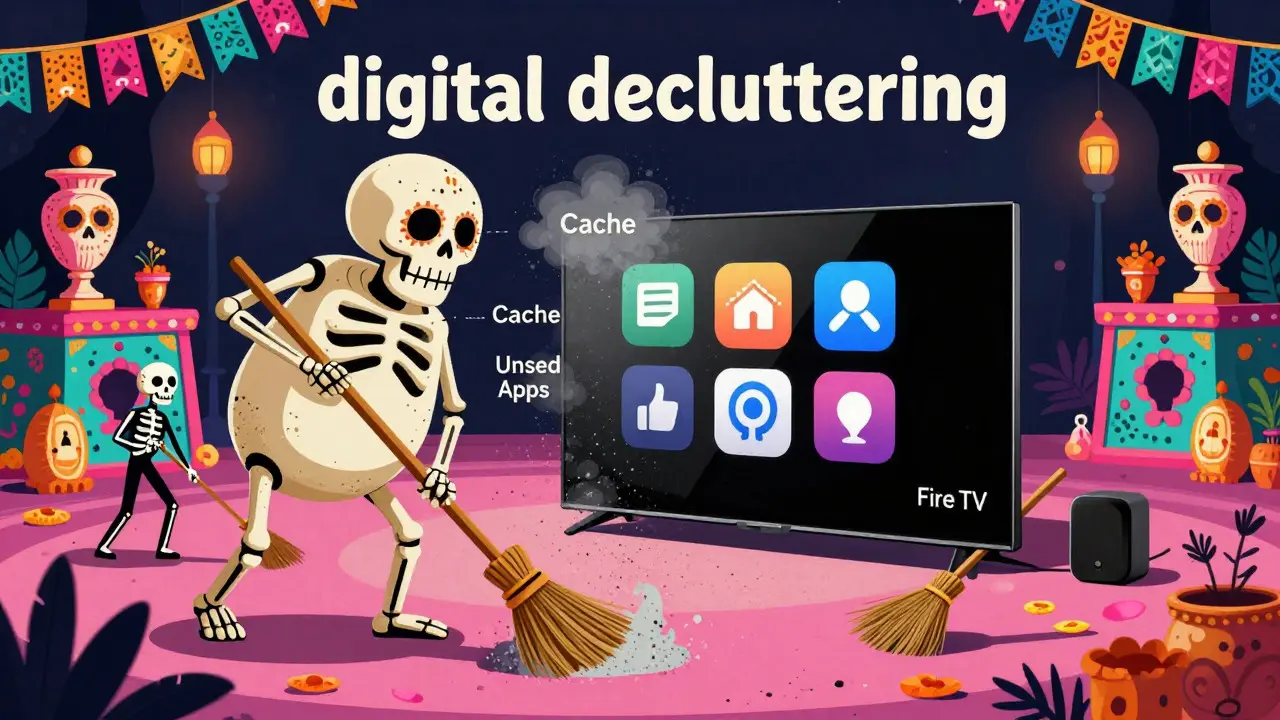
Since you cannot easily move apps to a USB drive, the most effective way to expand your usable capacity is aggressive cleanup. Think of it as digital decluttering.
Start with unused apps. Go to Settings > Applications > Manage Installed Applications. Scroll through the list. Do you really use that fitness tracker from six months ago? Uninstall it. Each uninstall frees up not just the app size, but also its residual data.
Next, tackle the cache. For each remaining app, select it and choose "Clear Cache." This deletes temporary files without logging you out. Do this for heavy hitters like YouTube, Netflix, and Prime Video. You might recover 500MB to 1GB instantly. Yes, you will experience slightly longer loading times the first time you open these apps after clearing, but the speed boost from having more free RAM is worth it.
Sideloaded Apps: The Hidden Space Hogs
Many enthusiasts love to sideload apps is the process of installing applications on a device from sources outside the official app store. Tools like Downloader make it easy to grab APKs for Kodi, Emulator Classic, or ad-free browsers. But these apps are often poorly optimized for Fire TV’s limited resources.
Kodi, for instance, is powerful but bloated. If you use it, ensure you are only installing the skins and add-ons you actually use. A default Kodi installation can take up to 1GB. Consider using lightweight alternatives like TiviMate for IPTV if your main goal is live channels. They consume significantly less storage and run smoother on constrained hardware.
Also, check for duplicate functionality. Do you have two different browser apps? Three different photo viewers? Pick one and delete the rest. Consolidation is key.
Comparison: Internal vs. External Storage Strategies
| Method | Space Recovered | Difficulty | Best For |
|---|---|---|---|
| Uninstalling Unused Apps | High (100MB - 2GB) | Easy | Quick immediate relief |
| Clearing App Cache | Medium (200MB - 800MB) | Easy | Maintenance every 2-4 weeks |
| USB Drive for Media | Variable (Depends on files moved) | Medium | Users with large local video libraries |
| Factory Reset | Maximum (Restores to near-full capacity) | Hard | Severe lag or corrupted systems |
When to Consider a Factory Reset
If you have cleaned apps, cleared caches, and removed sideloaded junk, but your Fire TV still feels sluggish or reports low storage, it might be time for a nuclear option: a factory reset.
A reset wipes everything back to the state it was in when you unboxed it. All your logins, preferences, and installed apps are gone. But it also removes hidden system bloat and fragmented data that accumulates over years of use.
To do this, go to Settings > My Fire TV > Reset to Factory Defaults. Confirm the action. Your device will restart and guide you through setup again. Reinstall only the essential apps. You will likely notice a significant performance improvement within the first week.
Future-Proofing Your Setup
As streaming quality moves toward 4K HDR and higher bitrates, storage demands will only increase. If you find yourself constantly battling space issues, consider upgrading your hardware. The Fire TV Cube (3rd Gen) offers 16GB of storage compared to the 8GB found in older sticks. That extra headroom makes a massive difference in longevity.
Alternatively, look at competitors like the NVIDIA Shield TV is a high-performance streaming media player known for its support of microSD cards and robust Android TV features. It supports external storage expansion via microSD cards, allowing you to install apps directly to the SD card. If storage flexibility is your top priority, this might be a better long-term investment than sticking with Amazon’s ecosystem.
Can I install apps directly onto a USB drive on Fire TV?
No, Fire OS does not currently support installing applications directly to external USB storage. Apps must remain on the internal flash memory. The USB drive is primarily used for storing and playing media files like videos and music.
Does clearing the cache delete my saved passwords or settings?
No. Clearing the cache only removes temporary files used to speed up loading times. Your login credentials, watchlists, and personal settings remain intact. You may need to re-enter your password once if the session token was stored in the cache, but generally, it is safe.
What is the best file format for a USB drive on Fire TV?
exFAT is the recommended format because it supports large files (over 4GB) and is widely compatible with Fire TV. FAT32 is also supported but has a 4GB file size limit, which is problematic for high-definition movies.
Will a factory reset void my warranty?
No. A factory reset is a standard software function provided by Amazon. It does not affect your hardware warranty. It simply restores the software to its original state.
How often should I clear app caches on my Fire TV?
It depends on usage. Heavy users who stream daily should clear caches every two to four weeks. Casual users might only need to do it once or twice a year. If you notice buffering or slow navigation, try clearing the cache immediately.