
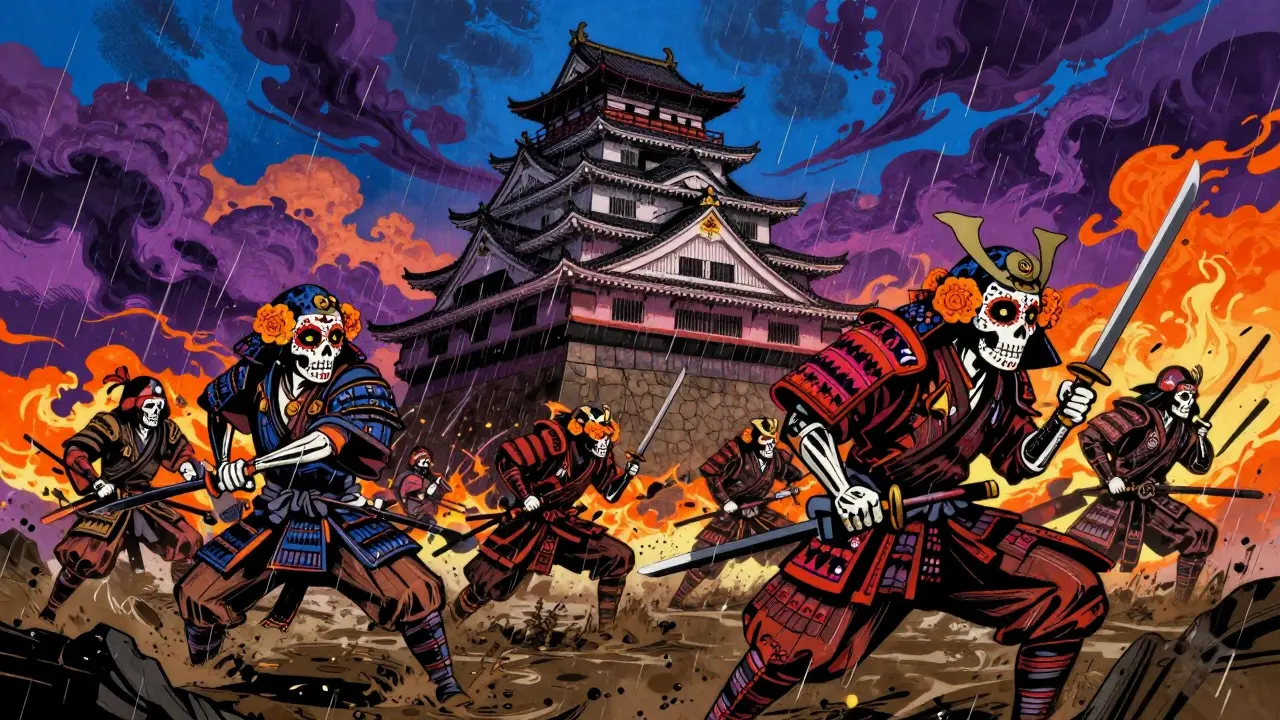
Watch Ran again. Not for the plot, not for the battle choreography, but for the sky. In the opening sequence of Akira Kurosawa’s final masterpiece, the clouds do not just drift; they bruise. They churn with a violence that mirrors the fracturing mind of Lord Hidetora. This is not background decoration. It is narrative.
If you are studying Akira Kurosawa, you cannot separate his visual language from his philosophical core. He did not make movies to tell stories in the traditional sense; he made them to explore how humans behave when stripped of comfort, control, and certainty. His work sits at the intersection of three powerful forces: kinetic movement, atmospheric weather, and profound humanism. Understanding these elements changes how you see every frame he ever shot.
The Kinetic Eye: Movement as Character
Kurosawa’s camera never rests. Even in scenes of stillness, there is a subtle push or pan that keeps the viewer’s eye engaged. This was not accidental. It was a deliberate rejection of the static theatrical staging common in early cinema. He wanted the audience to feel the energy of the scene, not just observe it.
Consider Seven Samurai. The famous rain-soaked village defense is a masterclass in controlled chaos. Kurosawa uses multiple cameras simultaneously-a technique he pioneered-to capture the action from different angles without losing continuity. The result is a visceral experience where you can feel the mud sucking at your boots and hear the rain hammering against armor. The movement isn’t just about showing what happens; it’s about making you feel the exhaustion and desperation of the characters.
- Multi-camera setups: Allowed for capturing complex action sequences with greater realism and less reliance on editing tricks.
- Deep focus cinematography: Kept foreground and background sharp, forcing viewers to choose where to look, mimicking real-life attention.
- Dynamic framing: Characters often enter and exit frames unpredictably, creating a sense of spontaneity and danger.
This approach influenced generations of filmmakers. George Lucas credited Kurosawa’s use of space and movement in The Hidden Fortress as a direct inspiration for the droid chase sequences in Star Wars. But while Lucas used movement for spectacle, Kurosawa used it for empathy. Every tracking shot serves the emotional state of the character being followed.
Weather as Narrative Engine
In Western cinema, weather is often treated as set dressing. Rain makes a scene moody; snow makes it romantic or harsh. For Kurosawa, weather was an active participant in the drama. It dictated pacing, revealed character, and even served as an antagonist.
Take Rashomon. The fog-shrouded forest is not just a location; it is a manifestation of moral ambiguity. As the story unfolds through conflicting testimonies, the environment reflects the confusion and lack of clarity. The sun breaks through only at the end, symbolizing a fragile hope for truth. This wasn’t poetic license-it was structural storytelling.
Kurosawa famously waited months for the right conditions to shoot key scenes. For High and Low, he delayed production until autumn because he needed the specific quality of light that comes with falling leaves. For Throne of Blood, the relentless mist and rain create a claustrophobic atmosphere that traps Washizu in his own guilt. The weather doesn’t just happen around the characters; it presses down on them.
| Film | Primary Weather Element | Narrative Function |
|---|---|---|
| Rashomon | Fog | Represents moral ambiguity and obscured truth |
| Seven Samurai | Heavy Rain | Intensifies conflict and physical struggle |
| Ran | Storms/Wind | Mirrors psychological breakdown and chaos |
| Yojimbo | Bright Sunlight | Highlights stark contrasts and moral clarity |
This attention to natural elements required immense patience and technical innovation. Kurosawa worked closely with cinematographer Kazuo Miyagawa to develop new lenses and lighting techniques that could capture the subtleties of changing weather. They didn’t just record reality; they shaped it to serve the story.
Humanism in the Face of Chaos
Beneath the sweeping landscapes and dynamic camera work lies a deeply humanistic philosophy. Kurosawa believed in the resilience of the human spirit, even when faced with overwhelming odds. His protagonists are rarely heroes in the traditional sense. They are flawed, uncertain, and often driven by personal motives rather than grand ideals.
In Ikiru, we follow Kanji Watanabe, a bureaucrat who discovers he has terminal cancer. Instead of succumbing to despair, he finds purpose in building a playground for children. The film is quiet, introspective, and profoundly moving. It asks a simple question: What does it mean to live? And it answers not with words, but with actions.
Even in his more violent films like Sanjuro, the focus remains on individual dignity. The samurai Sanjuro intervenes in a clan dispute not out of loyalty, but because he sees injustice. He acts not for glory, but because it is the right thing to do. This theme recurs throughout Kurosawa’s body of work-the idea that ordinary people can make extraordinary choices.
Hiroshi Teshigahara, another prominent Japanese director, once said that Kurosawa’s films were “about the struggle to maintain humanity in an inhumane world.” That statement captures the essence of his humanism. Whether it’s a farmer standing up to bandits or a doctor fighting for his patients, Kurosawa always centered his stories on the power of individual agency.
The Influence of Western Literature and Theater
Kurosawa was heavily influenced by Western literature, particularly the works of Shakespeare and Dostoevsky. Throne of Blood is an adaptation of Macbeth, transposed into feudal Japan. Ran draws from King Lear. These adaptations were not mere translations; they were reinterpretations that infused Western themes with Japanese aesthetics.
He also drew inspiration from American Westerns. Yojimbo, for instance, inspired Sergio Leone’s A Fistful of Dollars. But while Leone focused on style and myth, Kurosawa grounded his characters in social realism. The ronin in Yojimbo is not a cowboy archetype; he is a survivor navigating a corrupt system.
This cross-cultural dialogue enriched both traditions. Kurosawa showed that universal themes-betrayal, redemption, justice-could be expressed through any cultural lens. His ability to blend Eastern and Western influences created a unique cinematic language that resonated globally.
Legacy and Modern Relevance
Tony Scott, Christopher Nolan, Martin Scorsese-they all cite Kurosawa as a major influence. But beyond name-dropping, his techniques remain relevant today. In an era dominated by CGI and fast-paced editing, Kurosawa’s emphasis on practical effects, natural lighting, and thoughtful composition offers a counterpoint to modern excess.
His commitment to authenticity is especially valuable. He insisted on using real locations, real animals, and real weather whenever possible. This dedication to tangible reality gives his films a weight and presence that digital simulations often lack. When you watch Dreams, you believe you are seeing actual fire, actual water, actual dreams.
Moreover, his humanistic perspective feels increasingly urgent. In a world marked by polarization and alienation, Kurosawa’s reminder that individuals matter-that small acts of courage and kindness can ripple outward-is more important than ever. His films challenge us to confront our own complicity in systems of oppression and to seek meaning in everyday life.

Practical Takeaways for Filmmakers
If you’re looking to apply Kurosawa’s lessons to your own work, start with these principles:
- Use environment actively: Don’t let settings sit passively. Let them reflect internal states or drive external conflict.
- Embrace imperfection: Realism adds depth. Allow for messy details, unexpected moments, and raw emotion.
- Focus on character over plot: Stories stick when audiences care about the people involved. Build relationships before conflicts.
- Experiment with movement: Try shooting handheld or using long takes to immerse viewers in the moment.
- Draw from diverse sources: Read widely, watch broadly, and synthesize ideas across cultures and disciplines.
These aren’t rules-they’re invitations. Kurosawa didn’t follow formulas; he broke them. He trusted his instincts and pushed boundaries. That’s the true lesson of his career: creativity thrives when you dare to question convention.
Final Thoughts
Akira Kurosawa wasn’t just a director; he was a thinker, a poet, and a philosopher who happened to wield a camera. His films endure because they speak to something fundamental about the human condition. They remind us that beauty exists alongside brutality, that hope persists despite despair, and that every person has the capacity to shape their destiny.
As you revisit his work, pay attention to the spaces between the dialogue, the shifts in light, the way bodies move through space. These are the details that reveal his genius. And perhaps, if you listen closely enough, you’ll hear his voice whispering: Keep going. Stay curious. Make something meaningful.
What makes Akira Kurosawa’s use of weather unique?
Unlike most directors who treat weather as background, Kurosawa integrated it into the narrative structure. Weather in his films reflects character emotions, drives plot developments, and creates tension. For example, the fog in Rashomon symbolizes moral confusion, while the storms in Ran mirror psychological collapse.
How did Kurosawa influence modern filmmaking?
Kurosawa’s innovative techniques, such as multi-camera setups and deep focus cinematography, revolutionized action sequencing and visual storytelling. Directors like George Lucas, Martin Scorsese, and Christopher Nolan have cited him as a key influence, adopting his emphasis on dynamic movement and emotional authenticity.
Why is humanism central to Kurosawa’s work?
Kurosawa believed in the resilience of the human spirit. His films often feature ordinary individuals facing extraordinary challenges, highlighting themes of dignity, choice, and responsibility. Through characters like Kanji Watanabe in Ikiru, he explores what it means to live meaningfully despite adversity.
Which Kurosawa films best showcase his mastery of movement?
Seven Samurai and The Hidden Fortress are prime examples. Seven Samurai uses fluid camera movements during battle scenes to convey urgency and chaos, while The Hidden Fortress employs tracking shots to guide viewers through expansive landscapes, influencing later blockbusters like Star Wars.
Did Kurosawa adapt Western literature into his films?
Yes, several of his notable works draw from Western classics. Throne of Blood adapts Macbeth, setting it in feudal Japan, while Ran reimagines King Lear. These adaptations retain the original themes but infuse them with Japanese cultural elements, demonstrating Kurosawa’s ability to bridge cultures through cinema.
What role did collaboration play in Kurosawa’s success?
Collaboration was crucial. Kurosawa frequently worked with the same team, including cinematographer Kazuo Miyagawa and actor Toshirō Mifune. This consistency allowed for deeper creative synergy, enabling them to refine techniques and achieve higher artistic standards over time.
How can aspiring filmmakers learn from Kurosawa’s methods?
Aspiring filmmakers can study Kurosawa’s attention to detail, particularly his use of natural environments and practical effects. Emphasizing character development over plot mechanics, experimenting with camera movement, and drawing inspiration from diverse cultural sources are all valuable lessons derived from his approach.
Is Kurosawa’s work still relevant today?
Absolutely. His focus on humanism, environmental storytelling, and technical innovation continues to resonate. In an age dominated by digital effects, Kurosawa’s insistence on authenticity and emotional truth provides a refreshing alternative, reminding audiences of the power of genuine connection in cinema.
What distinguishes Kurosawa’s style from other Japanese directors?
While many Japanese directors excel in subtlety and minimalism, Kurosawa combined those traits with bold visuals and dramatic intensity. His willingness to experiment with form and content, along with his global appeal, sets him apart. He bridged East and West, creating a universal language accessible to international audiences.
Where can I find high-quality resources to study Kurosawa’s films?
Start with Criterion Collection releases, which offer restored versions accompanied by scholarly commentary. Books like "Akira Kurosawa: Master of the Moving Image" by Peter Cowie provide insightful analysis. Additionally, university courses on world cinema often dedicate modules to Kurosawa’s contributions.