Key Takeaways for Visual Writing
- Focus on the physical distance between the camera and the subject.
- Describe the movement of the camera (pans, tilts, dollies) to create energy.
- Identify the specific type of edit (cuts, fades, matches) to explain the pacing.
- Use active verbs to connect the visual choice to the emotional impact.
- Avoid generic words like "beautiful" or "stunning" in favor of technical specifics.
Mastering the Frame: Describing Shot Sizes
Before you worry about how the camera moves, you have to define what is in the frame. In cinematography is the art of photography and camerawork in filmmaking, the distance from the subject dictates the emotional intimacy of the scene.
When you're writing, don't just say a shot is "close." Be specific. An Extreme Close-Up is a shot that zooms in on a specific detail, like a twitching eye or a ticking watch. This is your go-to tool for describing tension or obsession. If a character is feeling isolated in a vast landscape, you aren't looking at a "far away shot"; you're looking at a Wide Shot, which captures the entire subject in relation to their environment. Using these terms tells the reader exactly how much of the world the director wants us to see.
Think about a scene in a thriller where a character realizes they are being followed. Instead of saying "the scene felt scary," describe how the camera pulls back from a Medium Shot (waist-up) to a Wide Shot, revealing the predator lurking in the background. This creates a concrete image of vulnerability that any reader can visualize.
Adding Motion: How to Describe Camera Movement
Static shots are great, but movies are defined by movement. If you describe a camera as "moving," you're wasting an opportunity to describe the *mood*. Different movements convey different psychological states.
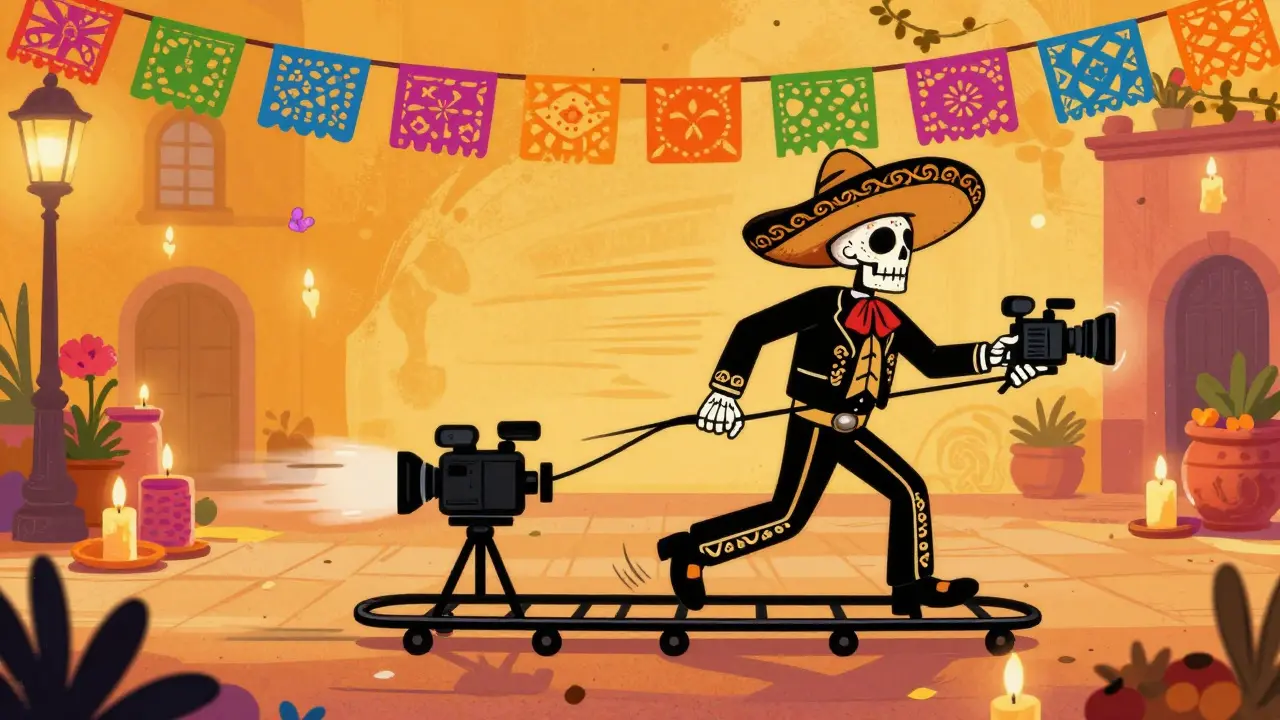
If the camera rotates on a fixed axis to follow a character walking across a room, that's a Pan. If it tilts up from the floor to a character's face, that's a Tilt. But when you want to describe a feeling of inevitable momentum, use the Dolly Shot, which involves the camera physically moving through space on a track or wheels. A "dolly-in" creates a feeling of growing intensity, while a "dolly-out" can leave a character looking lonely and small.
Then there is the Handheld Camera style. When you describe a scene as having a "shaky" or "documentary-style" feel, you're talking about handheld work. This is perfect for describing chaos, panic, or raw realism. Contrast this with a Steadicam shot-where the camera glides effortlessly through a hallway-to describe a feeling of grace, power, or a dream-like state.
| Movement Type | What it looks like | Emotional Value |
|---|---|---|
| Pan / Tilt | Rotating on a pivot | Observation, scanning, curiosity |
| Dolly / Tracking | Moving forward or alongside | Determination, discovery, intimacy |
| Handheld | Unstable, organic shaking | Anxiety, urgency, authenticity |
| Zoom | Lens focal length change | Shock, sudden realization, focus |
The Rhythm of the Cut: Describing Edits
The magic of cinema doesn't just happen in the camera; it happens in the Editing process, which is the manipulation of footage to create a cohesive story. If a movie feels "fast-paced," it's usually because of the Cut-the most basic transition from one shot to another.
When a director uses a Jump Cut, they are intentionally removing small chunks of time from a continuous shot. This makes the action feel jerky and fragmented. If you're reviewing a character's mental breakdown, describing the "aggressive jump cuts" tells the reader the character's mind is fracturing.
For a smoother, more artistic transition, look for the Match Cut, where two different scenes are joined by a similar shape or movement. A famous example is a bone being thrown into the air and cutting to a spacecraft in *2001: A Space Odyssey*. Describing a match cut shows you understand how the filmmaker is linking two disparate ideas visually.
Don't forget the Cross-Cutting (or Parallel Editing). This is when the editor toggles between two events happening at the same time in different locations. When you describe a scene as "intercutting between the ticking bomb and the hero racing through traffic," you are highlighting the building tension through the structure of the edit.
Combining Visuals with Narrative Impact
The biggest mistake writers make is describing a shot and then stopping. A technical description without a purpose is just a list. To make your writing professional, you must connect the visual storytelling technique to the story's meaning.
Instead of saying: "The director uses a low-angle shot of the villain," try: "By employing a low-angle shot, the director makes the villain tower over the protagonist, visually establishing their dominance before a word is even spoken."
Notice the difference? You've moved from stating a fact to analyzing a choice. You can apply this to any visual element. If the color palette is suddenly desaturated (gray and washed out), don't just say "the colors were dull." Say, "the desaturated palette reflects the protagonist's growing depression and loss of hope." This is how you bridge the gap between a technical manual and a compelling review.

Common Pitfalls to Avoid
Avoid the "adjective trap." Words like "stunning," "breathtaking," or "incredible" are useless to a reader because they are subjective. What is stunning to you might be boring to someone else. Instead, describe *why* it was stunning. Was it the symmetry of the frame? The unexpected use of a wide-angle lens in a claustrophobic room? The way the lighting created a sharp contrast between shadow and light (known as Chiaroscuro)?
Also, be careful with the term "Zoom." A lot of people use "zoom" to describe any camera movement that gets closer to a subject. But a zoom is a lens change, while a dolly is a physical move. A zoom often feels artificial or voyeuristic, whereas a dolly feels like the viewer is physically entering the scene. Distinguishing between the two shows you have a keen eye for detail.
What is the difference between a Pan and a Tilt?
A pan is a horizontal movement where the camera rotates left or right from a fixed point, similar to how you shake your head "no." A tilt is a vertical movement where the camera rotates up or down, like nodding your head "yes." Both happen without the camera actually changing its location in the room.
How do I describe a scene that feels "fast" without just saying "fast editing"?
Focus on the duration of the shots. You can describe "rapid-fire cuts," "short average shot lengths," or "aggressive jump cuts." Mentioning that the scenes are "intercut" or that the film utilizes "montage sequencing" also gives the reader a clearer idea of how the speed is achieved.
What does "low angle" actually communicate in a movie?
A low-angle shot, where the camera looks up at the subject, typically makes that person seem more powerful, heroic, or intimidating. It physically places the viewer in a position of submission, which is why it's often used for villains or leaders.
How should I describe a "long take"?
A long take (or sequence shot) is a scene filmed in one continuous shot without any cuts. Describe it as a "uninterrupted flow" or a "singular, sweeping camera movement." Mention how this removes the safety of the edit and makes the action feel more immediate and real.
What is a "Point of View" (POV) shot?
A POV shot shows the audience exactly what the character is seeing. The camera becomes the character's eyes. When describing this, mention how it forces the viewer to experience the scene through the character's specific perspective, increasing empathy or suspense.
Next Steps for Improving Your Visual Descriptions
If you're still feeling rusty, start with a "mute exercise." Watch a five-minute clip of a movie with the sound off. Try to write down every camera movement and edit you see. Because you can't rely on the dialogue or music to tell you the mood, you'll be forced to notice the technical choices the director made.
For those reviewing action movies, focus on the "kinetic energy" of the edits. Look for how the camera follows the action (tracking shots) versus how it reacts to the action (quick cuts). For dramas, focus on the intimacy of the shot sizes-how often does the camera move from a medium shot to a close-up to signal an emotional shift?
The goal isn't to write a technical manual, but to provide a roadmap for the reader. When you combine the right terminology with a clear explanation of the emotional impact, your reviews will stop being simple opinions and start becoming professional analyses.