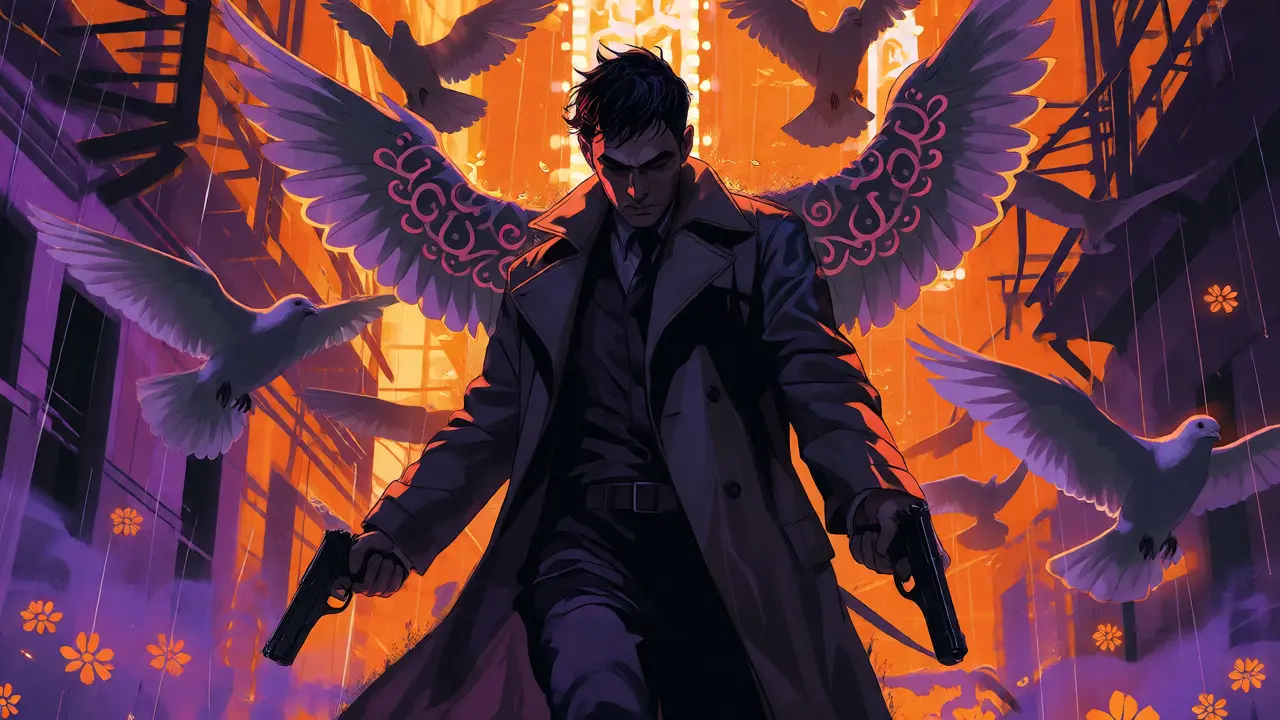
You know that feeling when you watch a movie and think, "How did they do that?" If your answer involves slow-motion doves, dual-wielding pistols, and gravity-defying stunts, you’re looking at Hong Kong Action Cinema. It’s not just a genre; it’s a visual language that rewired how the world sees movement. From the blood-soaked operas of John Woo to the sleek, digital-enhanced chaos of modern blockbusters, this style has dominated screens for decades.
Why does it matter today? Because every time you see Neo dodge bullets in The Matrix or John Wick slide across a floor while shooting, you’re watching the DNA of Hong Kong cinema. But where did it start? How did a local film industry become a global powerhouse? And what should you actually watch if you want to understand the evolution from raw kung fu to high-tech gun-fu? Let’s break it down without the academic jargon.
The Golden Age: Bloodshed and Ballet
To understand modern action, you have to go back to the late 1980s. Before this era, action movies were often about tough guys punching each other until one fell down. Then came John Woo. He didn’t just make movies; he created a mythology. His 1986 film A Better Tomorrow wasn’t just popular; it changed the template for heroism. It introduced the concept of "brotherhood" as a central theme, wrapped in stylish violence.
Woo’s signature was unmistakable. He used slow motion not to drag out scenes, but to emphasize the emotional weight of a decision. A character doesn’t just shoot; they hesitate, regret, and then act. The doves flying around aren’t random; they’re symbols of peace amidst chaos. This period, roughly 1986 to 1995, is known as the Golden Age. Directors like Ringo Lam (City on Fire) and Tsui Hark (Zu Warriors) pushed boundaries too, but Woo defined the aesthetic.
If you’ve only seen Hollywood remakes, you’re missing the source code. The original A Better Tomorrow has a raw energy that polished American versions lack. The actors weren’t doing CGI; they were doing practical stunts with real risks. That danger translates to the screen. You feel the stakes because the performers are actually putting their bodies on the line.
The Rise of Gun-Fu: When Guns Met Kung Fu
By the mid-1990s, audiences grew tired of standard gangster dramas. They wanted more speed, more precision, and more creativity. Enter Gun-Fu. This subgenre blends traditional martial arts choreography with firearms usage. Think of it as ballet with bullets. The pioneer here is arguably Johnnie To, but the style exploded globally thanks to The Matrix directors, who openly admitted their debt to Hong Kong filmmakers.
Key characteristics of gun-fu include:
- Precision Shooting: Characters don’t spray and pray. Each shot is calculated, often hitting multiple targets in a single fluid motion.
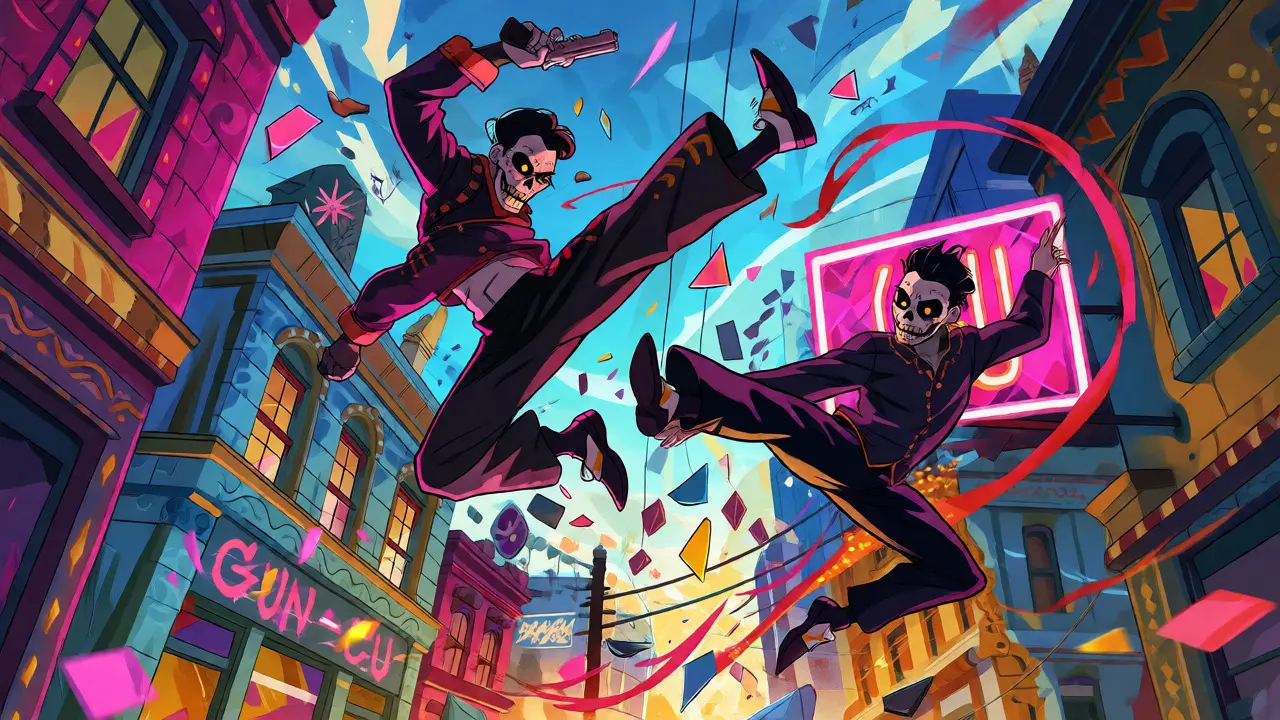
- Acrobatic Reloads: Reloading becomes part of the dance. Sliding under tables, spinning mid-air, and firing while inverted.
- Environmental Interaction: Walls shatter, glass explodes, and neon signs flicker in sync with gunfire.
Watch Hard Boiled (1992). The final hospital shootout is a masterclass. Chow Yun-fat moves through corridors like water, never stopping, never missing. There’s no shaky cam hiding poor choreography. Every frame is composed. This clarity is what separates classic HK action from many modern Western equivalents, which often rely on editing tricks to fake intensity.
The Stars Who Built the Genre
You can’t talk about this cinema without talking about its faces. These actors became global icons because they brought charisma and physical skill to roles that were previously one-dimensional.
| Actor | Signature Style | Must-Watch Film | Global Impact |
|---|---|---|---|
| Chow Yun-fat | Cool, stoic elegance mixed with explosive violence. | The Killer (1989) | Influenced Hollywood leads like Keanu Reeves and Ryan Gosling. |
| Jackie Chan | Improvisational comedy using everyday objects as weapons. | Police Story (1985) | Bridged East-West appeal; proved action could be funny. |
| Jet Li | Traditional Wushu forms executed with athletic perfection. | Fist of Legend (1994) | Revitalized interest in pure martial arts during the 90s. |
| Michelle Yeoh | Graceful yet brutal combat skills combined with dramatic depth. | Yes, Madam (1985) | Paved the way for female-led action franchises. |
Notice the diversity in styles. Jackie Chan isn’t trying to look cool; he’s trying to survive. Jet Li isn’t improvising; he’s demonstrating mastery. This variety kept the genre fresh. Audiences could switch between a gritty crime thriller and a slapstick adventure without leaving the same cinematic universe.
Modern Evolution: Digital Chaos and New Heroes
The early 2000s saw a decline in output due to market saturation and shifting interests. But it wasn’t dead. It evolved. With the rise of digital effects, filmmakers found new ways to push physics. Initial D (2005) used cars as weapons. SPL: Sha Po Lang (2005) brought a darker, more psychological tone to police procedurals.
Today, the torch is carried by directors like Wilson Yip. His Ip Man series (2008-2019) revived interest in Wing Chun kung fu. Unlike the wire-heavy fantasies of the 90s, these films focus on grounded, fast-paced hand-to-hand combat. Donnie Yen’s portrayal of Ip Man is less about acrobatics and more about efficiency. Every punch has a purpose.
Another key trend is collaboration. Recent hits like Raging Fire (2021) feature international co-productions. While some purists argue this dilutes the local flavor, others see it as necessary survival. The core identity remains: respect for tradition, emphasis on physical performance, and a willingness to take creative risks.
Where to Start: A Beginner’s Watchlist
Feeling overwhelmed? Here’s a curated path to get you started. Don’t try to watch everything. Pick one lane based on your mood.
- For Pure Adrenaline: Start with Hard Boiled. It’s violent, stylish, and features one of the best endings in cinema history.
- For Emotional Depth: Watch The Killer. It’s tragic, beautiful, and defines the "heroic bloodshed" subgenre.
- For Comedy & Stunts: Go with Police Story. Jackie Chan breaks bones so you don’t have to. The mall scene alone is worth the ticket price.
- For Modern Context: Try Ip Man. It connects historical tradition with modern storytelling techniques.
Pro tip: Avoid dubbed versions if possible. The Cantonese audio carries nuances that translations miss. Subtitles are your friend. Also, pay attention to the sound design. The crack of a pistol, the thud of a body-these sounds are mixed deliberately to enhance impact.
Common Misconceptions About HK Action
People often dismiss these films as "cartoonish." Sure, characters jump higher than humanly possible. But that’s the point. It’s heightened reality. In Hollywood, realism often limits spectacle. In Hong Kong, emotion drives the action. If a character is angry, the camera shakes. If they’re sad, the colors desaturate. It’s expressive, not lazy.
Another myth: "It’s all kung fu." Wrong. By the 1990s, guns were dominant. Martial arts blended into police work and gang warfare. The distinction between fighter and shooter blurred. Understanding this hybrid nature helps you appreciate films like Runaway Blues or Cyber Weapon Z.
What exactly is "Heroic Bloodshed"?
Heroic Bloodshed is a subgenre pioneered by John Woo in the late 1980s. It focuses on morally ambiguous anti-heroes, intense brotherhood themes, and highly stylized, balletic gunfights. Key elements include slow-motion deaths, doves, and religious imagery juxtaposed with extreme violence.
Why did Hong Kong cinema decline in the 2000s?
Several factors contributed: the Asian financial crisis reduced funding, talent migrated to Hollywood, and piracy skyrocketed. Additionally, audiences grew fatigued with formulaic sequels. However, the industry adapted by focusing on lower-budget, high-concept films and eventually rebounded with hits like the Ip Man series.
Is Jackie Chan better than Jet Li?
They serve different purposes. Jackie Chan emphasizes stunt comedy and environmental interaction, making him accessible to global families. Jet Li showcases pure Wushu technique and traditional forms, appealing to martial arts enthusiasts. Neither is "better"; they represent different philosophies of action filmmaking.
Do I need to know Cantonese to enjoy these films?
No, but subtitles are recommended over dubbing. Dubbed versions often lose cultural context and humor. The visual storytelling is universal, but hearing the original voice acting adds authenticity to the performances.
Which streaming services carry Hong Kong classics?
Availability varies by region, but platforms like Netflix, Amazon Prime Video, and specialized services like MUBI often host restored classics. Shout! Factory and Arrow Video also release high-quality Blu-rays for collectors seeking definitive editions.
Next Steps: Deepening Your Appreciation
You’ve got the basics. Now, branch out. Explore the works of Tsui Hark for fantasy elements or Dante Lam for modern military action. Read interviews with directors to understand their constraints. Budget limitations often sparked creativity-when you can’t afford a helicopter, you find a cooler way to use a crane.
Remember, this genre isn’t just about explosions. It’s about resilience. Hong Kong filmmakers worked under tight deadlines and low budgets, yet produced art that influenced the entire world. Next time you watch an action movie, ask yourself: Is this respectful of the craft? Or is it just noise? If it’s noise, go back to the source. Put on A Better Tomorrow, pour a drink, and let the doves fly.