
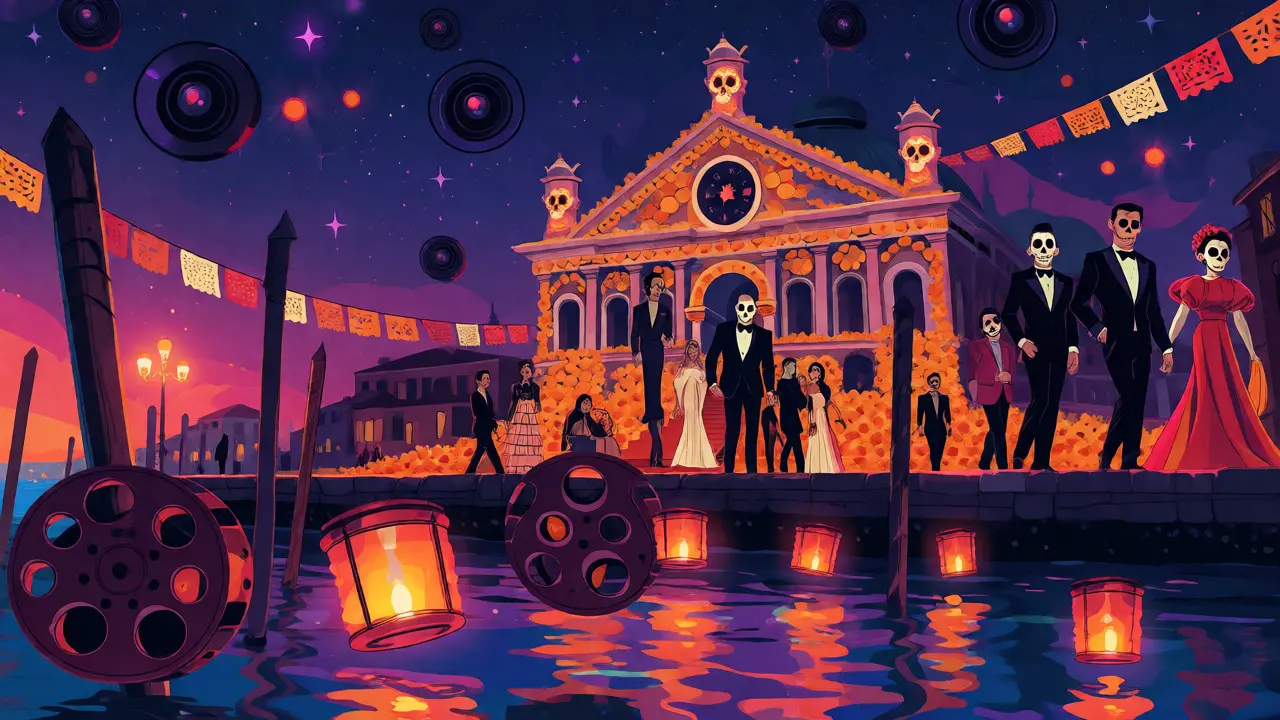
You know that feeling when you’re sitting in a dark theater, the lights dim, and suddenly the world outside ceases to exist? That’s what happens every late August on the Venice Film Festival is an annual film festival held in Venice, Italy. It is the oldest film festival in the world, having started in 1932. Organized by La Biennale di Venezia, it serves as the official launchpad for the global awards season.. But here’s the kicker: while Cannes gets the glamour and Toronto gets the buzz, Venice is where the serious contenders actually start their race toward Oscar gold. If you’re trying to figure out which movies will dominate your feed next year, this is the place to look. You don’t need a press pass to understand why this event matters; you just need to know how to read the room.
| Feature | Detail |
|---|---|
| Founded | 1932 (La Biennale di Venezia) |
| Top Prize | Golden Lion |
| Location | Lido di Venezia, Italy |
| Awards Season Role | Official Kickoff |
| Notable Past Winners | Roma, Joker, Nomadland |
Why Venice Beats Cannes For Oscars
Let’s be real for a second. People obsess over Cannes like it’s the Super Bowl of cinema. And sure, the Palme d’Or is prestigious. But if you look at the last decade of Best Picture nominees, a pattern emerges. Films that premiere in Venice have a statistically higher chance of making it to the Academy Awards than those that debut elsewhere. Why? Timing. Venice ends in early September. This gives distributors exactly three months to campaign before the voting window closes. It’s not magic; it’s strategy.
Think about Joker was a psychological thriller directed by Todd Phillips. It won the Golden Lion in 2019 and went on to win two Academy Awards, including Best Actor for Joaquin Phoenix.. Nobody expected a comic book movie to sweep the major categories. But because it premiered in Venice and generated massive word-of-mouth there, Warner Bros. had time to pivot its marketing from "blockbuster" to "prestige drama." Compare that to a film premiering at Sundance in January. By the time October rolls around, audiences have forgotten the title. Venice keeps the heat alive right when voters are starting to pay attention.
The Geography Of Prestige: Navigating The Lido
If you’ve ever tried to navigate Venice proper, you know it’s a maze. But the festival doesn’t happen in the main city islands. It takes place on the Lido di Venezia is a barrier island in the Venetian Lagoon. It is the physical location of the Venice Film Festival screenings and events., a narrow strip of land separated from the historic center by water. This distinction matters. The Lido is long, flat, and lined with hotels that have hosted celebrities since the 1950s. You aren’t getting lost in canals here; you’re walking along the Lungomare Marconi, hoping to spot a director stepping out of a black sedan.
The central hub is the Palazzo del Cinema. It’s a brutalist concrete structure that looks like it belongs in a sci-fi movie, but inside, it’s the beating heart of the event. The Sala Grande, the main auditorium, seats over 1,400 people. When the jury announces the winners here, the applause echoes off walls that have witnessed history. If you’re attending, your first job is to map out the venues. They aren’t all within walking distance. The Lido is about 11 kilometers long. While some screenings are close together, others require a vaporetto ride or a bike. Plan your route based on the films you want to see, not just the ones with red carpets.

Decoding The Competition Categories
Most people think there’s just one competition. Wrong. There are several sections, each serving a different purpose. Understanding them helps you predict which films are actual contenders versus which are just crowd-pleasers.
- Main Competition: This is where the Golden Lion is awarded to the best feature film. It also includes the Silver Lion for Best Director and the Volpi Cup for Best Actor and Actress. goes to the winner. These are usually auteur-driven dramas or high-stakes thrillers. If a film is here, it’s aiming for top-tier awards.
- Out of Competition: Big Hollywood blockbusters often land here. Think Marvel movies or star-driven dramas that don’t fit the "art house" mold but still want visibility. Winning isn’t the goal; buzz is.
- Horizons (Orizzonti): This section focuses on new trends and experimental works. It’s a great place to discover future stars before they blow up. The prize here is less about Oscars and more about critical credibility.
- Venice Classics: Restored masterpieces and documentaries about filmmakers. If you love film history, this is your lane.
Here’s a pro tip: watch the lineup announcements closely. If a studio submits a big-budget star vehicle to Main Competition, they’re playing hardball. If they put it in Out of Competition, they’re testing the waters. In 2024, we saw this dynamic play out clearly. Studios are increasingly using Venice to validate their prestige plays before releasing them in December.
The Jury Effect: Who Decides?
The composition of the jury changes every year, and it swings the results wildly. One year, you might get a jury led by a strict formalist director who hates handheld cameras. The next year, you might get a panel of actors who prioritize emotional resonance over technical perfection. This unpredictability is part of the charm, but it’s also a risk for studios.
Consider the 2023 jury, led by Julia Roberts. As an actor herself, she likely valued performance-heavy scripts. Films that showcased strong acting chops had an advantage. Contrast that with a jury led by a documentary filmmaker, who might prefer raw, unpolished storytelling. If you’re analyzing the potential winners, look at the jury president’s body of work. Do they favor quiet character studies or loud social commentaries? This heuristic has held true for years. It’s not foolproof, but it beats guessing blindly.

Surviving The Experience: Practical Tips
Attending the Venice Film Festival is not like going to a local multiplex. It’s a logistical challenge wrapped in humidity. The weather in late August in Italy is hot and sticky. You’ll be standing in lines for hours. Bring water. Bring sunscreen. And bring patience.
Ticket sales open online weeks in advance, but they sell out instantly for popular screenings. If you miss out, don’t panic. Many attendees buy tickets day-of for smaller venues. Also, keep an eye on the "Cinema nel Giardino" screenings. These are outdoor showings that feel more relaxed and often feature interesting indie films.
Another thing to note: the vibe is intense. Unlike Toronto, which feels like a giant party, Venice feels like a business meeting with a view. Industry professionals are everywhere. You’ll hear conversations about distribution deals happening in real-time on the beach. If you’re there for networking, dress slightly better than you think you need to. Italians take appearance seriously. A blazer goes a long way, even in 30-degree heat.
What Happens After The Lights Go Down?
The festival ends, but the conversation doesn’t. The immediate aftermath is crucial. Winners announce their release dates within days. Distributors scramble to secure North American rights. This is when the real work begins. If a film wins the Golden Lion, expect it to be front-and-center during the fall festival circuit-Telluride, Toronto, New York.
But here’s the reality check: not every winner becomes a box office hit. Some films are too niche. Others get overshadowed by later releases. The key indicator of success isn’t just winning the award; it’s whether the film sustains momentum through the winter. Look for films that generate consistent reviews across multiple festivals. That’s your sign they have staying power.
Ultimately, the Venice Film Festival is more than just a celebration of cinema. It’s a strategic battlefield. It sets the narrative for the year. Whether you’re a casual viewer looking for recommendations or an industry insider tracking trends, paying attention to what happens on the Lido gives you a head start. You’ll know which stories matter before anyone else does.
When does the Venice Film Festival take place?
The festival typically runs for eleven days in late August and early September. For example, recent editions have spanned from late August to the first week of September. Exact dates vary slightly each year, so always check the official La Biennale website for the current schedule.
Can I buy tickets as a regular person?
Yes, public tickets are available, though they sell out quickly for high-profile screenings. Tickets can be purchased online through the festival's official ticketing platform. Prices vary depending on the venue and time slot, but generally range from €8 to €25 for standard screenings.
Is the Golden Lion the same as the Oscar?
No, they are distinct awards. The Golden Lion is the highest prize awarded at the Venice Film Festival, given by the festival jury. The Oscar (Academy Award) is voted on by members of the Academy of Motion Picture Arts and Sciences. However, winning the Golden Lion often boosts a film's chances of being nominated for an Oscar.
How far is the Lido from Venice city center?
The Lido is accessible via vaporetto (water bus) from various points in Venice, such as Piazza San Marco or Piazzale Roma. The journey takes approximately 15 to 30 minutes depending on your departure point and stops. It is a separate island, not connected by road to the main historic center.
Do Hollywood stars attend the Venice Film Festival?
Yes, attendance has increased significantly in recent years. Major studios send their A-list talent to promote films in the Main Competition and Out of Competition sections. Stars like Brad Pitt, Lady Gaga, and Cate Blanchett have attended in recent editions, generating significant media coverage.