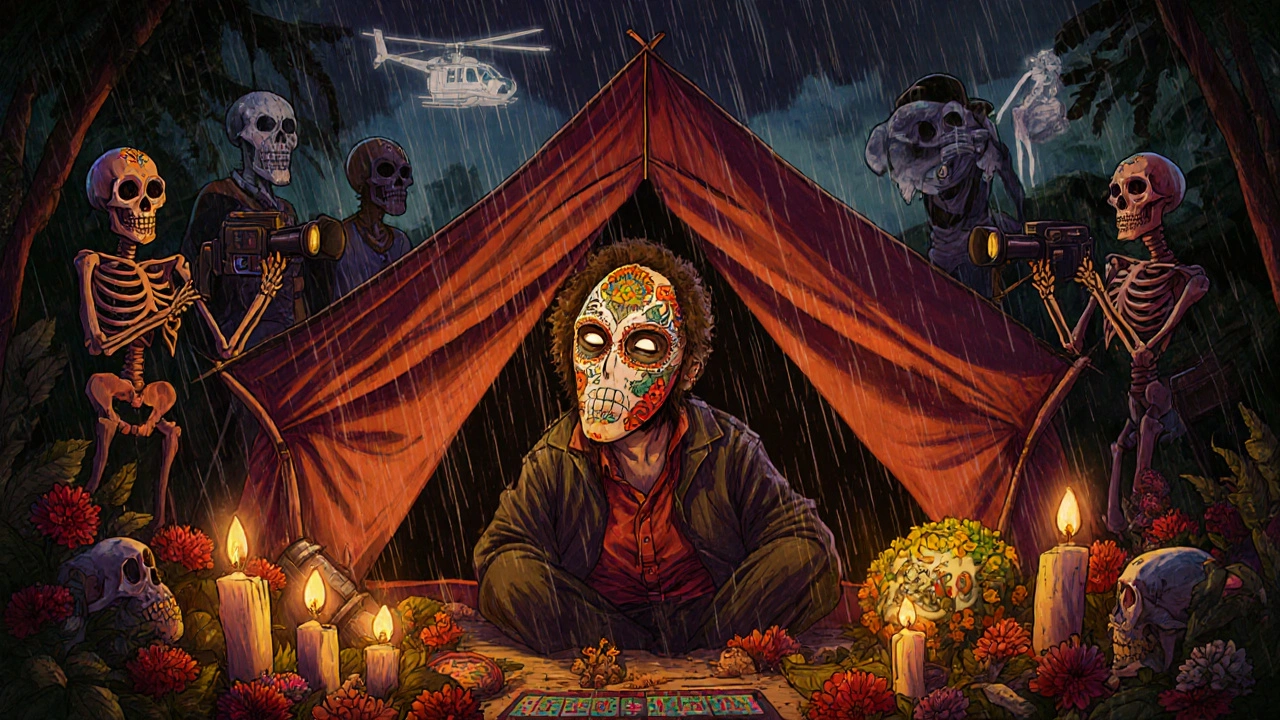
When you think of Apocalypse Now, a 1979 epic war film directed by Francis Ford Coppola that redefined cinematic rebellion through its chaotic portrayal of the Vietnam War. Also known as the ultimate anti-war film, it doesn’t just show war—it dissolves into it, leaving you breathless, unsettled, and strangely awake. This isn’t a movie about heroes or missions. It’s about how power corrupts, how logic breaks down, and how far a man will go when the rules vanish. Based loosely on Joseph Conrad’s Heart of Darkness but set in the jungles of Vietnam, it turns a military operation into a psychedelic nightmare. The film doesn’t ask you to understand the war—it asks you to feel it.
What makes Apocalypse Now, a landmark in cinematic rebellion that rejects traditional war movie tropes. Also known as a cinematic hallucination, it Francis Ford Coppola’s obsession with control, chaos, and the limits of human endurance turned a production disaster into a masterpiece. The film’s production was a mess—floods, heart attacks, Marlon Brando showing up overweight and unprepared, budgets exploding—but that chaos bled into the screen. You don’t watch Apocalypse Now—you survive it. And that’s why it still hits like a sledgehammer 45 years later. It’s not just about Vietnam. It’s about any system that claims to be righteous while tearing itself apart. The film’s haunting score, the surreal imagery of napalm-lit jungles, the descent into Kurtz’s cult-like madness—these aren’t effects. They’re symptoms. The character of Colonel Kurtz, played by Marlon Brando, isn’t a villain—he’s the logical endpoint of every war machine that loses its soul. And Captain Willard, the man sent to kill him, isn’t a hero—he’s just another soldier who’s starting to hear the same whispers.
Apocalypse Now doesn’t fit neatly into any box. It’s not a documentary, not a propaganda piece, not even a traditional narrative. It’s a fever dream wrapped in celluloid, and it changed how rebellion could look on screen. It influenced everything from Platoon to Full Metal Jacket to the way modern filmmakers use sound and silence to unsettle audiences. You’ll find echoes of its tone in films that reject easy answers—movies that don’t just show war, but question why we keep making it. The posts below dive into how this film still shapes cinema today: how its sound design rewrote the rules, how its themes echo in modern anti-establishment films, and why it remains the gold standard for movies that refuse to be tamed.
Hearts of Darkness is a raw, unforgettable documentary that captures the chaotic making of Apocalypse Now, revealing the human cost of artistic obsession and why some of the greatest films are born from near-collapse.