
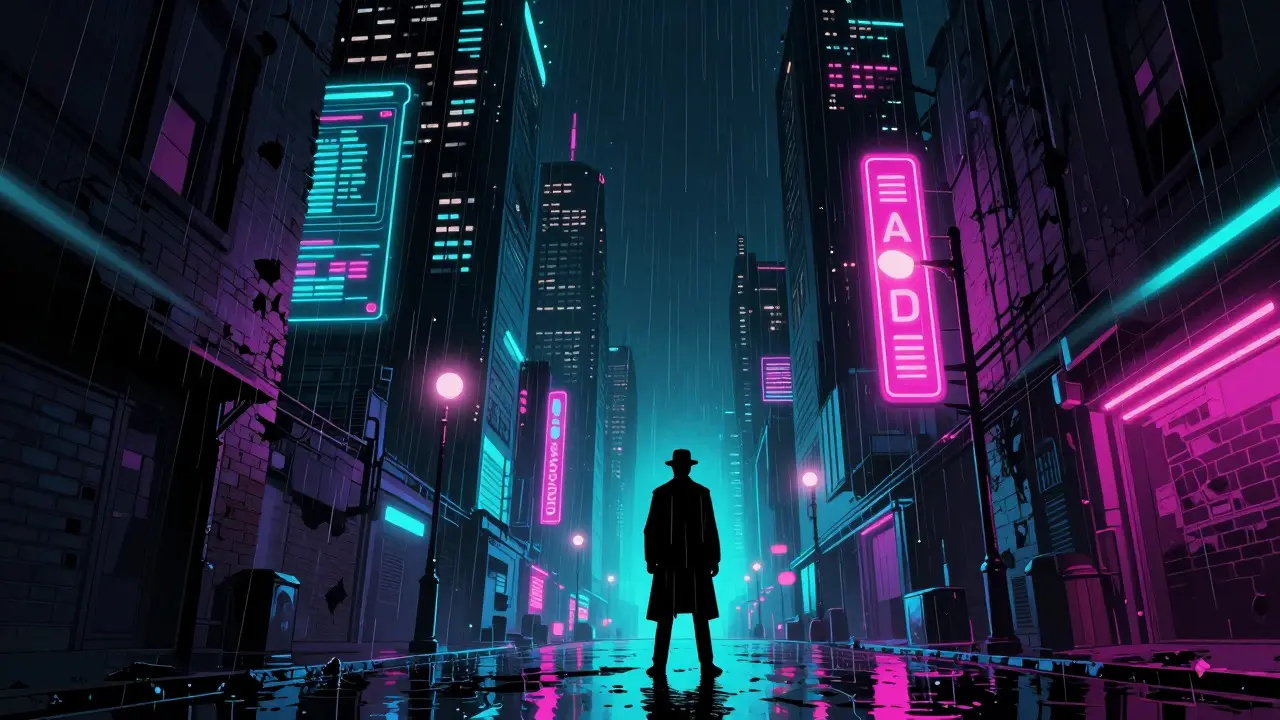
Walk into a dark alley in a rain-slicked cyberpunk city, and you know exactly what you’re seeing. The vertical streaks of light from the neon signs, the wide aspect ratio that makes the world feel vast yet claustrophobic, and the deep shadows hiding secrets-this is future noir. It’s not just a genre; it’s a visual language built on specific technical choices. If you’ve ever wondered why certain sci-fi films feel so immersive while others look flat, the answer lies in the interplay between optics, color theory, and narrative mood.
This article breaks down the three pillars of modern sci-fi visuals: Anamorphic Lenses is a type of lens system that compresses the image horizontally to create a widescreen aspect ratio and distinctive oval bokeh., Neon Lighting is an artificial light source using gas-discharge tubes that produces vibrant, saturated colors ideal for high-contrast scenes., and the aesthetic philosophy of Future Noir is a subgenre of science fiction that combines dystopian settings with the high-contrast lighting and moral ambiguity of classic film noir.. Together, these elements define the look of hits like Blade Runner 2049 and Dune, creating a cinematic experience that feels both alien and intimately human.
The Optical Signature of Anamorphic Lenses
Most digital cameras shoot in a standard 16:9 or 4:3 aspect ratio. But the big-screen sci-fi look often demands something wider-usually 2.39:1 or even 2.76:1. This is where anamorphic lenses come in. Unlike spherical lenses, which capture light uniformly, anamorphic lenses use cylindrical glass elements to squeeze the image horizontally during recording. When projected, the image is unsqueezed, resulting in a much wider field of view without cropping the top and bottom of the frame.
Why does this matter for sci-fi? The width creates a sense of scale. In a scene featuring a massive spaceship or a sprawling futuristic city, the extra horizontal space allows the environment to breathe. You don’t just see the ship; you see its place in the sky. But the most recognizable trait of anamorphic photography is the "flare." Spherical lenses produce circular highlights when out of focus. Anamorphic lenses produce oval-shaped bokeh and horizontal streaks of light, known as anamorphic flares. These streaks are particularly effective in night scenes, turning streetlights and neon signs into dramatic, elongated beams that cut through the darkness.
There is a trade-off, though. Anamorphic lenses have shallower depth of field than their spherical counterparts. This means the background falls out of focus faster, isolating the subject. For a detective standing alone in a crowded market, this separation is powerful. However, it requires precise focus pulling. A slight miss can ruin the shot. Modern digital anamorphic adapters allow filmmakers to achieve this look without the cost of vintage glass, but the optical physics remain the same: compression creates character.
Neon as Narrative Tool
If anamorphic lenses provide the shape, neon provides the soul. In traditional film noir, lighting was binary: hard key lights and deep shadows. Neon Lighting adds a third dimension: color. In a future noir setting, neon isn’t just decoration; it’s information. The color of the light tells you about the location, the time of day, and even the social status of the characters.
Consider the palette. Cyan and magenta are the dominant hues in cyberpunk aesthetics. Why? Because they are complementary colors that sit opposite each other on the color wheel. When placed side by side, they create maximum contrast without clashing. A character wearing a cyan jacket against a magenta wall pops instantly. This high-contrast color scheme mimics the emotional tension of the genre. It’s visually stimulating but also slightly disorienting, reflecting the unstable nature of the worlds depicted.
Practically speaking, working with neon presents unique challenges. Neon signs emit light at specific wavelengths, which can cause banding or flicker if the camera’s shutter speed doesn’t match the power frequency of the lights. Filmmakers often use LED panels calibrated to mimic neon spectra to avoid these issues while maintaining the aesthetic. Additionally, neon light is directional. It casts sharp, colored shadows that can sculpt a face in ways natural sunlight never could. A single red neon sign behind a character can turn their silhouette into a menacing figure, adding psychological weight to a simple profile shot.
Defining the Future Noir Aesthetic
Future Noir is more than a lighting setup; it’s a mood board. It inherits the DNA of 1940s and 50s noir films-Double Indemnity, The Maltese Falcon-but transplants it into a speculative future. The core elements include:
- High Contrast: Deep blacks and bright highlights with minimal mid-tones. This creates a graphic, poster-like quality.
- Moral Ambiguity: Visual cues rarely distinguish clearly between good and evil. Heroes are shadowed; villains are sometimes lit by warm, inviting tones.
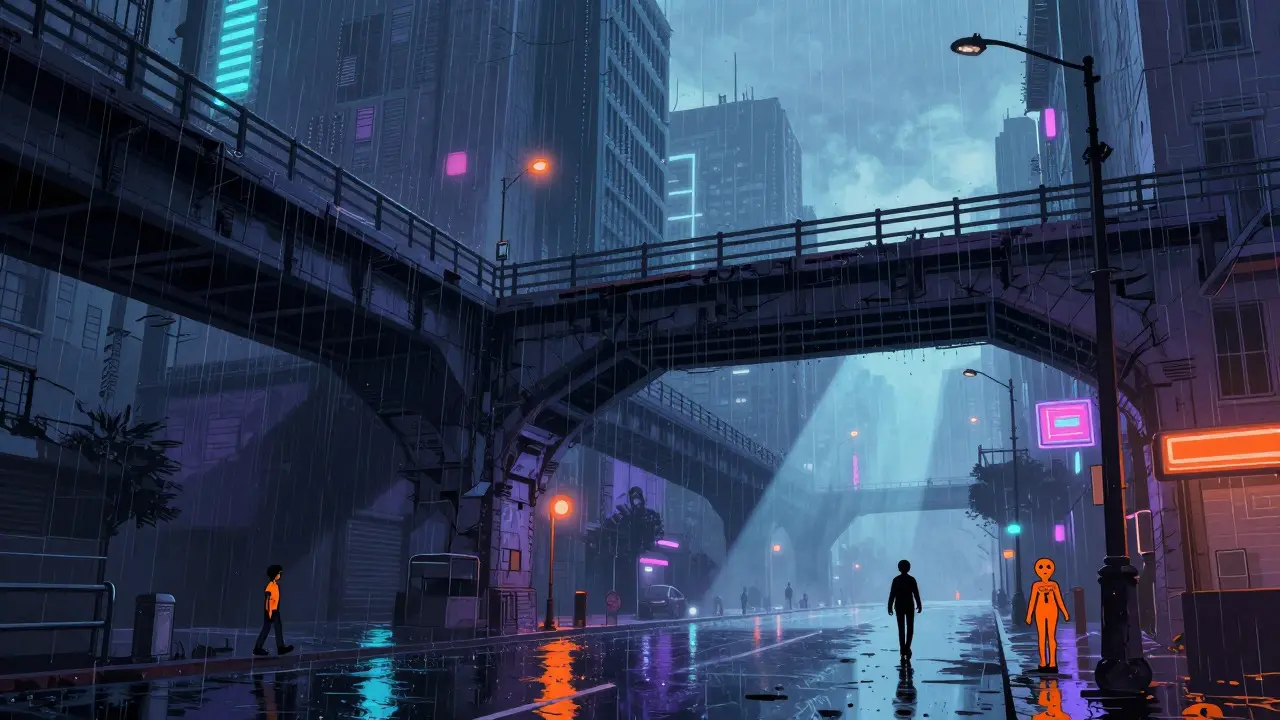
- Urban Decay Meets High Tech: The juxtaposition of crumbling infrastructure with sleek, holographic interfaces. Rain is a constant element, acting as a mirror for all the neon lights.
- Isolation: Wide shots emphasize the smallness of the individual against the massive, indifferent city.
This aesthetic works because it reflects contemporary anxieties. We live in a world of increasing surveillance, digital division, and environmental uncertainty. Future noir visualizes these fears through imagery that feels familiar yet wrong. The rain isn’t just weather; it’s a cleansing agent that never quite cleans. The neon isn’t just light; it’s a distraction from the darkness beyond the glow.
Technical Comparison: Spherical vs. Anamorphic in Sci-Fi
To understand why directors choose one over the other, let’s compare the two approaches directly. The choice often depends on the tone of the story. Is it grounded and realistic, or stylized and dreamlike?
| Feature | Spherical Lenses | Anamorphic Lenses |
|---|---|---|
| Aspect Ratio | Standard (16:9, 4:3) | Widescreen (2.39:1, 2.76:1) |
| Bokeh Shape | Circular | Oval / Elliptical |
| Flare Characteristic | Soft, diffuse halos | Horizontal streaks (anamorphic flares) |
| Depth of Field | Deeper (more in focus) | Shallower (subject isolation) |
| Best For | Grounded realism, VFX-heavy action | Stylized drama, atmospheric mood pieces |
Notice the last row. If your sci-fi film involves complex CGI integration, spherical lenses might be easier to work with because their predictable depth of field simplifies compositing. However, if you want that signature Blade Runner vibe, anamorphic is non-negotiable. The flare itself becomes a storytelling device, guiding the viewer’s eye across the frame.
Color Grading and Post-Production
Capturing the image is only half the battle. The final look is cemented in post-production. Color grading for future noir typically involves lifting the shadows slightly to preserve detail in the dark areas while crushing the highlights to maintain contrast. The goal is a "crushed black" look where the darkest parts of the image are nearly pure black, making the neon colors pop even harder.
Filmmakers often use teal and orange color wheels to balance the skin tones against the environment. Since neon tends to cast cool blues and purples, warming up the skin tones prevents characters from looking sickly or zombie-like. This subtle adjustment ensures that while the world feels alien, the people within it still feel human. Grain is another critical element. Adding fine, organic grain to digital footage helps break up the sterile perfection of sensors, giving the image a tactile, filmic texture that resonates with audiences who associate cinema with physical media.
Common Pitfalls to Avoid
Even experienced crews can fall into traps when chasing this aesthetic. Here are the most common mistakes:
- Over-saturating Neon: More neon doesn’t mean better neon. If every light in the scene is maxed out, the image loses contrast. Pick two or three dominant colors and let them dominate.
- Ignoring Practical Lights: Relying solely on digital effects for neon can look fake. Using actual practical neon signs or LED tubes in the set gives reflections and interactions that are hard to replicate in VFX.
- Forgetting the Sound Design: Visuals are only part of the immersion. The hum of neon tubes, the distant traffic, and the echo of footsteps in a rainy alley complete the sensory experience.
- Inconsistent Aspect Ratios: Mixing 16:9 and 2.39:1 shots without a clear reason disrupts the viewer’s immersion. Stick to one format unless a change serves a specific narrative purpose.
Frequently Asked Questions
Do I need expensive vintage anamorphic lenses to get the sci-fi look?
No. While vintage lenses like Panavision C-Series offer unique character, modern digital anamorphic adapters and new-generation anamorphic primes can achieve similar results. The key is understanding the optical properties-horizontal compression and oval bokeh-rather than just owning old glass.
What is the best color palette for future noir?
The classic palette is cyan and magenta, often accented with deep purple or electric blue. These colors offer high contrast and evoke a digital, synthetic feel. Avoid overly warm tones unless you want to signal safety or nostalgia, which contrasts with the typical dystopian mood.
How does rain affect cinematography in this genre?
Rain acts as a reflective surface, doubling the impact of neon lights. It also adds texture to the air, making light beams visible (volumetric lighting). Practically, it requires waterproofing equipment and careful planning for wet sets, but visually, it is essential for achieving the glossy, high-contrast look associated with the genre.
Can spherical lenses be used for future noir?
Yes, but you lose the signature horizontal flares and oval bokeh. You can simulate some of these effects in post-production, but it is often less convincing. Spherical lenses work well if you prioritize a cleaner, more modern look over the gritty, textured aesthetic of traditional anamorphic shooting.
What role does sound play in the future noir aesthetic?
Sound design reinforces the visual mood. Low-frequency drones, electronic hums, and muffled city noises create a sense of isolation and unease. The audio should feel dense and layered, mirroring the visual complexity of the neon-lit environments.