Key Takeaways
- Rotoscoping bridges the gap between live-action and animation by using real footage as a template.
- Modern digital tools like Interpolated Rotoscoping have replaced the old physical glass projectors.
- Films like Waltz with Bashir use it to represent the instability of memory.
- A Scanner Darkly uses the technique to mimic the disorienting feeling of paranoia.
- It is not "cheating" animation, but rather a specific stylistic choice that prioritizes human nuance.
How Rotoscoping Actually Works
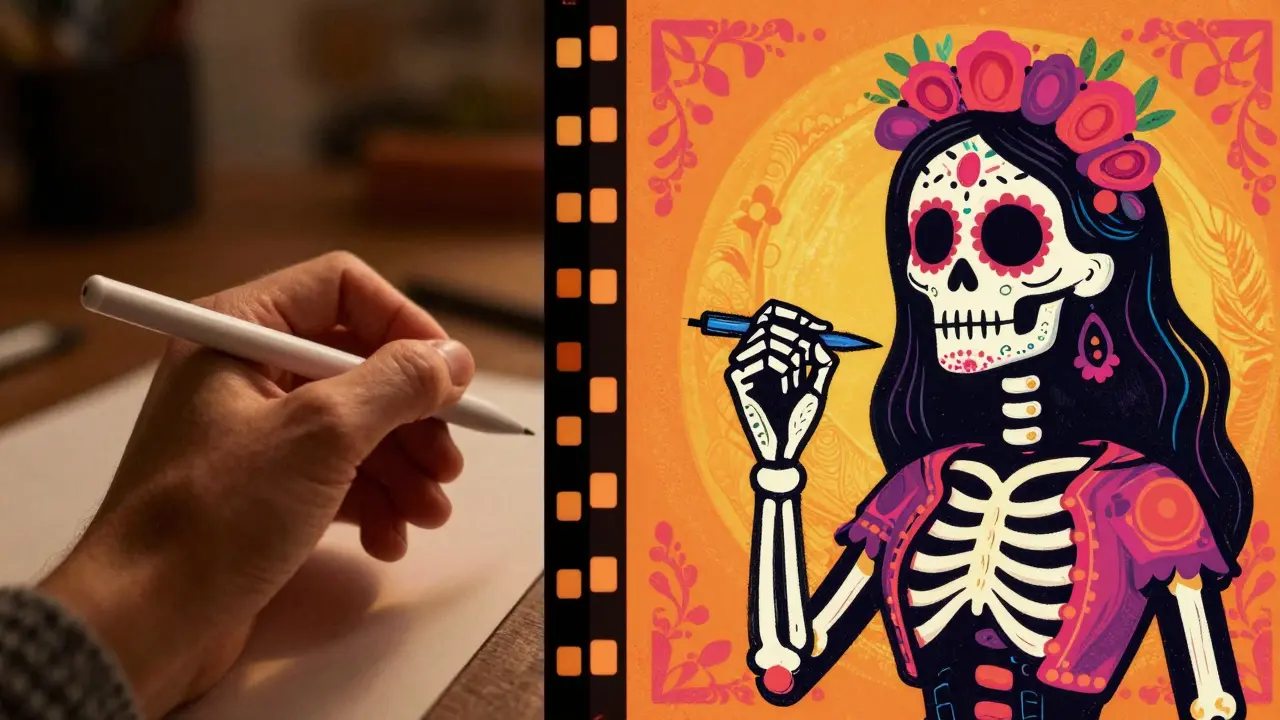
Back in the day, Max Fleischer invented the rotoscope by projecting film frames onto a glass panel where an artist could trace them onto paper. If you've ever seen the original Betty Boop or Popeye cartoons, you're seeing the early results of this. The goal back then was simple: they wanted characters to move like real people because hand-drawing a walk cycle from scratch often looked stiff or "floaty."
Today, we don't use glass plates. We use software. Modern artists use programs like Adobe After Effects or specialized AI-assisted tools that can track edges. However, the core process remains the same. You take a video, freeze a frame, draw the outline, move to the next frame, and repeat. If a movie runs at 24 frames per second, that's 24 drawings for every single second of screen time. It's a grueling process that requires an insane amount of patience.
The magic happens in the interpolation. Digital rotoscoping allows artists to set a keyframe at the start and end of a movement, and the software helps fill in the gaps. But the best works avoid looking too "smooth." When an animator intentionally leaves a slight jitter or a rough edge, it reminds the viewer that they are watching a constructed reality, not a polished Pixar movie.
The Psychological Power of Waltz with Bashir
When you look at Waltz with Bashir, you aren't just seeing a cool art style. Director Ari Folman used rotoscoping because the film is about the failure of memory. The movie follows a man trying to recover his lost memories of the 1982 Lebanon War. Since he can't truly "remember" the events, the animation serves as a visual metaphor for the gaps in his mind.
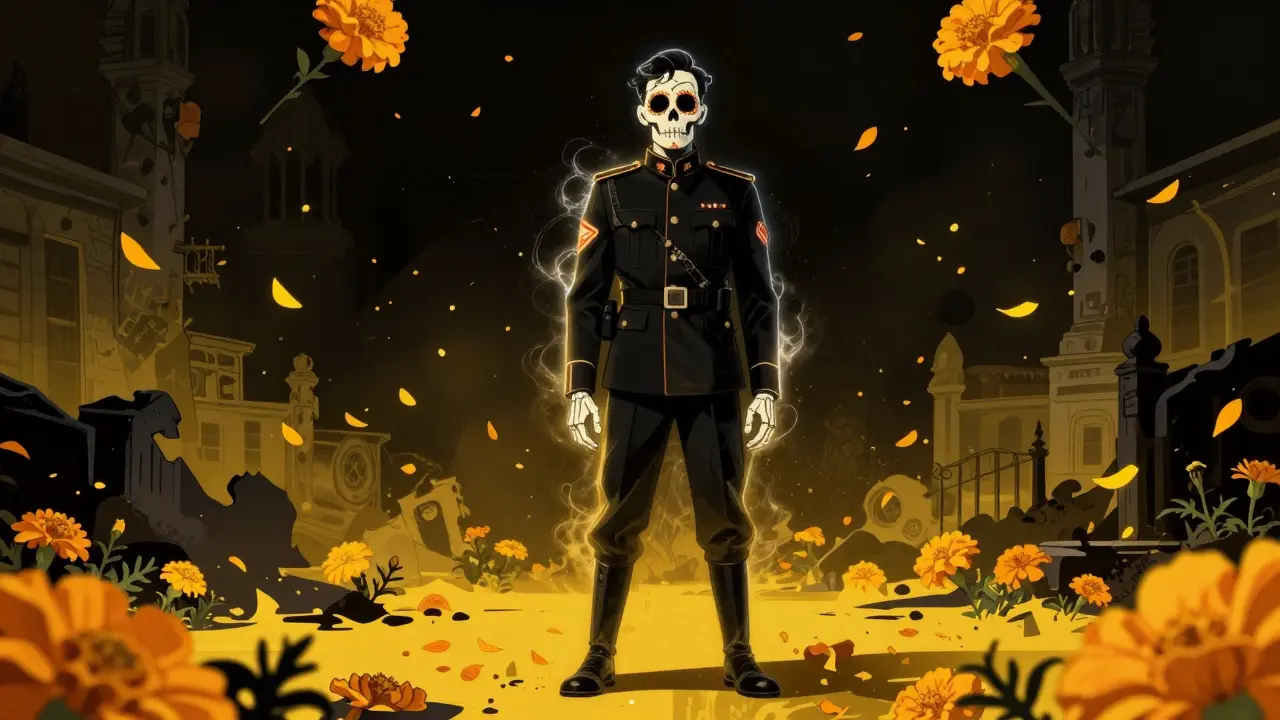
The film uses a specific palette of deep yellows and blacks, creating a noir-like atmosphere. Because the movement is based on real people, the gestures feel authentic and heavy, but the animated surroundings feel surreal. This contrast puts the viewer in the same headspace as the protagonist: something is real, but something is fundamentally "off." It proves that rotoscope animation isn't just about saving time on drawing; it's about using the medium to tell a story that live-action couldn't capture.
A Scanner Darkly and the Art of Digital Paranoia
While Waltz with Bashir is about memory, A Scanner Darkly is about identity and drug-induced dissociation. Director Richard Linklater used a technique called "interpolated rotoscoping." They filmed the entire movie in live-action first-with actors like Keanu Reeves and Robert Downey Jr.-and then had a team of artists paint over the frames digitally.
The result is a shimmering, unstable image. The characters' faces seem to shift and slide, mirroring the paranoia of the characters who are undercover cops spying on themselves. In a traditional film, you'd use camera tricks or editing to show a drug trip. In A Scanner Darkly, the very fabric of the image is unstable. It forces you to feel the disorientation of the characters. The detail is so high that you can see the subtle micro-expressions of the actors, but the colors are hyper-saturated, stripping away the "truth" of the live-action footage.
Rotoscoping vs. Traditional Animation vs. Motion Capture
People often confuse rotoscoping with motion capture (MoCap), but they are fundamentally different. MoCap uses sensors to record a skeleton's movement and map it to a 3D model. Rotoscoping is about the visual surface. It's a 2D process of tracing an image, not a 3D process of tracking a point in space.
| Feature | Rotoscoping | Traditional (2D) | Motion Capture (3D) |
|---|---|---|---|
| Source of Movement | Live-action video | Artist's imagination | Sensor data/Actors |
| Visual Style | Stylized Realism | Any / Abstract | Hyper-realistic / CGI |
| Effort Focus | Tracing & Painting | Drafting & Timing | Technical Rigging |
| Emotional Tone | Uncanny / Dreamlike | Whimsical / Bold | Cinematic / Immersive |
Common Pitfalls and the "Uncanny Valley"
There is a huge risk with rotoscoping: the Uncanny Valley. This is the feeling of revulsion people get when something looks almost human, but not quite. If the tracing is too accurate but the colors are wrong, or if the movements are too fluid but the eyes are static, the audience stops paying attention to the story and starts focusing on how "creepy" the characters look.
To avoid this, great directors lean into the abstraction. They don't try to make it look like a photo; they make it look like a painting that moves. If you look at the work of Ralph Bakshi in the 70s, he often mixed rotoscoped characters with painted backgrounds. This created a jarring effect that actually helped the gritty, urban feel of his movies. The trick is to commit to the style. If you're going to use rotoscoping, don't try to hide the fact that it's an animation.
How to Get Started with Rotoscoping
You don't need a Hollywood budget to try this. If you have a smartphone and a tablet, you can start today. The basic workflow for a beginner would look like this:
- Film your footage: Keep the camera steady. High contrast between the actor and the background makes tracing much easier.
- Import into a layer-based app: Use something like Procreate Dreams or Krita. Put the video on the bottom layer and a transparent layer on top.
- Trace the key poses: Don't trace every single frame at first. Do every 2nd or 3rd frame (this is called "animating on twos"). It gives the movement a more organic, hand-drawn feel.
- Fill and Color: Instead of realistic skin tones, try using a limited color palette. This helps avoid the Uncanny Valley.
- Export and Iterate: Play it back and see where the movement feels too stiff. Go back and add "in-between" frames to smooth out the transitions.
For those who want a more professional approach, looking into Adobe After Effects is a must. The "Rotobrush" tool can automatically isolate subjects from their backgrounds, which saves hours of manual tracing. However, the final polish-the line work and the shading-still requires a human eye to make it feel like art rather than a computer filter.
Is rotoscoping considered cheating in animation?
Not at all. It is a legitimate artistic technique. While it uses live-action as a guide, the artist still has to make thousands of decisions about line weight, color, and simplification. It's more like using a reference photo for a painting than "cheating." Many world-class animators use it to achieve a level of human nuance that is nearly impossible to draw from scratch.
Which movies use rotoscoping besides A Scanner Darkly?
Apart from the masterpieces mentioned, you can see rotoscoping in films like "Loving Vincent," where every frame is an oil painting based on real references. Earlier works by Ralph Bakshi, such as "The Lord of the Rings" (1978), also heavily relied on the technique to create epic battle scenes without the cost of full traditional animation.
Why is rotoscoping so effective for psychological dramas?
Because it creates a visual "filter" between the viewer and reality. It allows a director to keep the authentic emotional performance of a real actor while altering the world around them to represent internal states-like depression, madness, or nostalgia. It makes the mundane look extraordinary and the real look surreal.
Does AI make rotoscoping obsolete?
AI can handle the tedious part (isolating the subject), but it can't make stylistic choices. AI-generated rotoscoping often looks like a "filter," which is exactly what artists try to avoid. The goal of rotoscoping in cinema is the artistic interpretation of the footage, something that still requires a human animator to decide which lines to keep and which to ignore.
What is the difference between rotoscoping and cel animation?
Cel animation is created from scratch on transparent sheets (cels). The animator defines the movement. Rotoscoping is a sub-type of animation that uses a pre-existing video as the blueprint for those cels. In short, cel animation is "drawn," while rotoscoping is "traced."
Next Steps for Aspiring Animators
If you're fascinated by this style, start by analyzing a scene from Waltz with Bashir. Pause the video and look at how the lines don't perfectly align with the characters' edges-this "bleed" is what makes the animation feel alive. Try filming a 10-second clip of a friend talking and trace it using three different styles: one hyper-realistic, one minimalist, and one abstract. You'll quickly see how the technique changes the mood of the performance.
For those moving into professional work, explore the concept of "limited animation." You don't have to trace every frame to be effective. By combining rotoscoped keyframes with static backgrounds, you can create a high-impact visual style without spending ten years on a short film. The goal is always to serve the story, not the software.