You’re staring at your TV screen, wallet empty, and the latest blockbuster just hit Netflix for $15 a month. Sound familiar? The streaming wars have shifted gears. It’s no longer just about who has the most originals; it’s about who can keep you watching without charging a cent-or at least, not much of one.
In 2026, the line between free and paid is blurrier than ever. You’ve got Pluto TV, which feels like flipping channels on cable but costs nothing, and Tubi, a massive library that’s surprisingly deep. Then there’s Amazon Freevee (now often integrated into Prime Video as "Free with Ads"), offering high-quality originals alongside older hits. And don’t forget the "Lite" tiers from major players like Netflix or Disney+, which are technically paid but cheaper than the full subscription.
So, what’s the real difference? Is it worth paying $4 to remove ads, or should you stick with the free options? Let’s break down the actual experience of using these platforms, because the specs on paper don’t tell you how annoying the ad breaks really are.
The Real Cost of "Free": Ad Load and Interruptions
When people say "free," they usually mean "I’m paying with my attention." But not all ads are created equal. This is where the user experience diverges sharply between the contenders.
Pluto TV operates like traditional broadcast TV. It uses linear channels. If you tune into the "Law & Order" channel, you get an episode every hour, with commercial breaks baked into the schedule. You cannot skip them. The ad load is roughly 8-10 minutes per hour. It’s predictable. You know when the break is coming because the show starts and ends at fixed times. For background noise or casual viewing, this works. But if you’re trying to binge-watch three episodes back-to-back, the rigid structure feels archaic.
Tubi takes a different approach. It’s primarily on-demand. You pick a movie, press play, and then endure ad breaks every 15-20 minutes. These aren’t always skippable. In 2026, Tubi improved its algorithm to place breaks during less critical scenes, but let’s be honest: interrupting a car chase for a toothpaste commercial kills the momentum. The average ad load here is slightly higher, around 10-12 minutes per hour, depending on the title.
Amazon Freevee (or Prime Video’s free tier) offers a middle ground. Because it’s backed by Amazon’s ad-tech infrastructure, the targeting is sharper. You might see ads for products you actually looked at last week. The frequency is similar to Tubi, but the quality of the content-especially their original series like *Jury Duty* or *Bosch: Legacy*-often justifies the interruption. Plus, if you already pay for Prime, some "Freevee" content is accessible without extra fees, though ad removal requires a separate add-on.
| Service | Ad Frequency | Skippable? | Best For |
|---|---|---|---|
| Pluto TV | Every 30-60 mins (Linear) | No | Background viewing / Nostalgia |
| Tubi | Every 15-20 mins | Rarely | Movie nights / Binging |
| Freevee | Every 15-20 mins | No | High-quality originals |
| Paid Lite (e.g., Netflix) | 4-5 mins/hour | No | Minimal disruption |
Content Libraries: What Can You Actually Watch?
A service is only as good as its catalog. Here’s where the differences become stark.
Pluto TV shines in niche genres. Want to watch nothing but 90s sitcoms? There’s a channel for that. Horror movies from the 80s? Done. It owns Paramount’s vast library, so expect a lot of CBS shows, Star Trek, and classic Nickelodeon cartoons. However, new releases are rare. You won’t find last month’s theatrical hit here.
Tubi has exploded in size. By late 2025, it crossed 100 million monthly active users. Its strength is breadth. They have deals with MGM, Lionsgate, and various indie distributors. You’ll find Oscar-winning films, obscure international cinema, and reality TV marathons. The catch? Many titles are older. If you want current-season dramas, Tubi lags behind.
Amazon Freevee focuses on prestige. Their originals compete directly with HBO Max or Hulu. Think high-budget dramas and comedies. For licensed content, it leans heavily on Amazon’s existing Prime library, pulling in popular shows that have aged out of the "new" category. It’s smaller than Tubi but curated better.
What about the "Paid Lite" tiers? Services like Netflix Standard with Ads or Disney+ Basic offer access to brand-new premieres. This is the key differentiator. If you need to watch the latest season of *Stranger Things* or a new Marvel movie on release day, free tiers simply can’t compete. They wait 6-12 months for licensing windows to open.
User Experience and Device Compatibility
Nobody wants to fight with a clunky app interface. In 2026, usability is a major selling point.
Pluto TV’s interface mimics a TV guide. It’s intuitive for older demographics or anyone who grew up with cable. Switching channels is instant. However, searching for a specific movie can be tedious because you’re scrolling through grid listings rather than typing into a robust search bar. It works best on big screens where you can lean back and browse.
Tubi has invested heavily in its mobile app. It’s fast, responsive, and remembers where you left off across devices. The recommendation engine has gotten smarter, suggesting titles based on your watch history rather than just popularity. One frustration remains: the "Continue Watching" row sometimes gets cluttered with abandoned trials from other apps if you use shared logins, but generally, it’s smooth sailing.
Amazon Freevee benefits from being embedded in the Prime Video ecosystem. If you already use Prime, there’s no new app to learn. The UI is polished, though some users complain that finding "Free" content specifically requires filtering through paid rentals. It’s seamless if you’re already in the Amazon universe, but disjointed if you prefer standalone apps.
Is Paying for a Lite Tier Worth It?
This is the million-dollar question. Should you pay $3-$7 a month for an ad-supported tier on a premium service, or stick with the truly free options?
Consider your viewing habits. Do you watch 2 hours of TV a week? Stick with Tubi or Pluto. The ad fatigue won’t set in. Do you binge-watch 10+ hours a week? The cumulative time spent watching ads becomes significant. On Tubi, 10 hours means ~1.5 hours of commercials. On a Netflix Lite plan, that drops to ~40 minutes. Is saving 50 minutes worth $6? For many, yes.
Also, consider picture quality. Free tiers often cap resolution at 720p or 1080p. Premium Lite tiers frequently offer 1080p or even 4K (depending on the platform). If you have a large OLED TV, the difference in bitrate and clarity is noticeable, especially during dark scenes.
- Choose Free (Pluto/Tubi) if: You’re budget-conscious, enjoy browsing randomly, don’t mind older content, and view TV as background activity.
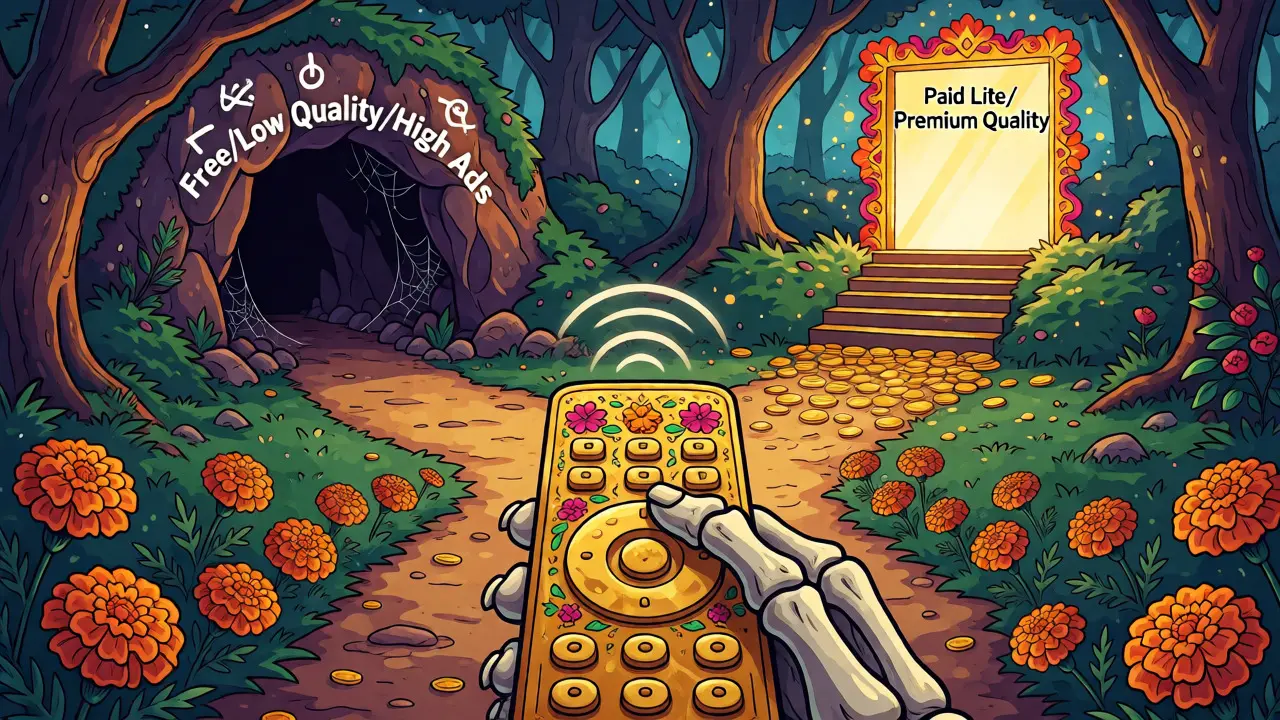
- Choose Lite Paid (Netflix/Disney+) if: You need current releases, value high-resolution video, hate unpredictable ad breaks, and watch enough to justify the small fee.
- Choose Hybrid: Keep Pluto for background noise and subscribe to one Lite tier for your main shows. This balances cost and convenience.
Regional Availability and Future Trends
Not all services work everywhere. As someone living in Auckland, I’ve noticed that Pluto TV availability fluctuates outside the US. While it’s expanding globally, local content libraries vary wildly. In New Zealand, we rely more on Freeview or local broadcaster apps, though global giants are slowly entering.
Tubi launched in select international markets recently, but its catalog is heavily US-centric. If you travel or live abroad, check the geo-restrictions. Using a VPN can help, but it’s a hassle for daily viewing.
Looking ahead to 2027, expect more consolidation. We’re seeing moves where free tiers are becoming loss leaders for premium subscriptions. Expect fewer standalone free apps and more integration into smart TVs’ home screens. The battle isn’t just about content; it’s about owning the remote control.
Frequently Asked Questions
Which free streaming service has the best movies?
Tubi generally has the largest and most diverse movie library, including recent blockbusters and independent films. Pluto TV is better for specific genre channels, while Amazon Freevee offers high-quality originals but a smaller overall catalog.
Can I skip ads on Pluto TV or Tubi?
No, neither service allows ad skipping on their standard free tiers. Pluto TV ads are part of the linear broadcast schedule, and Tubi inserts non-skippable breaks into on-demand content. Some third-party browser extensions claim to help, but they often break playback.
Is Amazon Freevee still available in 2026?
Yes, but it has been largely rebranded or integrated into Amazon Prime Video as "Free with Ads" content. You can access it through the Prime Video app without a paid subscription, though the interface may look different depending on your region.
Do free streaming services require a credit card?
Generally, no. Pluto TV, Tubi, and Freevee do not require payment information to sign up. You only need an email address or social media login. Be wary of sites asking for cards for "free" trials unless explicitly stated.
Which service is better for live TV?
Pluto TV is superior for live TV experiences because it mimics traditional cable with scheduled programming. Tubi and Freevee are primarily on-demand, meaning you choose when to start, but you don't get the "channel surfing" feel.