
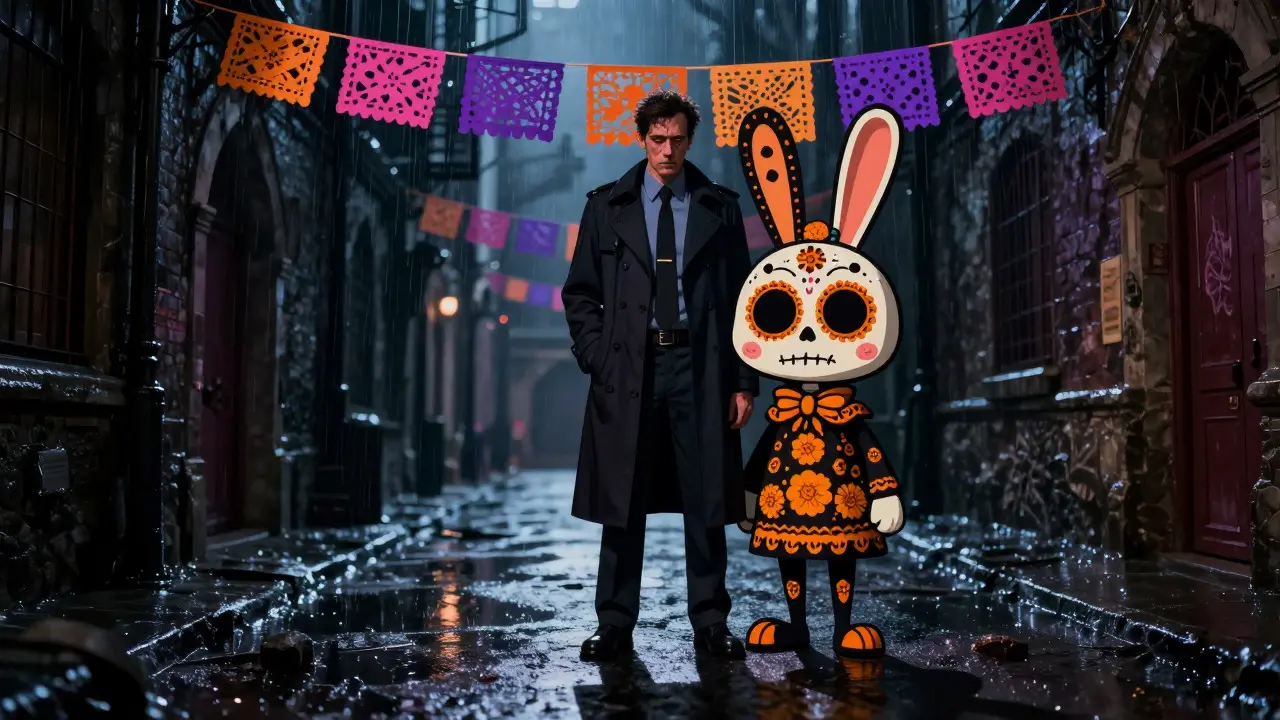
Ever wondered why some movies feel like they’re stuck between two worlds? You know the ones. The characters are real people, but their friends look like cartoons. It’s a jarring mix that either works magic or feels completely wrong. This specific blend of live-action animation has a fascinating history, defined by two massive hits: Who Framed Roger Rabbit (1988) and Space Jam (1996). These films didn’t just entertain; they changed how studios thought about combining reality with fantasy.
The core challenge here is simple to say but hard to do: making a hand-drawn character interact naturally with a human actor. In Who Framed Roger Rabbit, Bob Hoskins’ detective Edward Deacon must talk to, chase, and even get hit by a cartoon rabbit. The audience accepts this because the rules are established early. But in Space Jam, Michael Jordan plays himself alongside Bugs Bunny. The stakes are different. One is a mystery in a fictional city; the other is a sports movie where physics matter. Understanding these differences reveals why one film is considered a technical masterpiece while the other remains a cult favorite for its star power rather than its seamless integration.
The Technical Leap of Who Framed Roger Rabbit
Who Framed Roger Rabbit is a 1988 American comedy adventure film directed by Robert Zemeckis that pioneered the seamless integration of live-action and traditional 2D animation. Before this movie, mixing these mediums was rare and usually looked cheap. Think of old commercials where a cartoon character jumps into a live-action frame. It felt disjointed. ILM (Industrial Light & Magic) and Disney Animation Studios solved this by treating the animation as if it existed in the same physical space as the actors.
The key innovation was lighting. Animators had to draw shadows on the cartoon characters that matched the direction of the studio lights hitting the live actors. If Bob Hoskins stood under a spotlight, Roger Rabbit had to cast a shadow on the floor that aligned with that light source. This created a sense of depth. Furthermore, the aspect ratio mattered. The live-action footage was shot in a wider format, but the animation was drawn to fit the perspective of the camera lens. This meant that when the camera zoomed in, the cartoon lines stayed consistent with the focal length.
Another critical element was interaction. When Deacon touches Roger, his fingers press into the fur. When Roger slaps Deacon, the impact ripples through the live-action plate. These subtle details convince the brain that the two worlds share the same mass and momentum. Without these physical reactions, the hybrid style falls apart. The film spent over two years in production, largely due to the painstaking work required to synchronize 2D drawings with 35mm film photography.
Space Jam: A Different Approach to Hybridity
Space Jam is a 1996 American comedy sports film starring Michael Jordan and Looney Tunes characters, known for its use of motion capture and digital compositing. By the time Space Jam came out eight years later, technology had shifted. We were moving from pure 2D drawing toward digital tools. However, Space Jam didn’t aim for the same level of photorealistic integration as Roger Rabbit. Instead, it leaned into the stylized nature of the Looney Tunes universe.
The goal wasn’t to make Bugs Bunny look like he was standing in a real basketball court. The goal was to make him play basketball *with* Michael Jordan. The physics were intentionally loose. Bugs could fly, shrink, and turn into objects. This allowed the animators to focus on timing and comedic rhythm rather than strict optical realism. The film used early digital compositing to layer the animated cels over the live-action plates. While still primarily 2D, the process was faster and more flexible than the manual registration used in Roger Rabbit.
Michael Jordan’s performance is crucial here. He plays a version of himself who is tired and ready to retire. His deadpan delivery contrasts sharply with the chaotic energy of the Toons. This tonal clash is part of the charm. Unlike the serious noir tone of Roger Rabbit, Space Jam embraces absurdity. The hybrid technique serves the story: the Toons are magical beings invading our world, so their lack of realistic shading is a feature, not a bug.
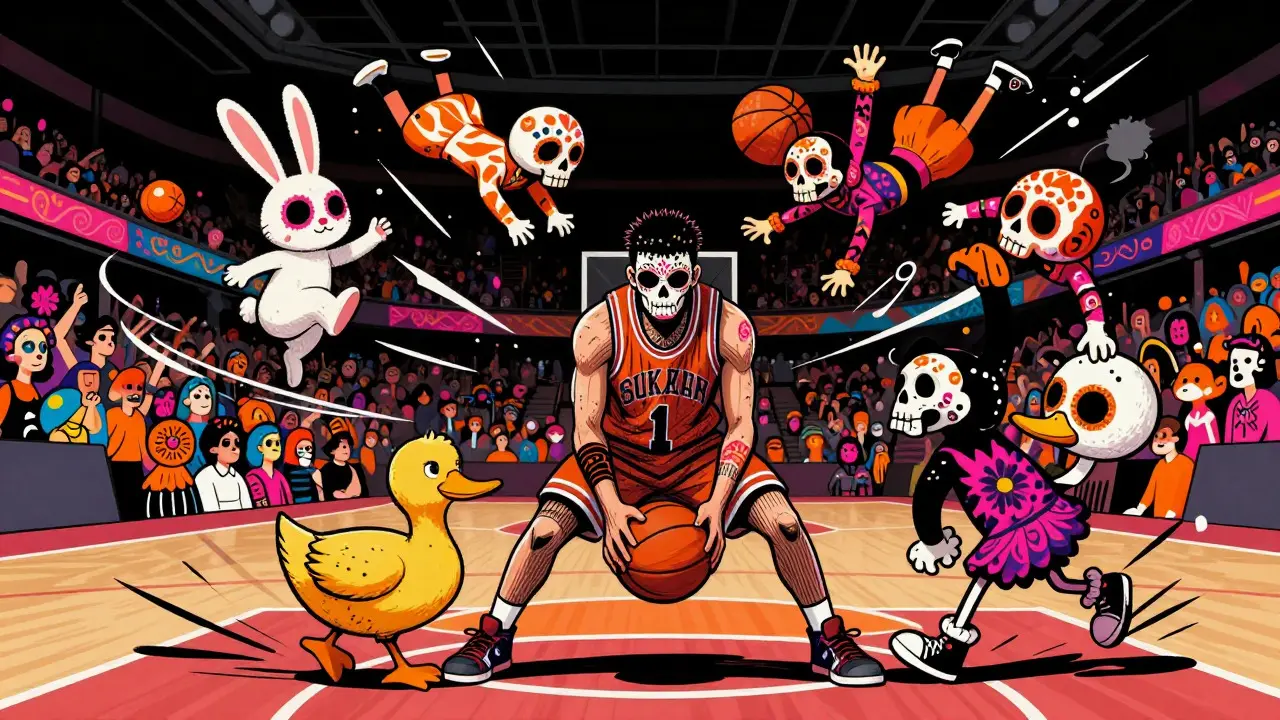
Comparing the Two Approaches
Why do we compare these two films so often? Because they represent two distinct philosophies of hybrid animation. One seeks invisibility; the other seeks visibility. Let’s break down the technical and artistic differences.
| Feature | Who Framed Roger Rabbit (1988) | Space Jam (1996) |
|---|---|---|
| Primary Technique | Traditional 2D Cel Animation | 2D Animation with Digital Compositing |
| Lighting Integration | High fidelity; shadows match live-action sources | Stylized; lighting supports comic effect |
| Physics Rules | Strict; characters obey gravity and collision | Loose; characters defy physics for comedy |
| Tone | Noir Mystery / Drama | Sports Comedy / Satire |
| Production Time | ~2 years (heavy manual labor) | ~1 year (accelerated by digital tools) |
| Key Innovation | Seamless optical illusion | Star-driven crossover appeal |
The table highlights a clear divergence. Roger Rabbit is a technical marvel because it hides the seams. Space Jam is a cultural phenomenon because it leverages brand recognition. For filmmakers, the choice between these approaches depends on the story. If your plot requires the audience to believe the cartoon is real, you need the Roger Rabbit method. If your plot is about the cartoon breaking the fourth wall, the Space Jam method works better.
The Role of Star Power in Hybrid Films
You can’t talk about these films without mentioning the humans involved. In hybrid animation, the live-action actor carries the emotional weight. The animation carries the visual spectacle. If the actor isn’t compelling, the whole thing collapses.
In Who Framed Roger Rabbit, Bob Hoskins delivered a career-defining performance. His weary, cynical demeanor grounded the fantastical elements. If he had played it straight, like a standard action hero, the contrast with Roger would have felt less impactful. His vulnerability made the audience care whether the cartoon rabbit was real or a hallucination. This psychological grounding is essential for the hybrid format to succeed in dramatic contexts.
Conversely, Space Jam relied on Michael Jordan’s global fame. At the time, Jordan was arguably the most recognized athlete on Earth. His presence validated the premise. Why should we care about a basketball game involving rabbits? Because MJ is playing. The hybrid technique here serves as a vehicle for a crossover event. The animation isn’t trying to convince us of its reality; it’s there to create a unique product that neither medium could achieve alone. This distinction-grounding vs. spectacle-is vital for understanding the legacy of these films.

Legacy and Modern Implications
So, what happened after 1996? Did studios stop making these kinds of movies? Not exactly, but the approach evolved. With the rise of CGI (Computer-Generated Imagery), the line between 2D and 3D blurred. Films like Beetlejuice (remake discussions) or The Lord of the Rings (Gollum) used motion capture to create characters that looked almost real but weren’t. This is a different beast than the hand-drawn hybrid style.
Today, we see echoes of Roger Rabbit in high-end productions like Spider-Man: Into the Spider-Verse, which uses mixed media styles, though mostly within an animated framework. True live-action/hand-drawn hybrids remain rare because they are expensive and difficult. The technology exists to do it digitally now, but the aesthetic choice to use hand-drawn frames is a deliberate artistic decision. It signals a specific type of nostalgia and craftsmanship that digital rendering often lacks.
For modern filmmakers, the lesson from these two classics is clarity of intent. Decide early whether your animated characters are part of the same physical world as your actors or if they are intruding upon it. That decision dictates every technical choice, from lighting to sound design to editing rhythm. Get that wrong, and the audience will feel the dissonance. Get it right, and you create a memorable cinematic experience that transcends genre boundaries.
Frequently Asked Questions
Which is harder to make: Who Framed Roger Rabbit or Space Jam?
Who Framed Roger Rabbit is generally considered technically harder. It required precise manual alignment of 2D animation with live-action lighting and perspective without the aid of modern digital compositing software. Space Jam benefited from digital tools that allowed for easier layering and adjustment, although it still required significant coordination between the two departments.
Did Who Framed Roger Rabbit win any awards for its animation?
Yes, the film won two Academy Awards: Best Original Score and Best Sound Effects Editing. It also received nominations for Best Film Editing and Best Visual Effects. The technical achievement of integrating animation with live action was widely recognized by critics and peers alike.
Why did Space Jam use Michael Jordan instead of another celebrity?
Michael Jordan was chosen because of his immense popularity and association with basketball, which is central to the plot. His willingness to play a semi-fictionalized version of himself added credibility and excitement. The combination of a top-tier athlete and iconic cartoon characters was seen as a guaranteed commercial success, which it ultimately achieved.
Are there any recent movies that follow the Who Framed Roger Rabbit style?
Pure live-action/hand-drawn hybrids are rare in recent years. Most modern films use CGI for integrated characters. However, independent films and music videos occasionally experiment with this style. The 2022 film The Mitchells vs. the Machines uses mixed media, but it is fully animated, not live-action hybrid. True successors to the Roger Rabbit technique are few and far between due to cost and complexity.
What is the main difference in tone between the two films?
Who Framed Roger Rabbit has a noir, mystery-driven tone with underlying drama and danger. It treats the cartoon world as a serious threat or ally. Space Jam has a lighthearted, comedic, and satirical tone. It focuses on entertainment and sportsmanship, using the cartoon characters primarily for humor and visual flair rather than deep narrative integration.