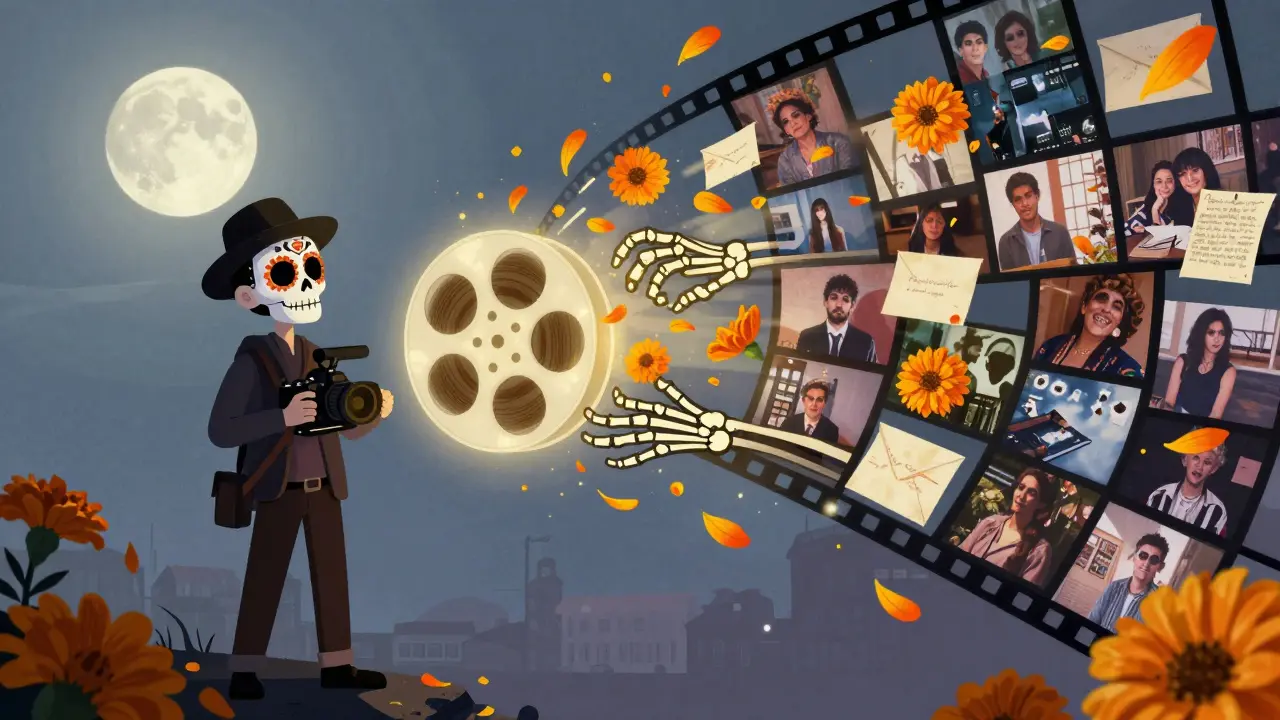
Think of a documentary as a window into the world-but not just any window. Some show you the view straight on. Others tilt, blur, or frame the scene through someone’s eyes. That’s where essay documentary comes in. It doesn’t just report facts. It argues, wonders, remembers, and sometimes even confesses. It’s film as thought made visible.
What Is an Essay Documentary?
An essay documentary isn’t about gathering interviews and archival footage to prove a point. It’s about building a feeling, a rhythm, a personal logic. Think of it like a written essay-but filmed. The filmmaker becomes a guide, not a neutral observer. Their voice-literal or implied-shapes everything. You hear it in the narration, see it in the editing, feel it in the music.
Chris Marker’s La Jetée (1962) is one of the earliest examples. A black-and-white film built almost entirely from still photos, narrated by a man haunted by a memory from his childhood. No actors. No dialogue. Just a voice, a gaze, and a haunting question: What if time isn’t linear? It’s not journalism. It’s poetry with a political pulse.
Other names you’ll see again and again: Agnès Varda, Ross McElwee, Errol Morris, and more recently, Laura Poitras. They don’t just document reality. They layer it with memory, doubt, longing, anger. The camera doesn’t hide behind objectivity. It leans in.
The Personal Voice as a Political Tool
Why does personal voice matter in a documentary? Because politics isn’t just about laws and policies. It’s about who gets heard, who gets forgotten, and who gets to tell the story.
Take The Fog of War (2003). Errol Morris interviews Robert McNamara, the former U.S. Secretary of Defense, about Vietnam and nuclear strategy. On the surface, it’s a historical review. But Morris doesn’t let McNamara off the hook. He uses the Interrotron-a device that lets McNamara look straight into the camera-so you feel like he’s talking directly to you. The personal becomes terrifying. When McNamara says, “You can’t make war without killing civilians,” you don’t just hear a fact. You hear a man wrestling with guilt.
That’s the power of the personal voice in essay documentaries. It turns abstract politics into human consequences. You don’t learn about poverty by seeing statistics. You learn about it when a filmmaker shows you their own mother struggling to pay rent, as in My Architect by Nathaniel Kahn. The film isn’t about architecture. It’s about a son trying to understand a father he barely knew-and the legacy of power, isolation, and silence.
The personal isn’t just emotional. It’s strategic. When a filmmaker says, “This happened to me,” they’re forcing the viewer to ask: Why does this matter? Who else is affected? What systems made this possible?
How It Differs From Traditional Documentaries
Traditional documentaries often follow a formula: problem → evidence → expert testimony → solution. They aim for clarity, authority, and completeness. Think of a PBS nature special or a CNN investigative piece. They want you to walk away with a clear takeaway.
Essay documentaries do the opposite. They embrace ambiguity. They leave gaps. They use silence. They might cut from a childhood photo to a warzone to a song from 1978. No explanation. Just connection.
Take Waltz with Bashir (2008), Ari Folman’s animated documentary about his lost memories of the 1982 Lebanon War. He interviews veterans. He draws his own fragmented recollections. He doesn’t try to reconstruct the truth. He shows how memory fails, how guilt hides, how trauma reshapes identity. The film doesn’t answer the question: “What happened?” It asks: “How do we live with what we can’t remember?”
Traditional docs say: Here’s the truth. Essay docs say: Here’s how I’m trying to find it.
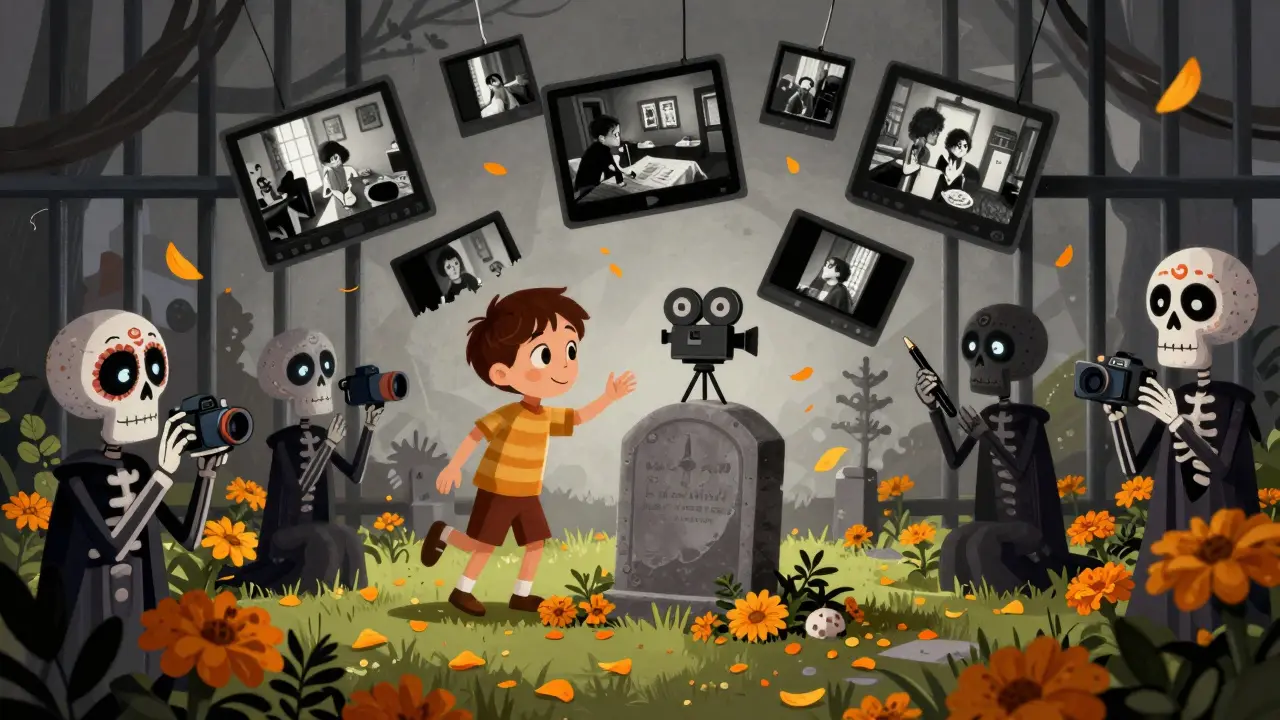
Key Techniques Used in Essay Documentaries
These films aren’t random. They use deliberate tools to build meaning:
- First-person narration: The filmmaker speaks directly, often in a conversational tone. Not a voice-of-God, but a voice-of-me.
- Nonlinear editing: Time jumps. Flashbacks. Dream sequences. The structure mirrors thought, not chronology.
- Found footage and personal archives: Old home videos, letters, diaries. These aren’t just props-they’re emotional anchors.
- Self-reflexivity: The film might show the camera crew, the editing process, or the filmmaker arguing with themselves. It reminds you: This is someone’s version, not the whole truth.
- Music as mood, not decoration: A song isn’t just background. It’s a memory trigger, a protest, a lament.
For example, in The Gleaners and I (2000), Agnès Varda films herself as she wanders rural France, collecting leftover food and discarded objects. She films her own hands, her aging body, her reflection in a mirror. She doesn’t claim to speak for all gleaners. She says: This is what I see. This is what I feel. And suddenly, you’re thinking about waste, dignity, and survival-not as issues, but as lived experiences.
Why Essay Documentaries Matter Today
In a world flooded with news clips, social media takes, and algorithm-driven content, essay documentaries offer something rare: time to think.
They don’t shout. They whisper. They pause. They let silence speak.
Look at Time (2020), Garrett Bradley’s film about a woman fighting to free her husband from a 60-year prison sentence. Bradley doesn’t use talking heads or data charts. She layers black-and-white home videos from the 1990s with modern footage of her family. The film doesn’t argue for criminal justice reform. It shows what reform looks like when it never comes. The political vision is clear-not because of a speech, but because of a child’s birthday party that never happened.
These films work because they refuse to simplify. They know that justice, memory, and power aren’t neat. They’re messy. They’re personal. And they’re often carried in the quiet moments-the way someone looks out a window, the sound of a pen scratching on paper, the pause before a confession.
Who Makes These Films? And Who Watches Them?
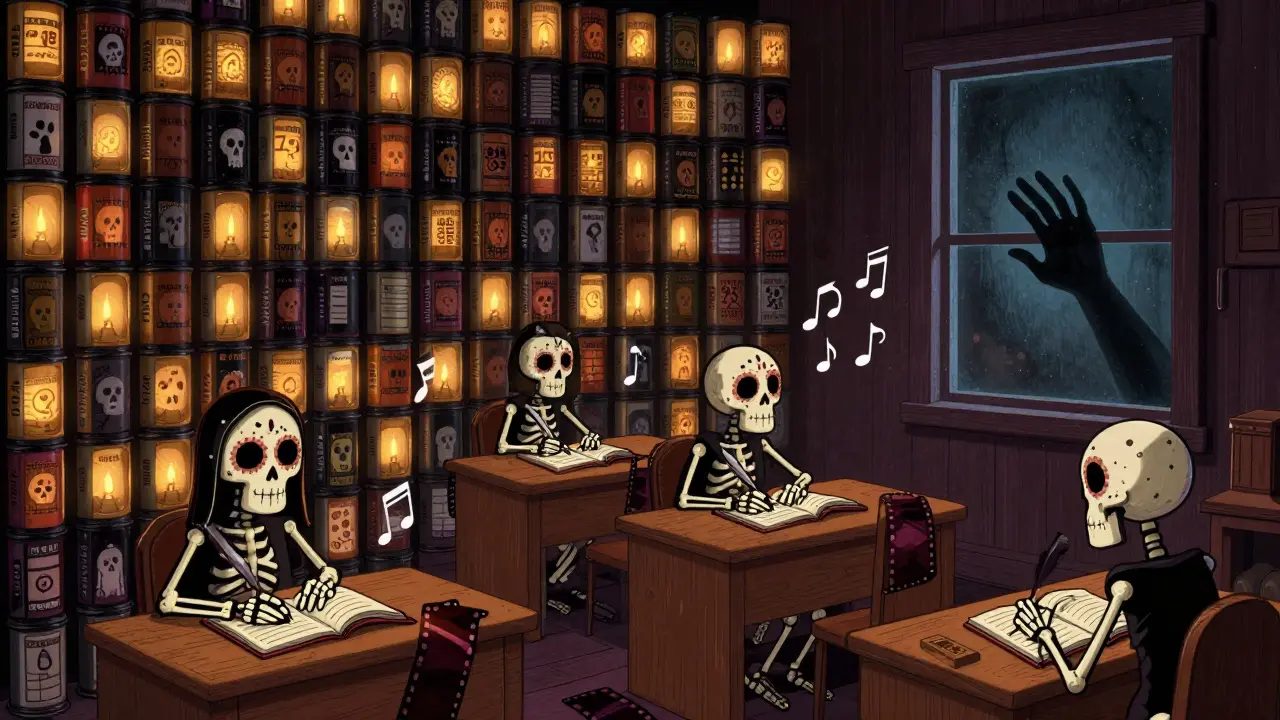
Essay documentaries aren’t made by big studios. They’re made by artists, academics, journalists with a poetic bent, and sometimes, people who just had a story they couldn’t let go of.
They’re funded through grants, film festivals, or crowdfunding. They rarely get wide releases. You’ll find them on streaming platforms like Criterion Channel, MUBI, or at indie theaters. The audience? Not mass-market. But deeply engaged. These viewers don’t just watch. They reflect. They discuss. They revisit.
That’s the quiet power of this form. It doesn’t need millions of views to matter. It needs one person to say: That’s exactly how I feel.
Where to Start Watching
If you’ve never seen an essay documentary, here are five to begin with:
- La Jetée (1962) - Chris Marker. A post-apocalyptic love story told in still images.
- The Gleaners and I (2000) - Agnès Varda. A poetic meditation on waste and survival.
- Waltz with Bashir (2008) - Ari Folman. Animated memories of war and forgetting.
- My Architect (2003) - Nathaniel Kahn. A son searches for his absent father, the architect Louis Kahn.
- Time (2020) - Garrett Bradley. A family’s fight against time and the prison system.
Each one is different. But they all share this: They don’t tell you what to think. They invite you to think with them.
Are essay documentaries considered real journalism?
Not in the traditional sense. Essay documentaries aren’t about verifying facts for public accountability. They’re about exploring truth through personal perspective. They might use real events, but their goal isn’t to prove something. It’s to feel something-and to make you feel it too. They’re closer to memoir than to investigative reporting.
Do I need to know film theory to enjoy essay documentaries?
No. You don’t need to know terms like “diegetic sound” or “montage.” You just need to be open to a different kind of storytelling. If you’ve ever read a personal essay in a magazine and felt moved, you already know how to watch these films. Let the images, the voice, the silence do the work.
Why are essay documentaries often black-and-white or grainy?
It’s not a stylistic choice for looks. It’s often about memory. Grainy footage feels like a recollection. Black-and-white removes distraction and focuses attention on emotion and texture. In La Jetée, the still images mimic how memories freeze in time. In Time, the contrast between old home videos and modern color footage shows how time separates people from their pasts.
Can essay documentaries be biased?
Yes-and that’s the point. Traditional documentaries try to hide bias. Essay documentaries wear it openly. The filmmaker’s perspective isn’t a flaw. It’s the lens. The power comes from knowing you’re seeing the world through someone’s eyes, not from a neutral camera. That honesty is rare-and more truthful than pretending there’s no viewpoint at all.
Are essay documentaries still being made today?
Absolutely. Filmmakers like RaMell Ross (Colma: The Musical), Sonia Bonspille Boileau (La Voix des Oiseaux), and even podcasters using visual storytelling are expanding the form. With easier access to cameras and editing tools, more people are using the essay format to tell stories that official media ignores. It’s not a dying art. It’s becoming more necessary.