
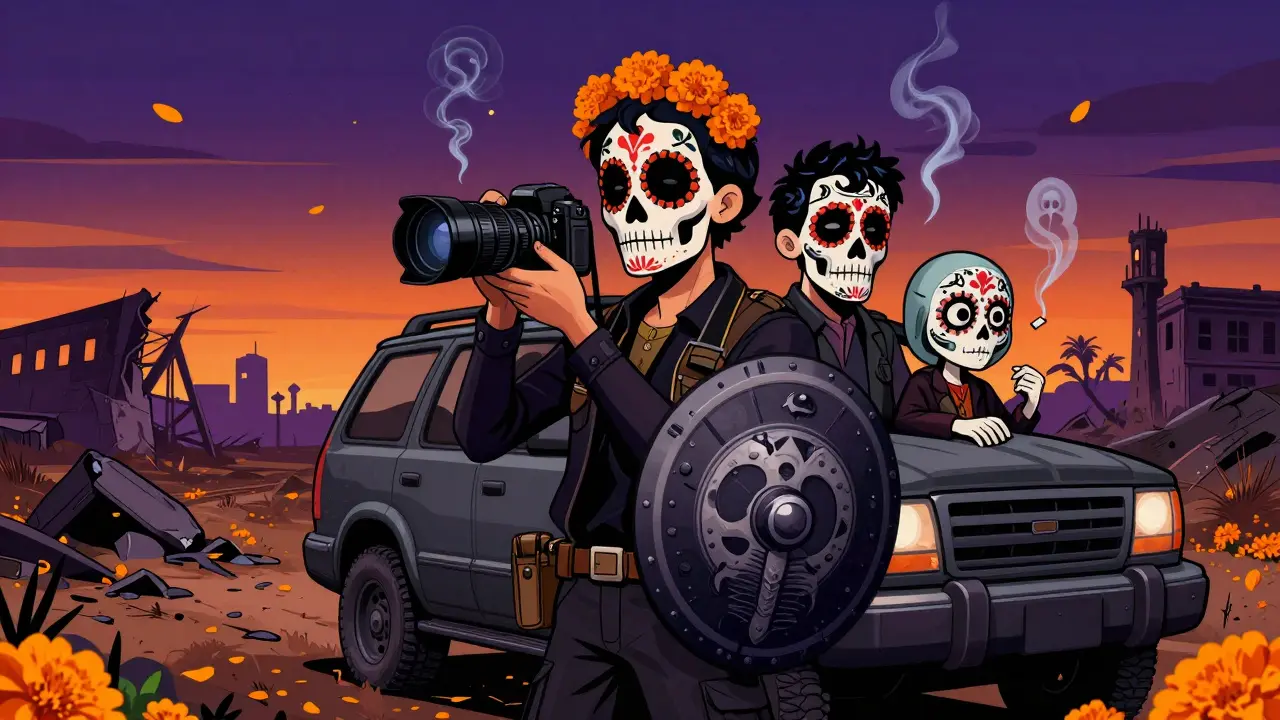
There is a specific kind of silence that falls over a theater when the screen goes black after a particularly brutal scene. It isn’t just shock; it’s a collective holding of breath. When Civil War ends, you will know exactly what I mean. This isn't your grandfather's historical epic about uniforms and cannons. This is Alex Garland’s latest descent into human fragility, but this time, he has turned his lens on the people who document the breaking of America.
A24 has always had a knack for finding the pulse of cultural anxiety, and with this film, they have hit a nerve that has been throbbing since the early 2020s. The premise is simple yet terrifyingly plausible: in a near-future United States, the federal government has collapsed, and regional factions are fighting for control. But we aren’t watching from the perspective of a soldier or a politician. We are riding shotgun with three journalists trying to reach Washington D.C. to interview the President before the final assault begins.
The Lens as a Shield and a Weapon
The core of the film rests on the shoulders of Lee, played with chilling detachment by Kirsten Dunst. Lee is a veteran war photographer. She doesn’t flinch. She doesn’t cry. She adjusts her aperture. This characterization is crucial because it forces us to ask an uncomfortable question: at what point does documenting suffering become complicit in it? Or worse, does it become entertainment?
Dunst’s performance is a masterclass in restraint. You rarely see her emote, yet every glance through her viewfinder tells a story of exhaustion and moral erosion. Beside her is Joel, played by Wagner Moura, a seasoned cameraman who provides the cynical, weary counterpoint to Lee’s cold professionalism. Their dynamic feels lived-in, like two people who have shared too many cigarettes and too many nightmares to pretend they are friends. They are colleagues bound by trauma.
Then there is Sammy, portrayed by Cailee Spaeny. Sammy represents the audience’s innocence. She is young, eager, and still believes that capturing a moment can change the world. Her journey from wide-eyed idealist to shaken witness is the emotional arc of the film. Watching her realize that her camera offers no protection against the chaos around her is heartbreaking. It strips away the romanticism of photojournalism and leaves only the raw, ugly reality.
Visual Storytelling That Feels Real
Visually, the film is stunning, but not in the way blockbusters usually are. There are no sweeping drone shots of armies clashing. Instead, director Alex Garland uses tight, claustrophobic framing. Much of the action takes place inside cars, cramped hotel rooms, or behind makeshift barricades. This choice makes the violence feel immediate and personal. When things go wrong, they happen fast, and there is nowhere to hide.
The cinematography by Rob Hardy mimics the aesthetic of real war photography. Grainy textures, high contrast, and sudden bursts of light create a sense of unease. You feel like you are looking through a lens that has seen too much. The sound design deserves special mention here. The roar of engines, the crackle of radios, and the distant thud of artillery create a soundscape that is both immersive and exhausting. It puts you right in the passenger seat, feeling every bump and turn.
One particular sequence stands out: a checkpoint encounter where the journalists must navigate a tense standoff with local militia. There is no dialogue, just stares and the mechanical click of cameras. The tension is palpable. You realize that in this fractured society, the press is neither respected nor safe. They are obstacles to be removed or tools to be used. This ambiguity adds layers of complexity to their mission.
Ethical Dilemmas in a Fractured Society
Beyond the action, Civil War is a profound meditation on the ethics of journalism. Lee constantly debates whether she should intervene when she sees injustice or stick to her role as an observer. Is it better to take a photo that might expose the truth to the world, even if it means someone gets hurt? Or is it better to put down the camera and help, knowing that the story might never be told?
The film doesn’t provide easy answers. In fact, it actively resists them. By refusing to judge Lee’s choices, Garland forces the audience to sit with their own discomfort. We want to cheer for the heroes, but there are none here. Everyone is compromised. The politicians are corrupt, the soldiers are desperate, and the journalists are detached. It’s a bleak portrait, but it’s honest.
This thematic depth elevates the film above typical disaster thrillers. It’s not just about survival; it’s about identity. Who are we when the structures that hold our society together crumble? What values do we cling to when everything else is gone? For Lee, it’s the image. For Joel, it’s survival. For Sammy, it’s hope. These conflicting priorities drive the narrative forward, creating moments of intense interpersonal drama amidst the external chaos.
Comparison to Previous Works
| Film | Primary Focus | Tone | Viewpoint |
|---|---|---|---|
| Civil War (2024) | Journalistic Ethics | Unflinching, Gritty | Photojournalists |
| Don't Look Up | Media Satire | Comedic, Absurd | Scientists & Celebrities |
| The Report | Government Accountability | Serious, Procedural | Investigators |
| Arrival | Communication & Time | Mysterious, Emotional | Linguists |
Unlike Don't Look Up, which uses satire to critique media indifference, Civil War immerses you in the indifference itself. It’s less funny and far more disturbing. Compared to procedural dramas like The Report, it lacks the comfort of institutional order. Here, the institutions are the problem. And while Arrival explores communication across vast divides, Civil War shows what happens when communication breaks down entirely within one nation.
Why This Film Matters Now
Releasing in a year where political polarization continues to dominate headlines, Civil War feels less like fiction and more like a warning. It taps into a deep-seated fear that our social contract is fragile. The film doesn’t predict the future so much as it extrapolates current trends to their logical conclusion. If trust in media erodes completely, if regional identities supersede national ones, where does that lead?
Garland avoids partisan politics deliberately. He doesn’t tell you who is right or wrong in this conflict. That’s the point. In a civil war, everyone loses. The specificity of the factions matters less than the universality of the experience. Whether you lean left or right, the sight of your home country tearing itself apart is horrifying. This neutrality makes the film accessible to a wider audience while maintaining its critical edge.
Moreover, the focus on photography brings attention to the role of images in shaping public opinion. In an age of deepfakes and curated social media feeds, seeing unfiltered, chaotic footage is jarring. It reminds us that reality is messy and often ugly. The film challenges viewers to look closer, to engage with difficult truths rather than scroll past them.
Final Thoughts: A Haunting Experience
Civil War is not an easy watch. It demands your attention and refuses to let you off the hook. But it is a necessary one. Alex Garland has crafted a film that is visually arresting, emotionally resonant, and intellectually stimulating. Kirsten Dunst delivers a career-best performance, anchoring the film with her quiet intensity. The supporting cast holds up equally well, creating a believable ensemble under extreme pressure.
If you’re looking for escapism, this isn’t it. But if you want cinema that provokes thought and lingers in your mind long after the credits roll, then Civil War is essential viewing. It’s a testament to the power of storytelling to confront uncomfortable realities. Just be prepared to check your settings before you walk out of the theater. You might find yourself questioning everything you thought you knew about truth, justice, and the price of witnessing history.
Is Civil War based on a true story?
No, Civil War is a work of fiction. However, it draws inspiration from real-world events such as the rise of political polarization, the decline of traditional media trust, and historical examples of civil conflicts. Director Alex Garland aimed to create a plausible scenario rather than retell actual history.
Who plays the main character in Civil War?
The protagonist, Lee, is played by Kirsten Dunst. She is supported by Wagner Moura as Joel and Cailee Spaeny as Sammy. The trio forms the core of the film's narrative, representing different stages of experience in war journalism.
What is the rating for Civil War?
Civil War is rated R for strong bloody violence, pervasive language, and some sexual material. Given its graphic depiction of war and mature themes, it is intended for adult audiences only.
Does Civil War take place in the present day?
The film is set in a near-future timeline, shortly after the release date. While technology looks familiar, the societal breakdown suggests several years of escalating conflict have already occurred. This ambiguous setting allows the story to feel immediate and relevant.
Where can I watch Civil War?
As of mid-2026, Civil War was released theatrically by A24. Streaming availability depends on your region, but typically follows a window of 45-60 days after theatrical release. Check major platforms like Apple TV, Amazon Prime Video, or rental services for digital copies.