
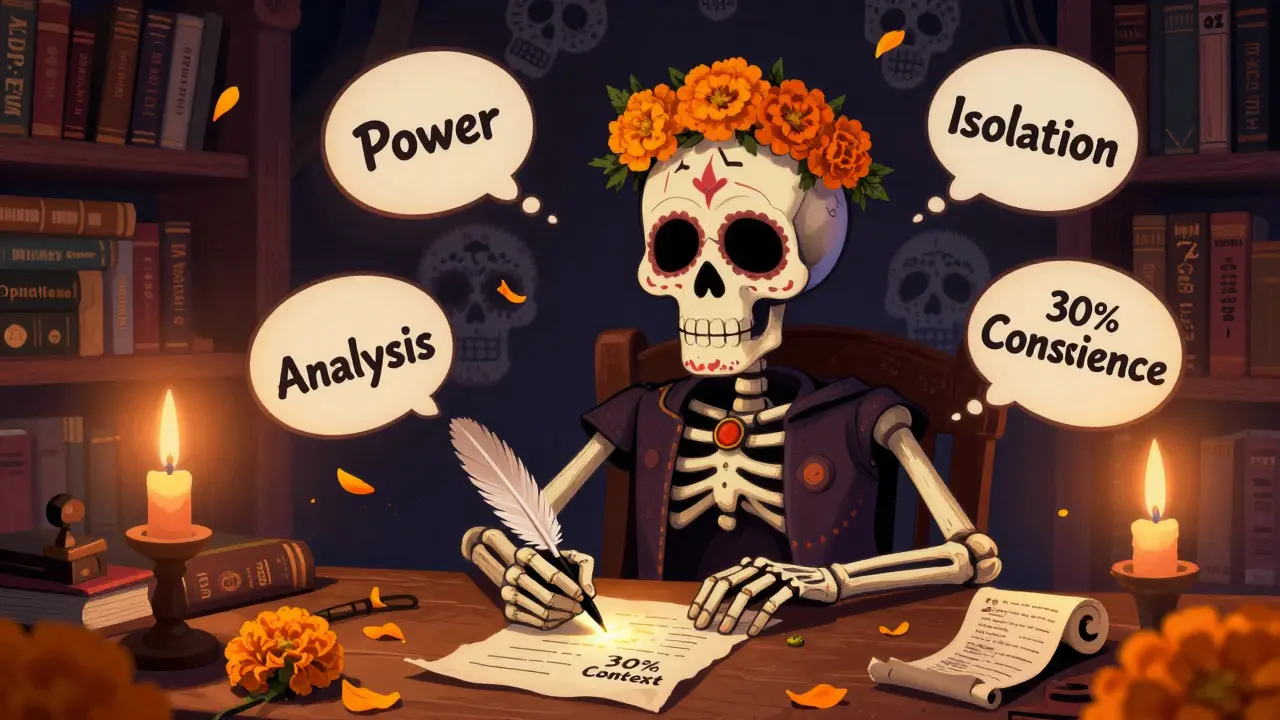
Writing a great review isn’t about telling the whole story. It’s about knowing what to leave out-and what to dig into. Too much plot summary, and you sound like a Wikipedia entry. Too little, and readers feel lost. The sweet spot? A review that gives just enough context to ground the analysis, then dives deep into why it matters.
Why Plot Summary Alone Falls Flat
Think about the last time you read a review that just retold the plot. "The hero finds a sword. He fights a dragon. He saves the princess." You close the page and think: So what? That’s not a review. That’s a synopsis. Readers can find plot summaries anywhere-on IMDb, on Wikipedia, even on YouTube in five-minute recaps. What they can’t find easily is someone who explains why that story moved them, confused them, or changed how they see the world.
Take Dune: Part Two. Anyone can say Paul Atreides becomes a messiah. But a real review asks: How does the film make you uncomfortable about hero worship? Does it show the cost of destiny, or glorify it? That’s the analysis. The plot is just the setup.
When Analysis Feels Like Nonsense
On the other end, some reviews skip the plot entirely. "The cinematography was existential," they write. "The sound design whispered truths the characters refused to speak." If you don’t know what’s happening on screen, that kind of writing feels like pretentious nonsense. It’s analysis without anchor.
Imagine reviewing The Lord of the Rings: The Fellowship of the Ring and saying, "The journey reflects the fragility of human connection." Cool idea-but without mentioning Frodo, Sam, or the Ring, who’s the reader supposed to connect that to? You need the story to have something to react to.
The 30/70 Rule: A Simple Framework
Here’s a rule that works: 30% plot summary, 70% analysis. Not because it’s magic, but because it forces balance.
Use the first 30% to give just enough context so someone who hasn’t seen or read it can follow your thoughts. That means:
- Who are the main characters? (Just names and roles)
- What’s the central conflict? (One sentence)
- What’s the setting? (One phrase-"1980s New Zealand," not a paragraph on geography)
- What’s the inciting incident? (The event that kicks everything off)
That’s it. No scene-by-scene breakdown. No dialogue quotes unless they’re critical. No explaining every twist. If you’re tempted to write more than three sentences on plot, stop. You’re slipping.
The remaining 70%? That’s where you live. Ask:
- What does this story say about power, fear, love, or identity?
- How does the pacing make you feel? Does it drag you in-or push you away?
- Are the characters believable? Or do they act like plot devices?
- Did the ending satisfy you emotionally-or just logically?
- How does this compare to similar stories? What makes it different?
These questions turn a summary into a conversation. They turn a review into a perspective.
Real Example: Breaking Down a Review
Let’s look at a real review snippet from Oppenheimer:
"Oppenheimer’s genius is matched only by his isolation. The film doesn’t show him as a hero or villain-it shows him as a man trapped by his own mind. The ticking clock of the Manhattan Project isn’t just a historical detail; it’s the sound of his conscience. Every close-up of his eyes feels like a confession.
Notice what’s missing? No mention of the test date. No description of the first explosion. No list of scientists involved. But you still know what happened. Why? Because the plot is implied, not explained.
And what’s present? Emotion. Theme. Technique. That’s the 70%.
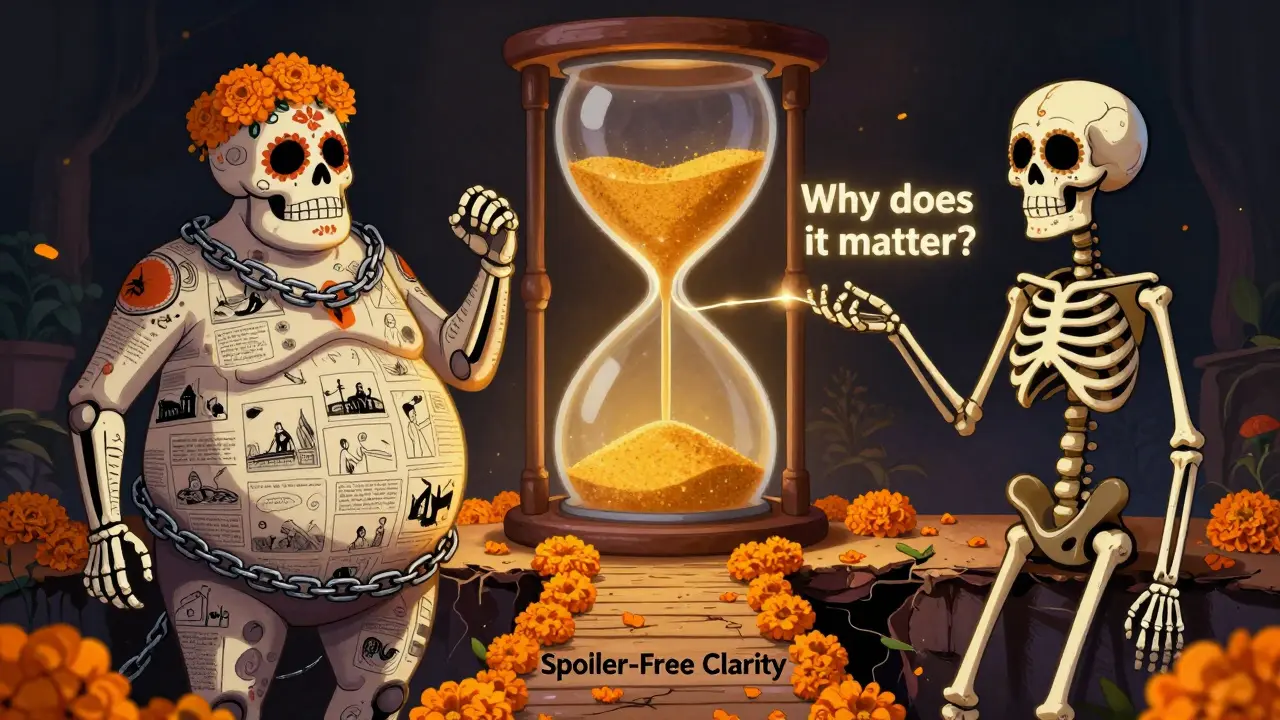
How to Avoid Spoilers While Still Being Clear
Many reviewers avoid plot details to keep spoilers away. That’s smart-but you don’t have to hide everything to stay spoiler-free.
Instead of saying: "In the third act, the main character kills his brother," say: "The story’s climax forces the protagonist to choose between loyalty and justice." That’s enough. You’re not revealing the event-you’re revealing its meaning.
Use phrases like:
- "The turning point reveals..."
- "What seems like a victory turns out to be..."
- "The final act challenges the idea that..."
These hint at structure without naming names or outcomes.
What Happens When You Get It Wrong?
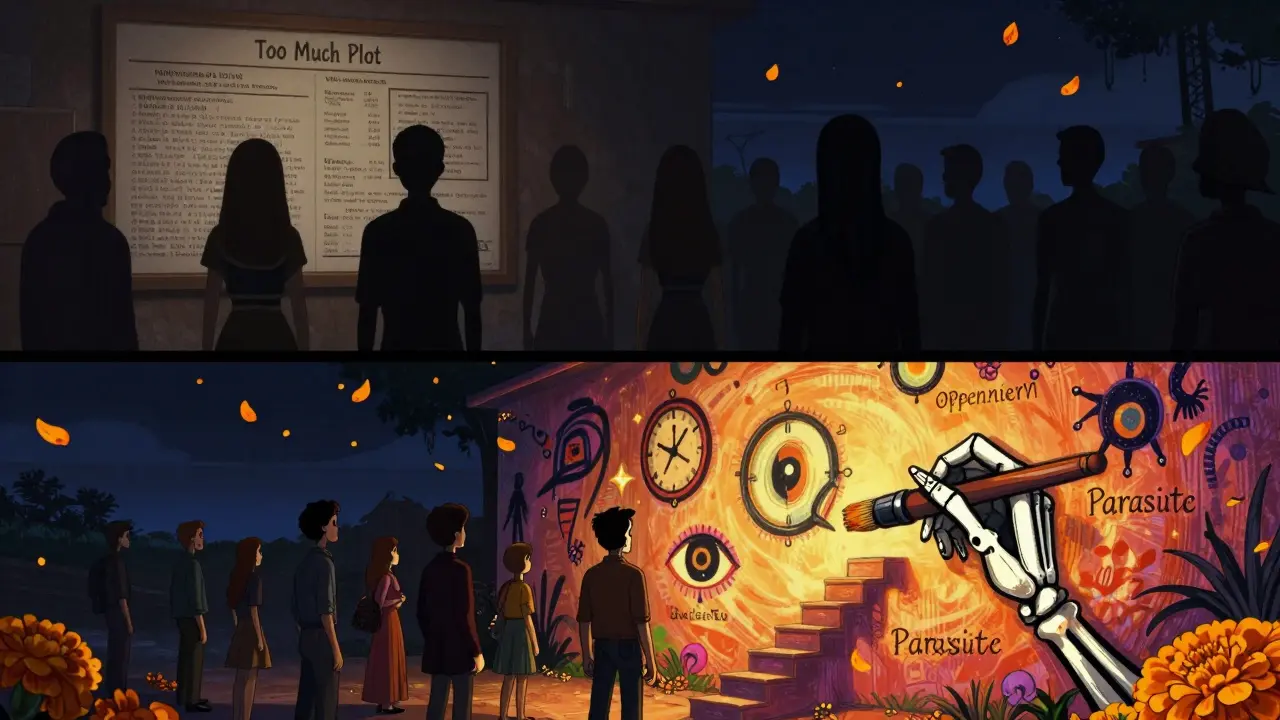
Too much summary? You’re writing a cheat sheet. Readers skip to the end. They don’t care about your voice. They just want the facts.
Too little? You’re writing poetry without a subject. Readers feel clever for guessing what you mean, but they leave confused. They don’t know if they should watch it.
And here’s the real cost: When reviews are unbalanced, they lose trust. People stop reading them. They go back to star ratings. And that’s the death of thoughtful criticism.
Practice This: Rewrite a Summary
Take your favorite movie or book. Write a 150-word plot summary. Now cut it in half. Then, write 350 words of analysis on what it means. Don’t just say "it was good." Say why.
Try it with Parasite. Not: "A poor family tricks a rich family into hiring them." Say: "The film doesn’t just show class inequality-it shows how the rich don’t even see the poor as human. The staircase isn’t just architecture. It’s a barrier no one dares cross."
That’s the difference.
Final Thought: Reviews Are Arguments
A great review isn’t a report. It’s an argument. You’re not telling people what happened. You’re convincing them why it matters.
Plot summary is your foundation. Analysis is your voice. The right balance lets you build something that lasts-not just in memory, but in how people think about stories.
How much plot should I include in a review?
Keep it short-about 30% of your review. Focus only on the essentials: main characters, central conflict, setting, and inciting incident. Avoid scene-by-scene details. If someone hasn’t experienced the story, they should still understand your point. If you’re writing more than three sentences on plot, you’re probably overdoing it.
Can I write a review without mentioning the plot at all?
No-not if you want readers to understand your analysis. Analysis without context feels abstract and confusing. Even if you’re writing about themes, symbols, or tone, readers need to know what they’re analyzing. A minimal plot summary acts as a shared reference point. Without it, your review becomes a puzzle only insiders can solve.
How do I avoid spoilers while still being clear?
Use indirect language. Instead of saying "The protagonist dies," say "The story ends with a choice that changes everything." Focus on emotional impact and thematic consequences rather than specific events. Phrases like "the final act challenges..." or "what seems like a victory turns out to be..." hint at structure without revealing outcomes.
What’s the difference between analysis and opinion?
Opinion says "I liked it" or "I hated it." Analysis explains why. It connects the story’s elements-cinematography, dialogue, pacing, character choices-to larger ideas: power, identity, fear, justice. Analysis uses evidence from the work itself. Opinion is personal. Analysis is persuasive. The best reviews blend both, but lean heavily on analysis to build credibility.
Should I compare the work to others?
Yes-but only if it adds insight. Don’t just say "It’s like The Godfather." Say why. "Like The Godfather, this story shows how power corrupts not through violence, but through silence and obligation." That kind of comparison deepens your analysis. It helps readers place your work in a broader tradition.