

Have you ever watched a scene where nothing happens-no dialogue, no action-and yet your heart races? That is the power of acting for the close-up, which is the art of conveying complex emotional states through subtle facial movements and internal thought processes visible to the camera lens. In theater, you project to the back row. In film, especially in the era of high-definition digital sensors, the camera sees everything. It sees the twitch of an eyelid, the slight dilation of pupils, the micro-tension in a jaw. If you are an actor trying to master this craft, understanding these "micro choices" is not just helpful; it is essential.
The Tyranny of High Definition
We need to talk about technology first because it dictates our performance. Thirty years ago, film stock had grain that masked small imperfections. Today, we shoot in 4K, 8K, and sometimes higher resolutions. The sensor is unforgiving. It captures every pore, every blink, every hesitation. This changes how we act. You cannot "perform" emotion in the traditional sense anymore. If you try to show sadness by furrowing your brow dramatically, the camera reads it as a caricature. It looks fake. Instead, you must experience the sadness internally so that the external result is organic.
This shift requires a new kind of discipline. We call it camera intimacy, which refers to the ability of an actor to maintain authentic presence and vulnerability when filmed at extreme proximity, often with lenses between 50mm and 135mm. When the lens is that close, the audience feels like they are inside your head. They are watching your thoughts form in real-time. Your job is not to tell them what you feel; your job is to let them watch you think.
Micro Expressions vs. Macro Acting
Let’s distinguish between two types of physical business. Macro acting involves large gestures: throwing hands up, shouting, running. Micro acting involves the face, specifically the eyes, eyebrows, and mouth. Psychologist Paul Ekman identified universal micro-expressions-brief, involuntary facial movements that reveal true emotions. As actors, we study these not to fake them, but to understand how genuine emotion leaks out.
- The Eyes: The most expressive part of the face. A shift in focus can indicate realization, fear, or attraction. Looking away might mean shame or processing information.
- The Eyebrows: A slight raise on one side suggests skepticism. Both raised indicates surprise or fear. Lowered brows signal anger or concentration.
- The Mouth: Tightening lips shows restraint or anger. A slight quiver can indicate suppressed grief. Relaxing the jaw signals relief or trust.
Notice how I said "suppressed grief" rather than "crying." Crying is a macro action. Suppressing grief is a micro choice. The camera loves the struggle more than the release. When you hold back, the tension builds. The audience leans in. They want to see if you break. That anticipation is magnetic.
The Power of Subtext and Inner Monologue
If the body is still, the mind must be moving. This is where subtext, defined as the underlying meaning or intention behind spoken dialogue, which drives the actor's internal motivation and micro-expressions, becomes your primary tool. In a close-up, silence is loud. If your character says "I'm fine," but their eyes dart to the door, the audience knows they are lying. You don't need to say "I want to leave." You just need to look at the door while saying "I'm fine."
To achieve this, you need a rich inner monologue. Before the director says "action," you should know exactly what your character is thinking, second by second. Are they remembering a past trauma? Are they calculating a risk? Are they trying to suppress anger? These thoughts trigger physiological responses. Your brain sends signals to your muscles. The camera picks up those signals. This is why "thinking" is an active verb in acting. You are not waiting for lines; you are reacting to stimuli.
| Aspect | Stage Acting | Close-Up Acting |
|---|---|---|
| Vocal Projection | Loud, clear, projected to back rows | Natural volume, intimate, whispered tones acceptable |
| Physical Scale | Large gestures, full body movement | Minimal movement, focus on face and eyes |
| Emotional Display | Externalized, obvious cues | Internalized, subtle micro-expressions |
| Audience Relationship | One-to-many, distant | One-to-one, invasive and personal |
| Error Visibility | Low (unless major blocking error) | High (every blink and twitch is recorded) |
Technical Awareness: Eye Lines and Lens Lengths
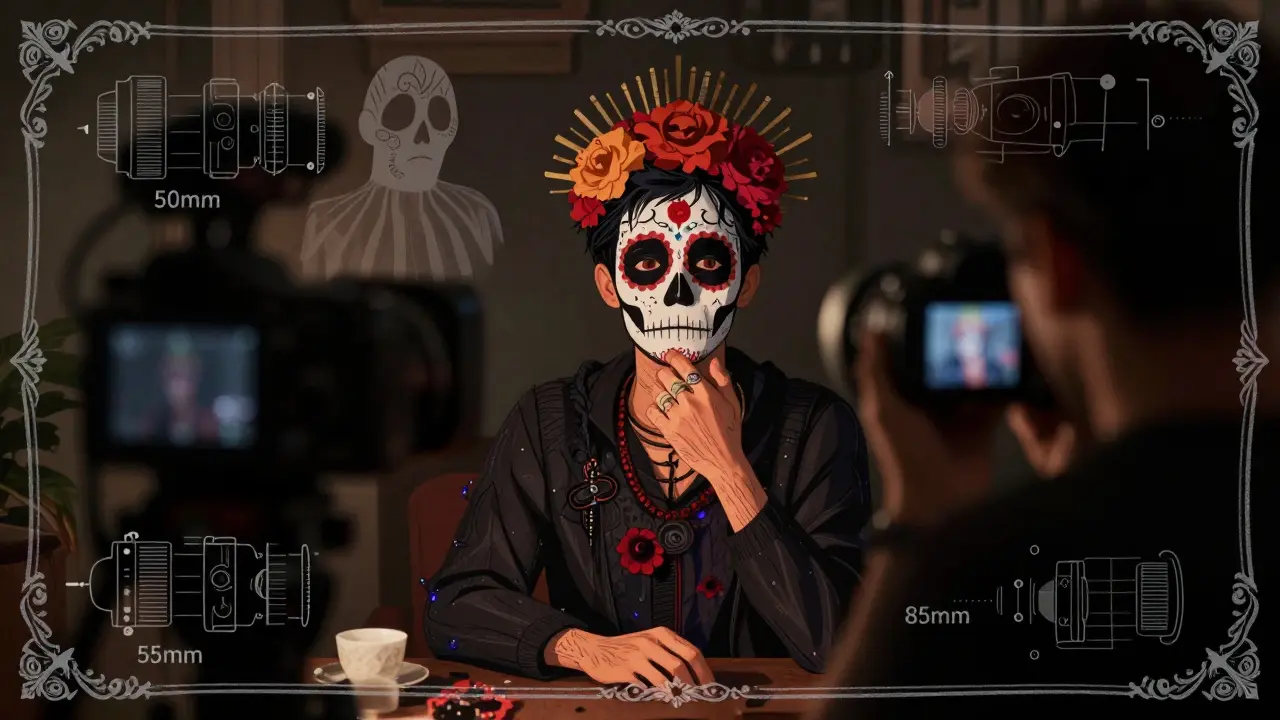
You don’t need to be a cinematographer, but you do need to understand how the camera works. The length of the lens affects how your face is perceived. A wide-angle lens (e.g., 24mm) distorts features if you are too close, making noses look larger and faces flatter. A telephoto lens (e.g., 85mm or 135mm) compresses space and flattens the face, which is generally more flattering and intimate. Most close-ups in dramas use 50mm to 100mm lenses. Knowing this helps you position yourself. If you lean into a wide lens, you distort. If you stay still with a telephoto, you create intensity.
Equally important is the eye line. Where you look tells the story. Looking slightly above the camera can suggest hope or memory. Looking directly into the lens breaks the fourth wall, creating a direct connection with the viewer (used sparingly). Looking off-camera implies another character or object is present. Consistency in eye lines is crucial for editing. If you change your gaze point between takes, the editor cannot cut the shots together seamlessly. Trust the marks. Stand on the tape. Let the camera come to you.
Common Pitfalls for New Actors
I see many talented actors ruin good scenes with bad habits. Here are the most common mistakes:
- Over-acting the eyes: Widening your eyes constantly makes you look surprised or crazy. Keep your eyes relaxed unless there is a specific reason to widen them.
- Fighting the makeup: Makeup artists apply products to reduce shine and enhance features. Don’t wipe your face constantly. It breaks continuity and irritates the crew.
- Ignoring the ears: Surprisingly, tension in the ears and neck is visible. Relax your shoulders and neck. Tension travels up from the feet.
- Smiling with the mouth only: A genuine smile involves the eyes (crow’s feet). A fake smile looks stiff. Engage the whole face or don’t smile at all.
- Looking at the monitor: Never look at the playback screen during a take. It breaks the reality of the scene. Focus on your partner or your imaginary world.
Another mistake is "waiting" for direction. In a close-up, you are always acting. Even in the pause before your line, you are reacting. Fill that time with thought. Don’t go blank. Blankness reads as boredom or incompetence. Always have an objective. What do you want in this moment? To comfort? To intimidate? To seduce? Pursue that objective relentlessly.
Practical Exercises for Camera Work
You can practice these skills alone. Set up your phone or webcam. Record yourself in a tight close-up. No dialogue. Just sit there. Try to convey different emotions without moving your head.
- Exercise 1: The Secret. Think of a secret you’ve never told anyone. Watch your face as you remember it. Notice where your eyes go. Do your lips tighten? Play it back. Does it look convincing?
- Exercise 2: The Reaction. Have someone read a list of random words. React to each word with a different emotion (joy, disgust, confusion) using only your eyes and eyebrows. Keep your mouth neutral.
- Exercise 3: The Pause. Say a simple phrase like "Hello." Then wait ten seconds. Fill that silence with a thought process. Maybe you’re deciding whether to lie. Maybe you’re feeling sudden sadness. Record it. Watch how long you can hold attention without speaking.
Review your footage critically. Be honest. Does it look natural? Or does it look like you are trying to show emotion? Aim for invisibility. The best acting is when the audience forgets you are acting. They just see a person.
Collaborating with the Director and Cinematographer
Finally, remember that you are part of a team. The director guides your emotional arc. The cinematographer lights your face. Communicate with them. Ask questions. "What is the mood of this scene?" "Where should I look?" "Is this lighting working for me?" A good director will give you notes on your micro-expressions. "Try looking less angry and more hurt." "Give me a beat of hesitation before you speak." Listen closely. These notes are gold. They help you refine your performance to fit the visual language of the film.
Acting for the close-up is a skill that takes years to master. It requires patience, self-awareness, and technical knowledge. But when you get it right, it is magical. You connect with millions of people through a tiny square of light. You make them feel something real. That is why we do this work.
How do I relax my face for a close-up shot?
Start by relaxing your jaw and tongue. Press your tongue against the roof of your mouth to prevent clenching. Roll your shoulders down. Take deep breaths. Often, tension starts in the neck and moves up. If you feel your forehead tightening, consciously soften your eyebrows. Remember, relaxation is not emptiness; it is readiness.
What is the difference between stage acting and camera acting?
Stage acting requires projection and large physical gestures to reach audiences far away. Camera acting, especially close-ups, relies on internalization and subtle micro-expressions. The camera magnifies small details, so what looks natural on stage can appear exaggerated on screen. You must scale down your performance significantly.
Why are eye lines important in filming?
Eye lines determine spatial relationships and emotional focus. They help the editor match shots from different angles. If you look at a specific point consistently, the scene feels continuous. Changing your eye line can also convey shifts in thought or attention, adding depth to your performance.
Can I practice acting for close-ups at home?
Yes. Use a smartphone or webcam to record yourself in a tight frame. Practice conveying emotions without dialogue. Focus on micro-expressions like eyebrow raises or lip tensions. Review the footage to see if your intentions are clear. This builds self-awareness and control over your facial muscles.
What should I avoid during a close-up take?
Avoid over-acting, such as widening your eyes excessively or making large gestures. Do not fight your makeup or touch your face unnecessarily. Stay focused on your marks and eye lines. Avoid looking blank or bored during pauses; fill the silence with active thought processes related to your character's objectives.