
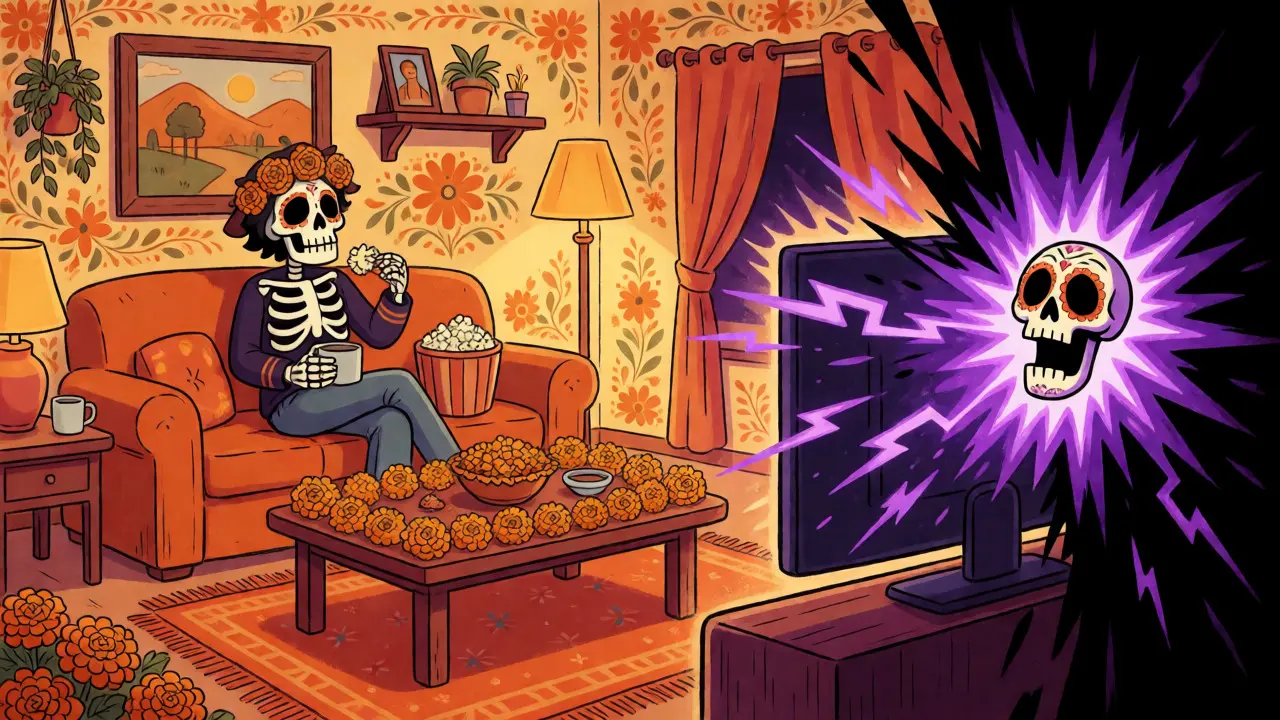
You know the feeling. You’re sitting on your couch, maybe eating popcorn, watching a scene that seems perfectly calm. The camera lingers on an empty hallway. Then-BAM-a face screams into the lens, accompanied by a deafening orchestral hit. Your heart hammers against your ribs, you spill your drink, and you let out a sound that isn’t quite human. Was it scary? Technically, no. Nothing actually happened to you. But your body reacted as if a tiger had just leaped out of the bushes.
This is the Jump Scare, a sudden, startling event in media designed to trigger an immediate physiological fear response through unexpected loud noises or visual shocks. It’s cheap, it’s effective, and filmmakers have been using it for decades because it bypasses your brain’s logic center entirely. But why does it work so well? And why do some people hate them while others crave the adrenaline rush?
The Startle Reflex: Your Body’s Alarm System
To understand jump scares, you first need to meet your oldest survival tool: the Startle Reflex, an involuntary, rapid motor response to a sudden and unexpected stimulus, such as a loud noise or bright light. This isn’t something you learned in school. It’s hardwired into your biology, dating back to when our ancestors needed to react instantly to predators lurking in the tall grass.
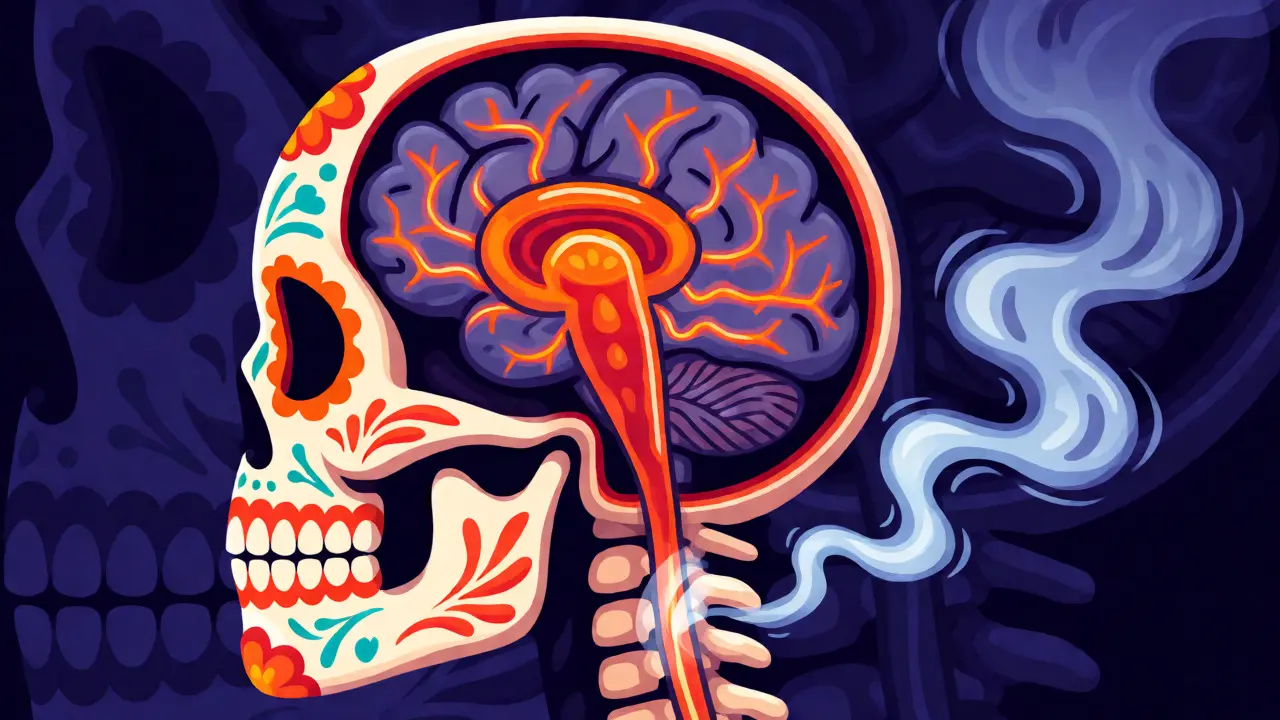
When a jump scare hits, your body doesn’t wait for permission from your conscious mind. The signal travels from your eyes and ears directly to the thalamus, which acts as a relay station. Instead of sending this information to the cortex (where you process complex thoughts like "this is just a movie"), the thalamus shortcuts the signal straight to the Amygdala, the almond-shaped cluster of nuclei located deep within the temporal lobes of the brain that processes emotions, particularly fear.
The amygdala is essentially your brain’s smoke detector. It doesn’t care about nuance. If it detects a potential threat, it pulls the fire alarm. Within milliseconds, your adrenal glands flood your system with adrenaline and cortisol. Your pupils dilate, your muscles tense up, and your heart rate spikes. This is the Fight-or-Flight Response, a physiological reaction that occurs in response to a perceived harmful event, attack, or threat to survival. By the time your prefrontal cortex catches up and realizes you’re safe in your living room, the physical shock has already happened.
Why We Can’t Think Our Way Out of Fear
Here’s the frustrating part: knowing a movie is fake doesn’t stop your body from reacting. This disconnect between cognitive knowledge and physiological response is what makes horror so potent. You can intellectually understand that the ghost in the attic is played by an actor named Dave who was complaining about his back pain during filming. But your amygdala doesn’t speak English; it speaks in signals of danger.
Filmmakers exploit this biological lag. They manipulate two key elements: Sensory Overload, the state of being overwhelmed by excessive sensory input, often used in horror to disorient viewers and Predictive Coding, the theory that the brain constantly generates predictions about incoming sensory inputs based on past experiences. Your brain is always trying to predict what happens next. In a quiet scene, your brain predicts silence. When a loud noise shatters that prediction, the error signal is massive, triggering a stronger startle response than if the noise were expected.
Consider the classic setup in films like The Exorcist or The Conjuring. The director builds tension slowly. The music drops out. The lighting dims. Your brain enters a state of high alert, scanning for threats. This state is called Hypervigilance, a heightened state of sensory sensitivity accompanied by an exaggerated intensity of behaviors whose purpose is to detect threats. When the scare finally arrives, your nervous system is already primed. It’s not just the scare itself; it’s the release of all that built-up tension.
The Anatomy of a Perfect Scare
Not all jump scares are created equal. A bad one feels cheap-a cat jumping out of a closet. A good one feels earned. What separates them? It comes down to timing, context, and subversion.
| Feature | Effective Scare | Ineffective Scare |
|---|---|---|
| Timing | Unpredictable but logical within the scene's reality. | Random or overused after every few minutes. |
| Sound Design | Uses silence before the hit; frequency matches human scream range. | Loud background noise masks the scare; generic stock sounds. |
| Context | Reveals character vulnerability or plot twist. | Irrelevant to story; purely for shock value. |
| Aftermath | Leaves lingering dread or questions. | Immediate relief; audience laughs at the absurdity. |
Sound design plays a huge role here. Horror composers often use Infrasound, sound waves with frequencies below the lower limit of human audibility, often causing feelings of unease or anxiety. These low-frequency vibrations aren’t consciously heard but can cause nausea, trembling, and a general sense of dread. When combined with a sharp, high-pitched sting-like the famous screech in Jaws or the stinger in Scream-the contrast creates a sonic punch that rattles your inner ear.
Visuals matter too. Jump scares often rely on Peripheral Vision, vision outside the central line of sight, which is more sensitive to motion and low-light conditions. Humans are evolutionarily tuned to notice movement in the corner of their eye because that’s where a predator might strike. Directors know this. They’ll place a subtle shadow moving in the periphery, forcing your brain to strain to see it. When the scare moves from peripheral to central vision, the shock is amplified because your focus shifts rapidly.
Personality and the Appeal of Fear
If jump scares are so unpleasant, why do we watch them? Why pay $15 to be startled in a dark theater? Psychologists point to a trait called Sensation Seeking, a personality trait defined by the search for experiences and feelings that are varied, novel, complex, and intense, and by the readiness to take physical, social, legal, and financial risks for the sake of such experiences.
People high in sensation seeking get a dopamine kick from the arousal state. The same chemicals that make you feel scared also make you feel alive. After the scare passes, there’s a phenomenon known as Excitation Transfer, a psychological theory stating that residual physiological arousal from one stimulus can amplify emotional responses to subsequent stimuli. The lingering adrenaline from the scare heightens the enjoyment of the rest of the film or the laughter shared with friends afterward.
Conversely, people with high neuroticism or anxiety disorders may find jump scares draining rather than fun. For them, the inability to control the environment triggers genuine distress. This explains why some horror fans prefer atmospheric dread over constant shocks. Films like The Babadook or Midsommar rely less on sudden noises and more on sustained psychological pressure, allowing the viewer to process fear cognitively rather than just physiologically.
Cultural Conditioning and Learned Fears
Your reaction to a jump scare isn’t just biological; it’s cultural. What terrifies someone in New Zealand might barely register for someone in Japan. Horror taps into specific cultural anxieties. Western horror often focuses on individual isolation and supernatural evil invading personal space. Japanese horror, like Ringu, leans into societal shame, curses, and the violation of social norms.
We also learn what to fear through exposure. Children aren’t born afraid of clowns or dolls. They learn these associations through media. Once you’ve seen enough movies where a clown equals danger, your brain starts flagging red noses as threats. This is Classical Conditioning, a learning process that occurs when two stimuli are repeatedly paired: a response which is at first elicited by the second stimulus is eventually elicited by the first stimulus alone. Filmmakers exploit these learned associations. A creaking floorboard means trouble. A flickering light means power loss. When they break these patterns unexpectedly, the surprise lands harder.
How to Enjoy Horror Without the Stress
If you want to enjoy horror movies without feeling like you’re having a heart attack, you can hack your own physiology. First, reduce the element of surprise. Watch trailers. Read reviews. Knowing a scare is coming allows your prefrontal cortex to prepare, dampening the amygdala’s panic response. You still get the thrill, but you retain control.
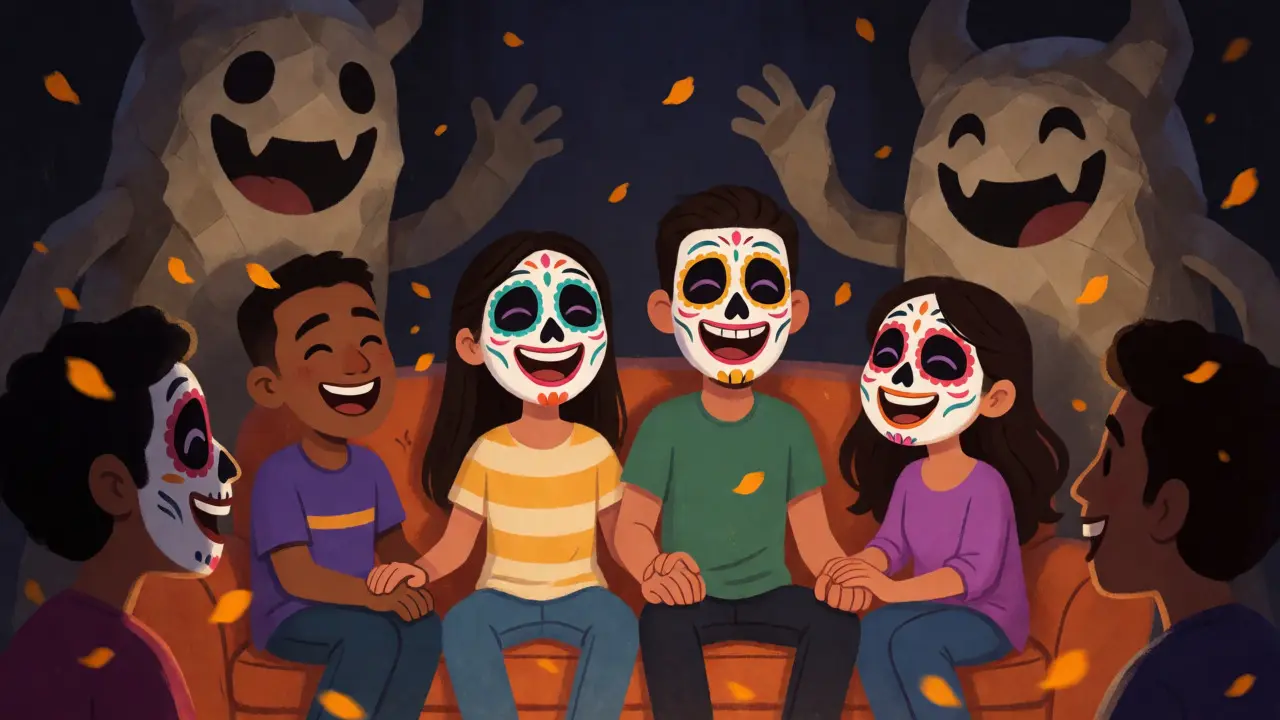
Second, manage your environment. Watching alone in a dark house amplifies fear because you lack social grounding. Watching with friends provides Social Buffering, the phenomenon where the presence of others reduces the physiological impact of stressors. Laughing at a jump scare with a friend turns the fear response into a bonding moment. The shared experience reframes the threat as entertainment.
Finally, practice mindfulness. Notice your breathing. When you feel the tension build, consciously exhale. Deep, controlled breathing activates the parasympathetic nervous system, which counteracts the fight-or-flight response. You can’t stop the initial jolt, but you can shorten the recovery time.
Why do I feel angry after a jump scare?
Anger is a common secondary emotion following fear. When your fight-or-flight response is triggered, your body prepares for combat. If there is no actual enemy to fight, that aggressive energy needs an outlet. Additionally, feeling manipulated by the filmmaker can trigger irritation, especially if the scare felt unearned or cheap.
Do jump scares actually hurt your heart?
For most healthy individuals, no. While your heart rate spikes and blood pressure rises temporarily, these changes are similar to those experienced during exercise. However, people with pre-existing heart conditions or severe anxiety should consult a doctor, as extreme stress can occasionally trigger arrhythmias or panic attacks.
Is desensitization real in horror fans?
Yes. Repeated exposure to jump scares can lead to habituation, where the physiological response diminishes over time. Experienced horror fans often become better at predicting scares or simply tolerate the adrenaline surge better. However, this doesn't mean they don't feel anything; they just recover faster and analyze the technique rather than just reacting.
Why are loud noises so effective in horror?
Loud noises trigger the acoustic startle reflex, which is one of the fastest neural pathways in the human body. Unlike visual processing, which requires interpretation, auditory threats are processed almost instantaneously by the brainstem. This speed ensures a reaction even if the visual component is unclear or ambiguous.
Can you train yourself to not get scared?
You can train your recovery, not necessarily the initial reflex. Techniques like cognitive reappraisal (telling yourself 'this is safe') and controlled breathing help mitigate the aftermath. Watching behind-the-scenes footage can also demystify the production, reducing the illusion of reality that fuels the fear.