You’ve probably seen it happen. A tiny, obscure thriller drops on a streaming platform with zero marketing budget. Three weeks later, it sits at an 8.4 on IMDb is the world's most popular online database of information related to films, television programs, home videos, video games, and streaming content online. Meanwhile, a blockbuster superhero movie with a $200 million budget hovers around a 6.9. Does that mean the obscure thriller is objectively better? Almost certainly not. It means you’re looking at sampling bias in action-a statistical distortion where the people who bother to rate something aren't representative of everyone who watched it.
This isn’t just a quirk of data nerds; it fundamentally changes how we discover movies. If you rely solely on aggregate scores to pick your next watch, you are systematically misled by who chose to speak up. Let’s break down why niche films often look artificially brilliant (or terrible) and how you can adjust your mental filter to find hidden gems without falling for the hype.
The Math Behind the Movie Score
To understand why ratings skew, you have to look at who is rating. In statistics, this is called selection bias. For major studio releases, the sample size is huge-millions of votes. When you average millions of opinions, the law of large numbers kicks in. The score tends to regress toward the mean, usually landing between 6.5 and 7.5 for decent but forgettable blockbusters. The extremes cancel each other out.
Niche films operate differently. Imagine a documentary about competitive yo-yoing. Only a few thousand people will ever watch it. Who watches it? Usually, two groups: hardcore enthusiasts who love yo-yos, and curious viewers who might hate it. Casual viewers skip it entirely because they don’t care enough to click play. This creates a polarized dataset. You rarely get the "meh" response from the middle of the bell curve because the middle didn't show up. Consequently, the average gets pulled toward the extremes of enthusiasm or disdain, depending on which group was more motivated to leave a review.
Why Enthusiasts Inflate Scores
There is a phenomenon known as the "fanbase effect." When a film targets a specific subculture-say, horror fans or anime devotees-the people who seek it out are already predisposed to like it. They aren't discovering it by accident; they are hunting for it. Because their expectations were aligned with the genre tropes, they are more likely to leave a high rating to signal their identity within that community.
Consider a low-budget indie sci-fi film released directly to VOD. The only people watching it are those who specifically searched for "indie sci-fi" or followed the director’s previous work. These viewers are primed to appreciate the effort, even if the execution is flawed. They rate it an 8 or 9 to encourage others in their niche to check it out. This inflates the score compared to a general audience film, where a viewer expecting a Marvel-style action sequence might feel cheated by slow pacing and rate it a 4.
The Horror Genre Paradox
Horror provides the clearest example of sampling bias distorting quality perception. Historically, horror films receive lower aggregate scores than dramas or comedies. Why? Because the barrier to entry is emotional. People watch horror to be scared. If a film fails to scare them, they feel they wasted their time and money. This leads to harsher penalties for failure.
However, within the horror niche, there is a subset of "elevated horror" or arthouse fright-fests that skew incredibly high. Films like Hereditary or Midsommar often score higher than mainstream slashers not necessarily because they are universally liked, but because the audience that seeks them out is culturally invested in the genre's artistic merit. The casual viewer who wanted a jump-scare fest skips these, removing the negative data points that would otherwise drag the average down. The result is a rating that reflects the taste of the connoisseur, not the crowd.
| Attribute | Blockbuster Release | Niche/Indie Release |
|---|---|---|
| Voter Sample Size | Hundreds of thousands to millions | Few hundred to few thousand |
| Audience Motivation | Casual entertainment, social currency | Specific interest, fandom support |
| Sensitivity to Flaws | High (expectations set by marketing) | Low (expectations managed by context) |
| Rating Volatility | Low (stable average) | High (easily swayed by small groups) |
| Bias Direction | Regresses to Mean (6.5-7.5) | Polarizes (Very High or Very Low) |
The Danger of Small Sample Sizes
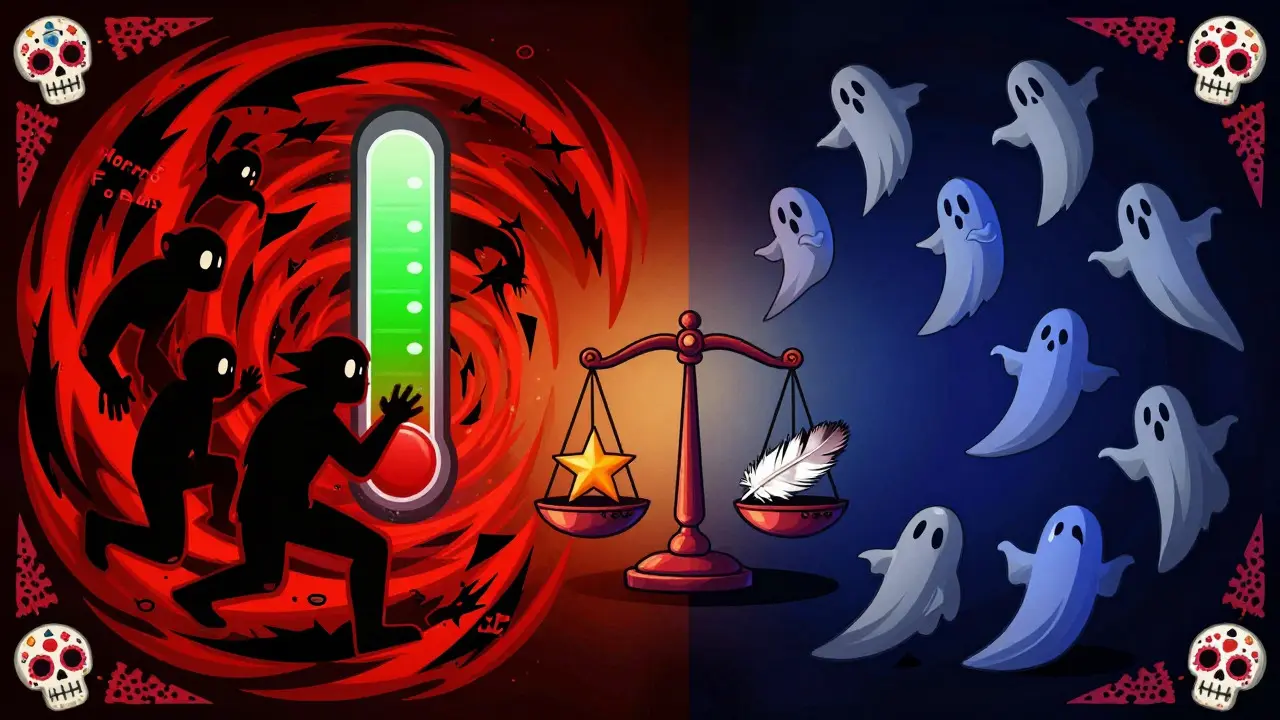
When a film has fewer than 1,000 votes, the statistical significance of its score drops dramatically. One disgruntled user having a bad day can drop a perfect 10 to a 7.5. Conversely, five friends of the director can boost a mediocre film to an 8.5. Platforms like Rotten Tomatoes try to mitigate this with weighted averages, but IMDb and Letterboxd still heavily favor raw counts in their sorting algorithms.
This volatility is dangerous for discovery. If you sort by "Highest Rated" and filter for films with under 500 votes, you aren't seeing the best films; you're seeing the films with the most aggressive fanbases. I once discovered a local New Zealand short film that held a perfect 10 rating for months simply because the cast and crew voted for it. Once the wider public got hold of it, it settled into a respectable but realistic 6.8. The initial 10 wasn't a lie; it was just a snapshot of a biased room.
How to Spot Artificially High Scores
You don’t need a statistics degree to navigate this. There are simple heuristics you can use to sanity-check a rating before committing two hours of your life.
- Check the Vote Count: Always look at the number of votes alongside the score. A 9.0 with 50 votes is meaningless. A 7.5 with 500,000 votes is reliable data. Aim for films with at least 10,000 votes for a true sense of consensus.
- Read the Negative Reviews First: On platforms like IMDb or Amazon, filter reviews by "Most Critical." If the top negative reviews are complaining about things that don't matter to you (like "too much dialogue" in a drama), the high score might be valid for your tastes. If they complain about objective flaws (bad audio, plot holes), be wary.
- Look for Polarization: Check the histogram of ratings. If you see a massive spike at 10 and 1, with almost nothing in the middle, the film is divisive. It won't appeal to everyone. If the graph looks like a bell curve centered around 7, it’s broadly acceptable.
- Contextualize the Genre: Compare the score to other films in the same micro-genre. An 8.0 for a zombie comedy is excellent. An 8.0 for a Shakespeare adaptation might be considered poor.

Platform Differences Matter
Not all rating systems suffer equally from sampling bias. Rotten Tomatoes uses a binary system based on professional critics, which reduces the impact of casual voter noise but introduces critic bias. Critics tend to reward novelty and technical achievement over pure entertainment value, which can skew niche arthouse films high while penalizing crowd-pleasers.
Letterboxd is a social networking service for sharing, discovering, and tracking films, and its culture skews younger and more cinephile-oriented. Here, niche films often score higher because the user base actively seeks out obscure titles. A generic rom-com might get mocked for being "basic," lowering its score, while a weird experimental film gets praised for its audacity. Understanding the demographic of the platform is key to interpreting the score.
Adjusting Your Expectations
If you love finding hidden gems, stop trusting the headline number. Instead, treat ratings as a compass, not a map. Use high-rated niche films as a starting point, then dive into the comments section. Look for users who describe themselves similarly to you. If you enjoy character-driven stories, ignore the rating if the top reviewer says, "I hated it because not enough explosions happened."
Sampling bias doesn't make ratings useless-it makes them context-dependent. A niche film’s high score tells you that the people who sought it out loved it. That’s valuable info, but it’s not a guarantee you will. By recognizing the bias, you stop being passive consumer of data and start becoming an active curator of your own taste.
Is a higher rating always better for niche films?
No. A high rating on a niche film often indicates strong approval from a specific subgroup rather than universal quality. It suggests the film delivers exactly what its target audience wants, but it may alienate general viewers.
Why do some movies have very few votes but high scores?
This is usually due to limited distribution or recent release. Early adopters and fans often rate highly to boost visibility, creating an inflated average until a broader audience samples the film.
Does Rotten Tomatoes suffer from sampling bias too?
Yes, but differently. It suffers from critic bias. Professional critics may overrate avant-garde or technically complex niche films while underrating formulaic but enjoyable mainstream hits.
How many votes are needed for a reliable rating?
While there is no magic number, statistically, reliability increases significantly after 1,000 votes. For mainstream accuracy, look for 10,000+ votes to ensure the sample represents a diverse cross-section of viewers.
Can I trust a 9.0 rating on IMDb?
Only if the vote count is substantial (usually 100k+). A 9.0 with 500 votes is likely skewed by a dedicated fanbase. Check the rating distribution graph to see if it's polarized.