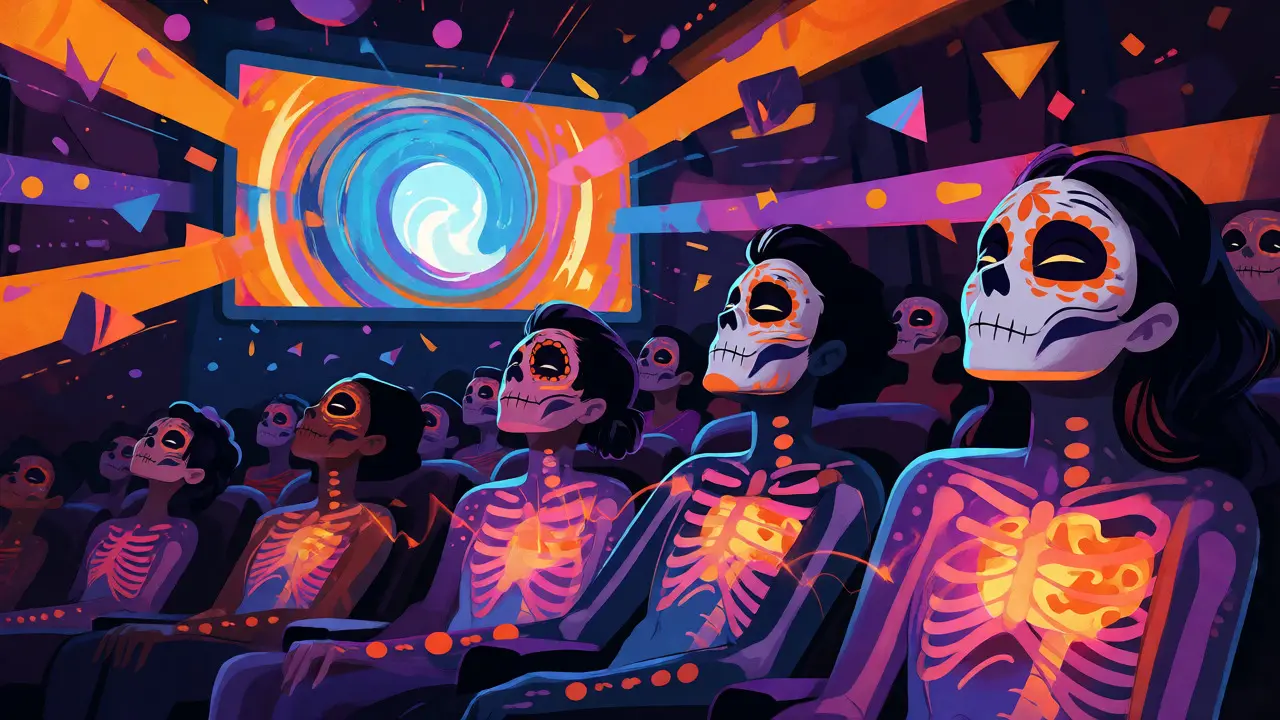
You know that feeling when a movie scene makes your stomach drop, or the sound design in a horror film makes your skin crawl before you even see the monster? That’s not just good acting or fancy editing. It is phenomenology of film, a philosophical approach to cinema that focuses on how viewers physically and emotionally experience movies through their bodies and senses. Most film criticism talks about what a movie means. Phenomenology asks what it feels like to be there.
This shift from interpretation to sensation changes everything. Instead of decoding symbols, you start noticing how camera movement mimics eye movement, how shaky handheld shots trigger your inner ear, and how close-ups create a sense of intimacy that bypasses logic. If you have ever walked out of a theater feeling changed rather than just informed, this framework explains why.
What Is Phenomenology in the Context of Cinema?
To get this right, we need to strip away the academic jargon. Phenomenology is the study of structures of consciousness as experienced from the first-person point of view. In film, it rejects the idea that you are a passive observer watching a screen. You are an active participant whose body reacts to light, sound, and motion.
Think about Maurice Merleau-Ponty, a French philosopher who argued that perception is fundamentally bodily. He believed we don’t just think with our brains; we perceive with our whole selves. When applied to movies, this means the camera isn’t just a recording device. It becomes a prosthetic extension of your own senses. A low-angle shot doesn’t just show a character looking up; it forces your neck muscles to tense slightly, creating a physical sensation of awe or submission.
This approach challenges traditional Film Theory, which often treats cinema as a language to be read. Phenomenology treats it as an environment to be inhabited. The goal isn’t to analyze the director’s intent but to map the viewer’s Lived Experience, defined as the subjective, immediate awareness of being present within a specific time and space.
The Role of Embodiment in Watching Movies
Embodiment is the process by which mental processes are influenced by the physical body and its interactions with the world. In cinema, this is where the magic happens. Your brain simulates the actions you see on screen. This is linked to Mirror Neurons, brain cells that fire both when an animal acts and when the animal observes the same action performed by another.
When you watch a character run, your motor cortex activates as if you were running. When they touch a hot stove, you feel a phantom heat. Directors use this biological fact intentionally. Consider the opening sequence of Saving Private Ryan. The chaotic, blurred visuals and deafening sound aren’t just stylistic choices. They overload your sensory processing, inducing a state of shock and disorientation that mirrors the soldiers’ experience. You don’t understand war intellectually; you feel its chaos in your gut.
- Kinesthetic Empathy: Feeling the weight and balance of characters’ movements.
- Tactile Visuals: Seeing textures (rain, sand, fabric) so vividly you imagine touching them.
- Vestibular Engagement: Camera rolls and tilts affecting your sense of balance.

Presence vs. Representation
Traditional narrative film relies on representation. It shows you a story happening somewhere else. Phenomenological film creates Presence, which is the quality of being immediately felt or sensed, rather than merely observed as an object. There is a huge difference between watching a storm and feeling the pressure change in the room.
How do filmmakers achieve this? They break the invisible contract of classical Hollywood editing. Long takes, for example, force you to stay in real-time with the character. You can’t skip ahead. You share their boredom, their tension, their waiting. Films by directors like Andrei Tarkovsky or Béla Tarr rely heavily on this technique. Their scenes drag on until the duration itself becomes palpable. You stop watching the plot and start inhabiting the moment.
| Feature | Traditional Narrative Film | Phenomenological Approach |
|---|---|---|
| Primary Goal | Tell a coherent story | Create a sensory experience |
| Viewer Role | Observer/Interpreter | Participant/Experiencer |
| Editing Style | Invisible cuts, fast pacing | Long takes, rhythmic pacing |
| Focus | Plot points and dialogue | Atmosphere, texture, duration |
| Emotional Impact | Cognitive understanding | Somatic (bodily) reaction |
Sensory Design and Atmospheric Immersion
Sound is often more powerful than image in creating presence. Dolby Atmos and spatial audio technologies have revolutionized how we feel immersed in a scene. But it’s not just about volume. It’s about directionality and frequency. Low-frequency sounds (infrasound) below 20Hz can cause anxiety or unease without being consciously heard. High-frequency screeches trigger instinctive fight-or-flight responses.
Lighting also plays a crucial role in phenomenological impact. Naturalistic lighting that shifts with time of day anchors the viewer in a believable reality. Harsh, artificial lighting can create a sense of alienation or exposure. In Parasite, Bong Joon-ho uses verticality and light gradients to make class disparity feel physically oppressive. The rich live in sunlight; the poor live in semi-darkness. You feel the claustrophobia of the basement not because someone tells you it’s small, but because the frame restricts your visual field.

Time and Duration in Lived Experience
One of the most profound aspects of phenomenological film is its manipulation of time. Henri Bergson distinguished between clock time and duration (durée), the continuous flow of conscious experience. Cinema usually compresses time. Phenomenological cinema often expands it.
When a film refuses to cut away during a painful or mundane moment, it forces you to endure that duration alongside the character. This creates a shared temporality. You aren’t just seeing grief; you are sitting with it. This is why some art-house films feel "slow" to casual viewers. They aren’t boring; they are respecting the actual pace of human experience. Real life doesn’t jump-cut from heartbreak to recovery. It lingers.
Practical Application: How to Watch Phenomenologically
You don’t need a philosophy degree to appreciate this. Here is how you can shift your viewing habits to engage with embodiment and presence:
- Notice Your Body: During intense scenes, check your posture. Are you leaning forward? Holding your breath? Clenching your jaw? These are signs of somatic engagement.
- Listen to the Silence: Pay attention to what isn’t said. Ambient noise, breathing, and room tone contribute significantly to the feeling of presence.
- Track Camera Movement: Ask yourself: Does the camera move like a person? If it shakes, does it mimic a heartbeat or panic? If it glides, does it feel detached or dreamlike?
- Resist Plot Obsession: Allow yourself to get lost in the atmosphere. If a scene has no dialogue, don’t look for hidden meaning. Look for sensory texture.
Is phenomenology only for art-house films?
No. While art-house films often prioritize these elements, mainstream blockbusters use them constantly. Action sequences in Marvel movies rely on kinetic energy and spatial awareness. Horror films depend entirely on visceral, bodily reactions like jump scares and tension. Any film that aims to immerse you rather than just inform you engages phenomenological principles.
How does VR relate to phenomenology of film?
Virtual Reality (VR) is essentially pure phenomenology. It removes the frame entirely, placing the viewer inside the space. Because you control the gaze, the sense of agency and presence is heightened. However, it also introduces new challenges, such as motion sickness, which highlights the importance of vestibular compatibility in embodied media.
Can I apply this to analyzing scripts?
Yes, but indirectly. Scripts describe events, but phenomenology focuses on execution. When analyzing a script, look for descriptions of sensory details-weather, temperature, texture, sound-that suggest a focus on atmosphere over plot mechanics. Writers who emphasize these elements are often writing with a phenomenological sensibility.
Does this mean plot doesn't matter?
Not at all. Plot provides structure, but phenomenology adds depth. A strong plot gives you a reason to care about the characters; phenomenology gives you a way to feel their journey. The best films integrate both, using narrative drive to sustain attention while using sensory immersion to deepen emotional resonance.
Who are key figures in this field besides Merleau-Ponty?
Vivian Sobchack is a major contemporary figure who wrote extensively on "The Address of the Eye." Laura Marks writes on "haptic visuality," exploring how images can function like touch. Steven Shaviro also contributes significantly to the discussion of affect and sensory experience in cinema.