
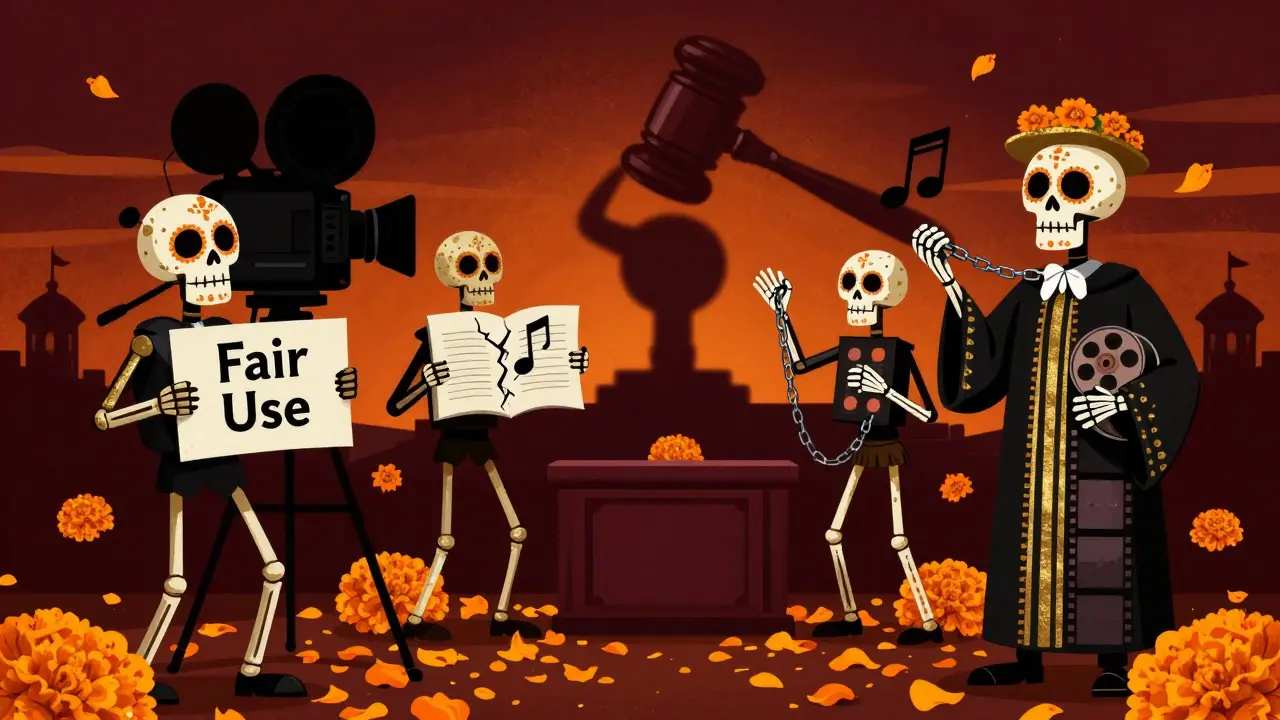
Making a documentary isn’t just about capturing powerful moments-it’s about avoiding lawsuits. Too many filmmakers jump into production without understanding the legal landmines waiting to blow up their project. You might think, "I’m just telling the truth," or "It’s public footage," but the law doesn’t care about your intentions. It cares about permissions, context, and how you use what you’ve filmed. Skip the basics, and you could lose your film, your funding, or even face a lawsuit.
What Fair Use Actually Means (And What It Doesn’t)
Fair use is the most misunderstood concept in documentary filmmaking. It’s not a free pass. It’s a legal defense you can only claim after someone sues you. Courts look at four things: why you used the material, what you used, how much you used, and whether it hurts the original’s market.
Let’s say you’re making a film about police brutality and you include a 12-second clip from a news broadcast showing an officer’s actions. That’s likely fair use. Why? You’re using it for commentary, it’s a small portion, and you’re not replacing the news station’s content. But if you use the same clip as background music over a montage of emotional interviews? That’s not fair use. You’re not commenting-you’re enhancing your own film with someone else’s work.
The U.S. Copyright Office says fair use applies to criticism, comment, news reporting, teaching, and research. Documentaries fit under criticism and comment-but only if your use is transformative. That means you’re adding new meaning or message. A 30-second clip of a song playing in a car during an interview? Probably not transformative. A 15-second clip of that same song, slowed down and layered with audio analysis showing how its lyrics reflect systemic oppression? That’s transformative.
Don’t assume you’re safe just because you didn’t monetize your film. Nonprofit status doesn’t protect you. The 2013 case Cariou v. Prince showed that even commercial use can be fair if it’s transformative. The key isn’t profit-it’s purpose.
Release Forms: Not Optional, Just Often Ignored
If you film someone in a private space-or even in public if they’re identifiable and the context could harm them-you need a release form. This isn’t bureaucracy. It’s insurance. Without it, your film could be pulled from festivals, blocked by distributors, or sued for invasion of privacy or defamation.
There are two types of releases: talent releases and location releases. Talent releases cover people on camera. Location releases cover private property you’re filming on-like someone’s home, a business, or a school.
Here’s a real case: A filmmaker shot interviews with homeless individuals in a park. He didn’t get releases because, he said, "They were public figures in a public space." When the film screened at a major festival, one subject sued. Why? The film portrayed him as unstable and addicted, using his words out of context. He had no release. The festival pulled the film. The filmmaker lost $80,000 in grants and distribution deals.
Even if someone says "sure, go ahead," get it in writing. A signed release form doesn’t need to be fancy. It should include: their full name, what they’re granting (right to use image and voice), the purpose (documentary), and that they understand they won’t be paid. The International Documentary Association offers free templates that work.
Special cases: Kids under 18? You need a parent or guardian to sign. People with cognitive impairments? Get a legal guardian. Filming in a hospital? You need HIPAA-compliant releases, not just a standard form.
The Hidden Risks: Privacy, Defamation, and Emotional Harm
Even with releases, you can still get sued. Why? Because legal risks go beyond copyright and consent.
Defamation happens when you portray someone in a false light that damages their reputation. Say you interview a small-town mayor who’s being investigated for corruption. You show him laughing at a fundraiser while your narration says, "He shows no remorse." But the footage actually shows him laughing at a joke about his dog. That’s defamation. You didn’t lie-but you manipulated context.
Privacy invasion is trickier. If someone is in a public place, you can film them. But if you zoom in on their face, record a private conversation, or show them in a vulnerable moment-like crying after losing a job-you’re crossing a line. The 2021 case Watts v. ABC ruled that even public figures have a reasonable expectation of privacy during emotional breakdowns.
And then there’s emotional harm. A 2023 study from the University of Southern California’s Annenberg School found that 42% of documentary subjects reported lasting psychological distress after appearing in films. One subject in a film about addiction took her own life two years after release. Her family sued. The court dismissed the case, but the damage was done. The film was shelved. The filmmaker lost funding.
There’s no legal requirement to protect emotional well-being-but there’s a moral one. Talk to your subjects after filming. Offer counseling resources. Let them review rough cuts. Don’t just film trauma-respect it.
Music, Archives, and Stock Footage: The Permission Trap
You found the perfect archival clip from 1987. It’s on YouTube. You think, "It’s online, so it’s free." Wrong. Just because something’s publicly available doesn’t mean it’s free to use. The person who uploaded it likely didn’t own the rights.
Same with music. You found a song on SoundCloud by an indie artist. You message them: "Can I use this?" They say yes. But did they own the rights? Maybe they were just the singer. The composer? The record label? You need written permission from every rights holder. That’s often three or four people.
Stock footage sites like Shutterstock or Getty Images offer licenses-but read the fine print. Some licenses don’t cover documentaries. Some require additional fees for broadcast. Some ban use in political films. Always check the license type before downloading.
For historical footage, contact archives directly. The Library of Congress, National Archives, and university film collections often have public domain materials. But even those can come with restrictions. Always ask for written confirmation of usage rights.
What You Need Before You Shoot
Here’s what every documentary filmmaker should have before pressing record:
- Written release forms for every identifiable person on camera
- Location releases for private property (homes, businesses, schools)
- Music licenses for every song used-no exceptions
- Archival footage permissions with written proof of rights
- A legal checklist reviewed by an entertainment lawyer before editing
Don’t wait until you’re in post-production to deal with this. If you’re using public domain material, verify it yourself. Just because it’s old doesn’t mean it’s free. A 1950s newsreel might still be under copyright if the distributor never let it lapse.
For low-budget filmmakers, legal help doesn’t have to cost thousands. Organizations like the International Documentary Association and Columbia University’s Documentary Law Clinic offer free or low-cost legal advice. Some law schools have student-run clinics that help indie filmmakers.
What Happens When You Skip the Basics
One filmmaker spent $120,000 making a film about a controversial religious group. He didn’t get releases from members. He used unlicensed music. He used a 45-second clip from a TV show without permission. The film premiered at Sundance. Two weeks later, the TV network sent a cease-and-desist. The music rights holder sued. The subjects filed for privacy violations. The film was pulled. He lost his distribution deal. His insurance didn’t cover it because he didn’t disclose the legal risks.
Another filmmaker made a film about a local school district. He didn’t get releases from students. The school district sued for invasion of privacy. The court ruled against him. He had to pay $150,000 in damages. He never made another film.
These aren’t rare cases. They happen every year. The industry calls them "legal nightmares." They’re avoidable.
Final Rule: When in Doubt, Get Permission
There’s no shortcut. Fair use is a shield, not a sword. Releases aren’t red tape-they’re your safety net. If you’re unsure whether you need permission, ask. If you’re still unsure, don’t use it.
The best documentaries don’t win because they pushed boundaries-they win because they built trust. With their subjects. With their audiences. And with the law.
Do I need a release if I film someone in public?
Yes-if they’re identifiable and the context could harm their reputation, privacy, or emotional well-being. Even in public, you can’t film someone’s face for 30 seconds while narrating they’re a criminal. That’s invasion of privacy. Releases protect you from lawsuits, even if the law doesn’t always require them.
Can I use news footage without permission?
Only under fair use-and even then, it’s risky. You can use short clips for commentary, criticism, or education. But you can’t use them as background filler or to enhance emotion. Always credit the source. If you’re unsure, contact the network. Many have media departments that grant limited-use permissions for documentaries.
What if my subject changes their mind after signing a release?
A signed release is legally binding, but ethics matter. If someone asks to be removed and you’ve already edited the film, consider honoring their request. Courts rarely force removal after release, but festivals and distributors often will. It’s better to lose a scene than a reputation.
Is fair use the same in other countries?
No. The U.S. has fair use. Most other countries have "fair dealing," which is much narrower. In the UK, Canada, and Australia, you can only use copyrighted material for specific purposes like criticism or news reporting-and even then, only small portions. If you plan to distribute internationally, assume you need permission everywhere.
Can I use a song if I change the tempo or remix it?
No. Changing the tempo, pitch, or arrangement doesn’t make it yours. You still need permission from the composer, publisher, and record label. Even a 5-second sample requires clearance. There’s no "10-second rule." That’s a myth.