
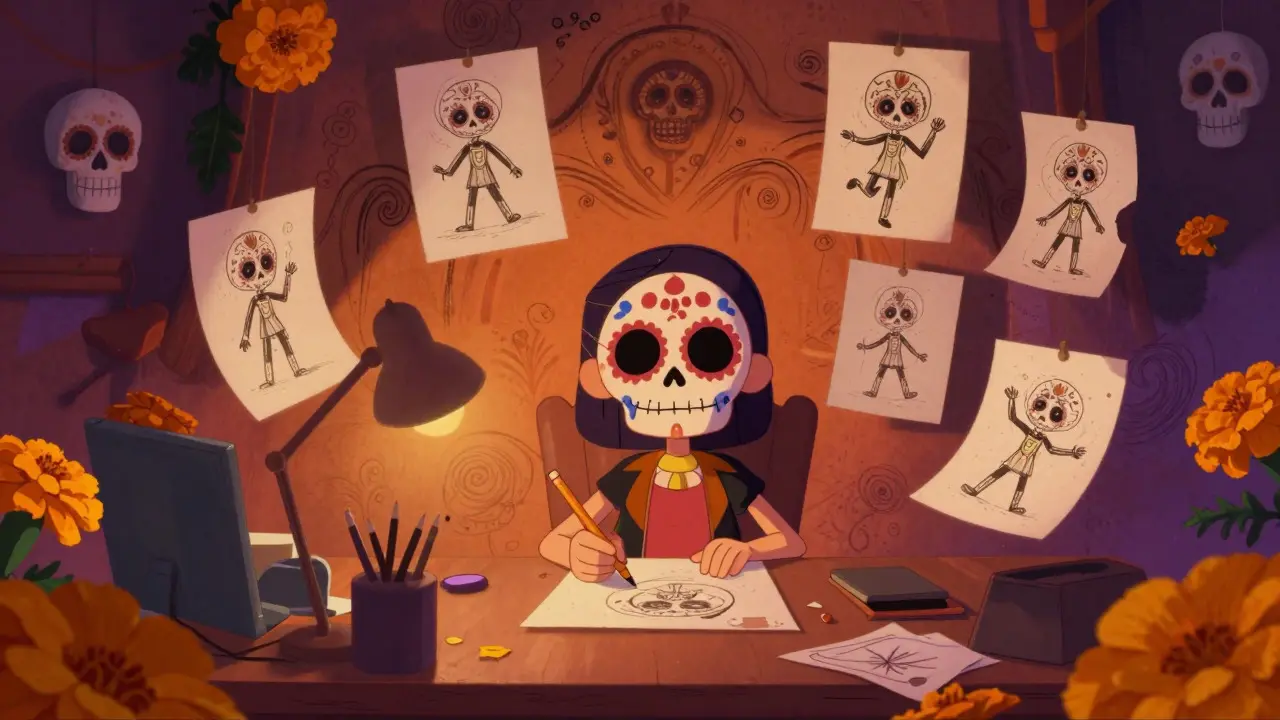
There is a persistent myth that hand-drawn animation is dying. You might have seen headlines declaring the death of traditional cel animation after every major studio shift toward digital pipelines. But look closer at the film landscape in 2026, and you’ll see something different. Studios are not abandoning one style for the other; they are blending them. The debate isn't about which method is "better," but rather which tool fits the specific story being told. For filmmakers and audiences alike, understanding the distinct textures, costs, and emotional impacts of these two dominant techniques is key to appreciating modern animated cinema.
The Texture of Tradition: What Makes Hand-Drawn Unique?
Hand-drawn animation is a technique where artists create each frame individually on paper or digital tablets, capturing the imperfections of human movement. Unlike computer-generated imagery, this process relies on the physical act of drawing. When you watch a classic like *Spirited Away* or a recent indie hit like *Flow*, you notice a quality often described as "organic." Characters breathe with a slight irregularity. Backgrounds have visible brushstrokes. This imperfection is not a bug; it’s a feature. It creates an intimate connection between the viewer and the character because you can feel the artist's hand behind every motion.
The aesthetic appeal lies in its flexibility. Artists can change the aspect ratio, skew the perspective, or use non-linear timing to convey emotion. In a scene of high tension, a hand-drawn animator might stretch a character's arm beyond anatomical limits to emphasize fear. This expressive freedom allows for a stylized reality that feels more dreamlike than realistic. However, this comes at a steep price. Producing a single minute of high-quality hand-drawn animation can require hundreds of individual drawings. For a feature-length film, this means thousands of hours of labor from specialized artists who must maintain consistent character designs across thousands of frames.
The Precision of Pixels: The Power of CGI
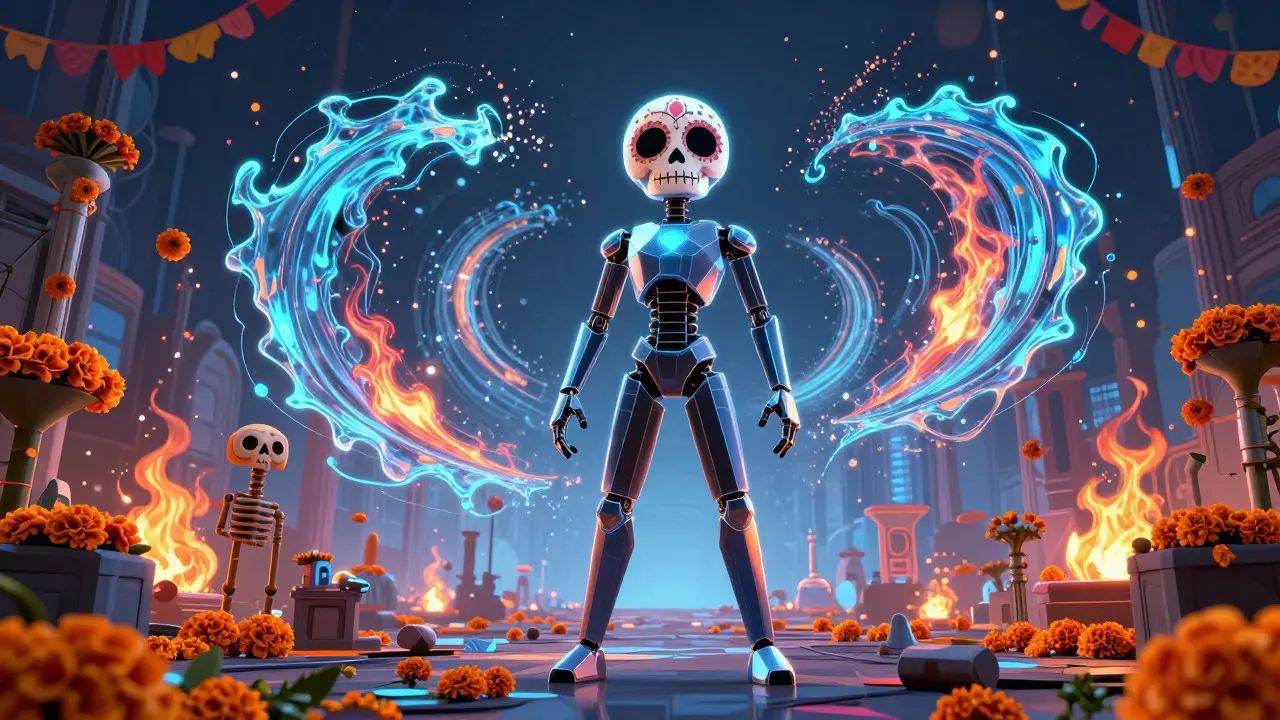
CGI Animation, or Computer-Generated Imagery, is a digital process using 3D modeling, rigging, and rendering to simulate realistic or stylized environments and characters. Since the breakthrough of *Toy Story* in the 1990s, CGI has evolved from simple geometric shapes to photorealistic simulations. Today, software like Maya and Blender allows animators to control light, physics, and material properties with mathematical precision. If you need water to splash exactly according to fluid dynamics, or hair to move realistically in the wind, CGI is the superior tool. It removes the guesswork of physics, replacing it with simulation engines that calculate millions of data points per second.
The primary advantage of CGI is consistency and scalability. Once a character model is built and rigged, it can be reused infinitely without needing to redraw it from scratch. This makes it ideal for complex action sequences involving crowds, explosions, or intricate camera movements that would be nearly impossible to draw by hand. Furthermore, CGI allows for seamless integration with live-action footage, enabling hybrid films where real actors interact with digital creatures. This versatility has made it the industry standard for large-scale productions, particularly in franchises where continuity across multiple films is critical.
Comparing Production Workflows and Costs
Understanding the financial and logistical differences between these two methods helps explain why studios choose one over the other. The cost structures are fundamentally different. Hand-drawn animation is labor-intensive, meaning costs scale linearly with the number of artists and hours worked. CGI, on the other hand, has high upfront technology costs but lower marginal costs for reuse. A single CGI asset can be rendered into dozens of shots without additional drawing time, whereas each new angle in hand-drawn requires new artwork.
| Attribute | Hand-Drawn Animation | CGI Animation |
|---|---|---|
| Primary Tool | Paper, Pencil, Digital Tablet | 3D Software (Maya, Blender), Render Farm |
| Visual Style | Organic, Expressive, Imperfect | Precise, Consistent, Realistic or Stylized |
| Cost Driver | Artist Labor Hours | Technology Infrastructure & Rendering Time |
| Best For | Emotional Drama, Indie Films, Stylized Art | Action Sequences, Large Environments, Franchises |
| Revision Difficulty | High (Redrawing required) | Low (Adjusting parameters) |
One critical factor often overlooked is the revision process. In CGI, if a director wants to change the lighting in a scene, the team can adjust the lights and re-render the shot. In hand-drawn animation, changing the lighting might require redrawing hundreds of background elements. This makes CGI more agile for late-stage changes, which is valuable in commercial filmmaking where deadlines are tight. However, the "uncanny valley" effect remains a challenge for CGI. If a character looks almost human but moves slightly wrong, it can become disturbing. Hand-drawn animation avoids this trap entirely because the audience accepts the stylization from the first frame.
Hybrid Approaches: The Modern Standard
The binary choice between hand-drawn and CGI is becoming obsolete. Most major animated films released in the last five years use a hybrid pipeline. For example, *Spider-Man: Across the Spider-Verse* used CGI to handle complex crowd scenes and camera movements, but applied a hand-drawn filter to give the final image a comic book texture. This approach leverages the efficiency of digital tools while retaining the artistic flair of traditional methods.
This hybrid model allows directors to mix styles within a single film. One character might be rendered in full photorealism, while another is depicted in sketchy, rough lines to reflect their mental state. This stylistic variety keeps the visual experience dynamic. As hardware improves, the gap between what is possible digitally and what is possible physically continues to narrow. Tablets now allow artists to draw directly in 3D space, blurring the line between the two disciplines. The future of animation is not about choosing sides, but about mastering both languages and switching between them as the story demands.
Choosing the Right Style for Your Project
If you are involved in producing or commissioning animation, the decision should start with the narrative goal. Ask yourself: Does the story require emotional intimacy or epic scale? If the focus is on subtle facial expressions and personal drama, hand-drawn or heavily stylized 2D may resonate more deeply with the audience. If the plot involves high-speed chases, massive environmental destruction, or complex physics interactions, CGI will likely save time and budget in the long run.
Budget constraints also play a significant role. Independent creators often gravitate toward hand-drawn or limited-animation styles because they require less expensive software and render farms. They can work with a small team of talented artists. Conversely, large studios with deep pockets invest in proprietary CGI tools to maintain competitive advantages in visual fidelity. Regardless of the path chosen, the most successful animations prioritize clarity of vision over technical purity. The best tool is the one that serves the story most effectively.
Frequently Asked Questions
Is hand-drawn animation really dead?
No, it is not dead, but it has shifted. Major studios use it less for full features due to cost, but independent filmmakers and international studios continue to produce acclaimed hand-drawn works. It remains a vital art form for specific aesthetic goals.
Which is cheaper to produce: CGI or hand-drawn?
It depends on the project scope. Hand-drawn is cheaper for short, simple projects with few characters. CGI is cheaper for long projects with complex environments, crowds, or reusable assets, despite higher initial setup costs.
Can CGI look exactly like hand-drawn animation?
Yes, through post-processing effects and procedural texturing. Many modern films apply 2D filters to 3D models to mimic pencil strokes, ink bleeds, and paper grain, achieving a hybrid look that satisfies both camps.
What is the uncanny valley in animation?
The uncanny valley is a phenomenon where near-human CGI characters appear unsettling because they are almost, but not quite, realistic. Hand-drawn animation avoids this by embracing stylization, making minor imperfections acceptable.
Do I need a computer science degree to work in CGI?
Not necessarily. While technical roles like programming shaders benefit from CS knowledge, most animation jobs (modeling, rigging, texturing) require strong artistic fundamentals and proficiency in specific software packages like Maya or Blender.