
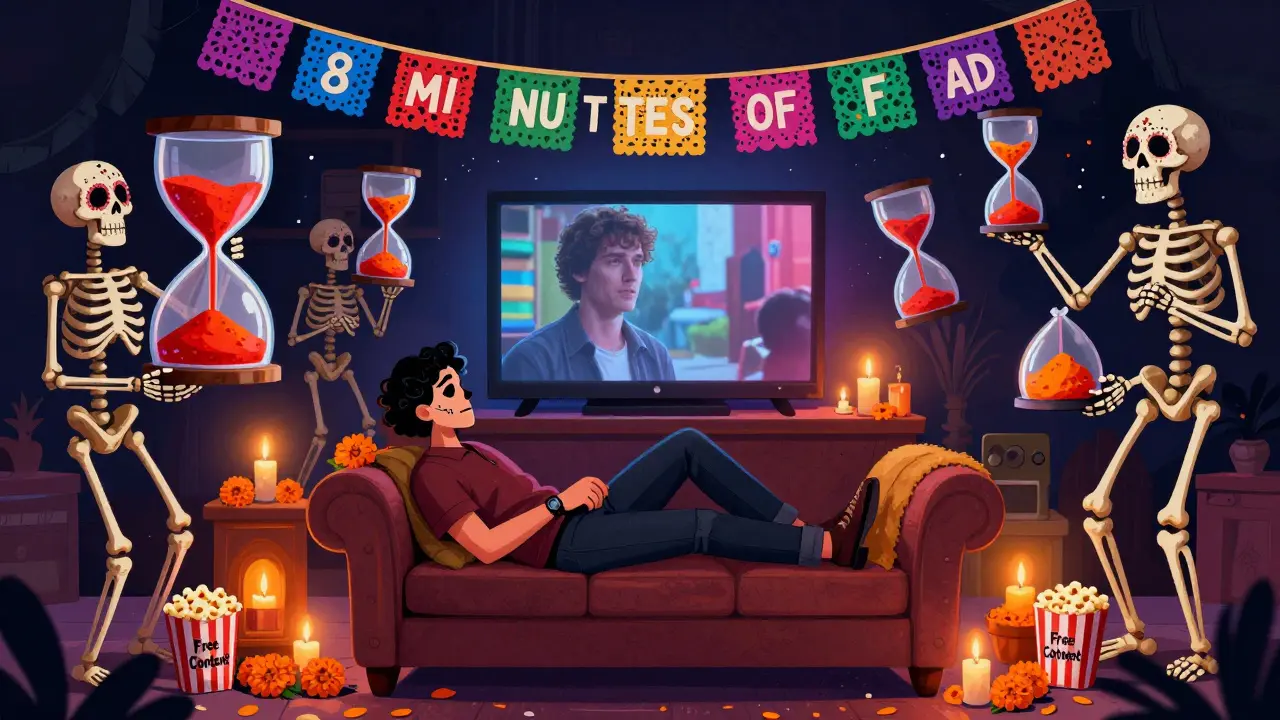
You open your favorite free streaming app, pick a movie, and hit play. Five minutes in, an ad pops up. Then another. And another. By the time the credits roll, you’ve spent more time watching commercials than the actual film. It’s not just you - this is the new normal for free streaming. But just how much advertising are you really seeing?
Ad breaks aren’t just occasional - they’re constant
Back in 2020, free streaming services like Tubi, Pluto TV, and Crackle averaged about 5 to 7 minutes of ads per hour. By 2025, that number jumped to 14 to 18 minutes per hour. That’s nearly one-third of your viewing time interrupted by ads. Some services, especially during peak hours or for newer releases, push it even higher - up to 22 minutes of ads per hour.
It’s not just longer ads. It’s more of them. Instead of one 30-second break between scenes, you now get three 15-second ads, a 60-second product plug, and a 20-second trailer for another show - all before the next scene loads. And unlike traditional TV, where you could count on a predictable ad schedule, streaming apps now use dynamic insertion. That means the ads change every time you pause and resume, or even when you switch devices.
Why do free streaming services pack in so many ads?
Because they have to. These platforms don’t charge you a monthly fee. Their entire business model depends on advertising revenue. And with more people cutting cable and switching to free options, the competition for your attention has exploded. In 2024, ad-supported streaming in the U.S. alone generated over $18 billion in revenue. That’s up 47% from just two years earlier.
Platforms like Tubi and Freevee don’t just want to fill your screen with ads - they want to maximize every second you spend watching. So they’ve optimized everything: shorter ad breaks, more frequent interruptions, and even pre-roll ads that play before the content even starts. Some apps now run ads even during the loading screen. You’re not just watching commercials - you’re being marketed to before you’ve even settled into your couch.
Not all ads are created equal
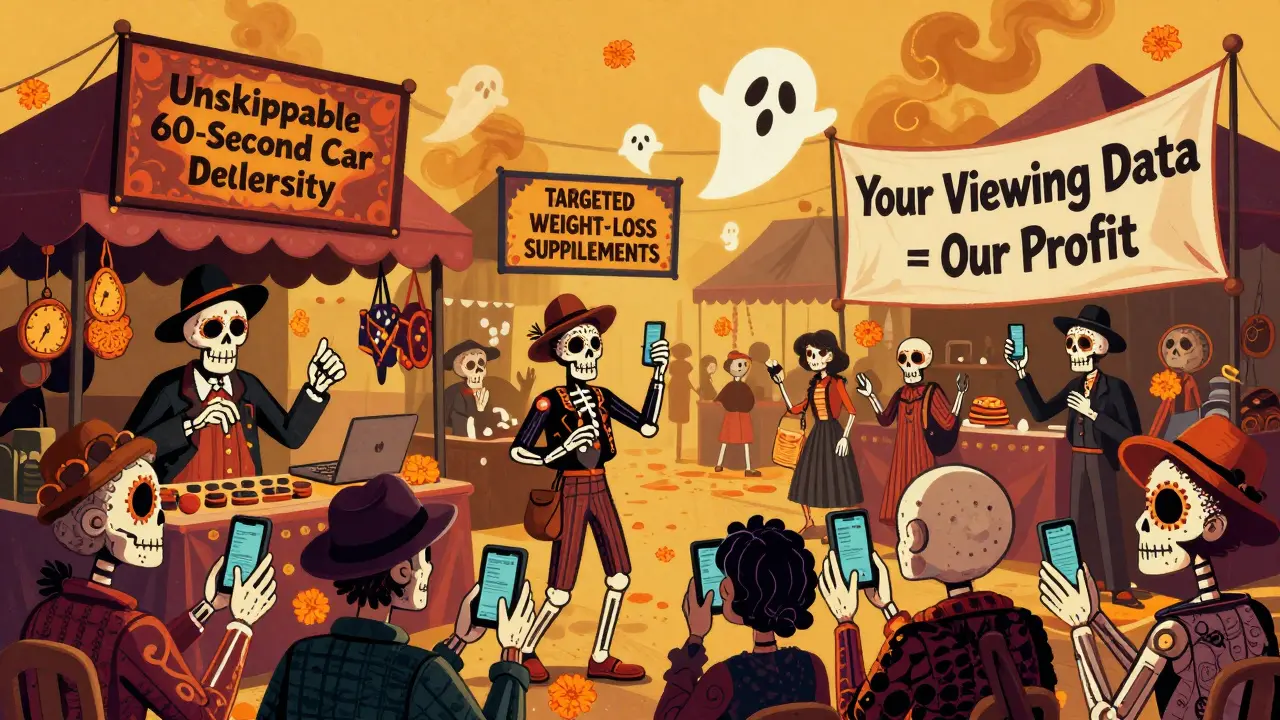
There’s a big difference between a 15-second ad for a laundry detergent and a 60-second trailer for a movie you actually want to see. But most free streaming services don’t make that distinction. You’ll see the same ad for a weight-loss supplement three times in 20 minutes. Or a local car dealership ad that plays even though you live 300 kilometers away.
Some services, like YouTube and Pluto TV, use targeting based on your viewing history. If you watch a lot of cooking shows, you’ll get ads for kitchen gadgets. If you binge crime dramas, expect to see ads for security systems. It’s not always creepy - but it’s always persistent.
Worse, some ads are unskippable. No matter how fast you tap, you’re locked in for the full duration. And unlike premium services like Netflix or Disney+, you can’t just turn them off. You’re stuck with them unless you upgrade - which defeats the whole purpose of going free.
How does this compare to cable TV?
Back in the cable days, you’d get about 12 to 15 minutes of ads per hour - mostly during commercial breaks between shows. But those breaks were predictable. You knew when they were coming. You could make coffee, go to the bathroom, or check your phone.
With free streaming, the ads are scattered randomly. They hit during the most intense scene. They cut off a joke right before the punchline. They play while you’re trying to follow a plot twist. It’s not just annoying - it’s designed to be disruptive. And studies from the University of Auckland in 2025 show that viewers who watch free streaming services report 68% higher levels of frustration compared to those using ad-free platforms.
What’s the real cost of ‘free’?
When you say you’re watching something for free, you’re not paying with money. You’re paying with time. And attention. And patience.
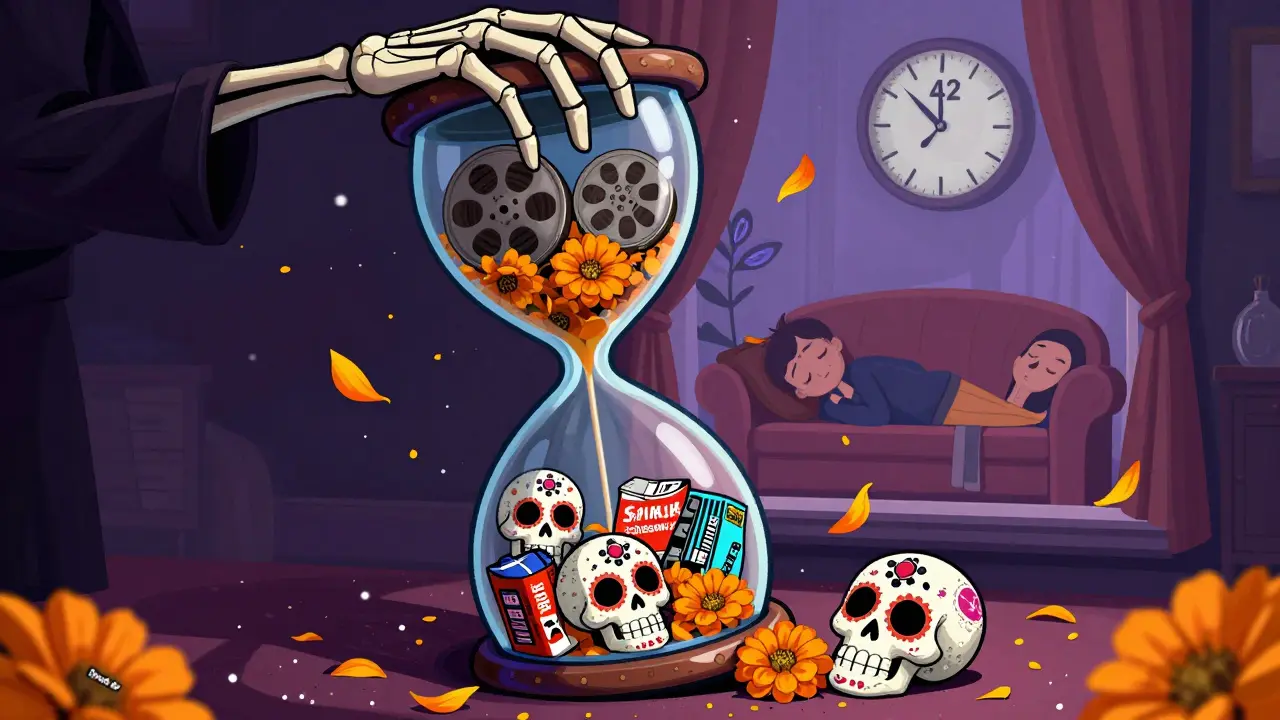
Let’s say you watch three hours of free streaming a week. At 16 minutes of ads per hour, that’s 48 minutes of ads every week. Over a year, that’s over 42 hours of your life spent watching commercials. That’s more than a full workweek. And you didn’t get paid for it.
Some people say, “It’s the price of free content.” But here’s the thing - you’re not just paying with time. You’re also paying with data. Every ad you see is tracked. Your viewing habits, device type, location, even how long you pause before skipping - all of it gets collected. That data is sold to advertisers. So you’re not just watching ads - you’re the product.
Is there a better way?
Yes - but it’s not always obvious.
Some free streaming services offer a “low-ad” mode. Tubi has an option to reduce ad frequency by 30% if you enable “Ad Experience Settings.” It’s buried in the app’s settings menu, but it works. Crackle sometimes lets you watch a 10-second survey to skip an ad. Not ideal, but better than being stuck.
Another option: use a free trial of a premium service. Many platforms like Hulu, Peacock, or Paramount+ offer 30-day trials with no ads. Use that time to binge what you want, then cancel. You’re not paying for a year - you’re paying for a few weeks of uninterrupted viewing.
And if you’re really serious about cutting ads: consider using a legal ad blocker on your browser. While it won’t work on most mobile apps, it can block ads on desktop versions of free streaming sites like Plex or Vudu. Just make sure you’re not violating any terms of service - and don’t expect it to work on everything.
What you can do today
You don’t have to accept this as normal. Here’s what you can do right now:
- Check your app settings - Look for “Ad Preferences,” “Ad Experience,” or “Reduce Ads.” Some services let you adjust frequency.
- Use a different platform - Try switching from Pluto TV to Tubi, or from Freevee to Crackle. Ad loads vary wildly between services, even for the same movie.
- Watch during off-peak hours - Ads are often shorter and less frequent late at night or early in the morning.
- Track your ad time - Next time you watch, time how long the ads take. You’ll be shocked. Awareness is the first step to change.
- Consider a cheap premium tier - Hulu’s ad-supported plan costs $9 a month. That’s less than your weekly coffee. For many, it’s worth it.
The truth is, free streaming with ads isn’t going away. But you don’t have to be a passive victim of it. You can take back control - one setting, one platform, one hour at a time.
How many ads are there on free streaming services in 2026?
On average, free streaming services show between 14 and 18 minutes of ads per hour. Some platforms, especially during peak viewing times or for new releases, can push that to 22 minutes. That’s nearly one-third of your viewing time interrupted by commercials.
Why do free streaming apps have so many ads now?
Free streaming services rely entirely on advertising revenue since they don’t charge monthly fees. As more people cut cable, competition for viewers has increased, pushing platforms to maximize ad impressions. This means more frequent, longer, and more targeted ads to boost revenue.
Are ads on free streaming worse than cable TV?
Yes, in several ways. Cable TV had predictable ad breaks, usually 12-15 minutes per hour. Free streaming ads are scattered randomly, often interrupting key moments. They’re also longer, more frequent, and harder to skip. Studies show viewers report 68% more frustration with streaming ads than traditional TV ads.
Can I skip ads on free streaming apps?
Most ads on free streaming platforms are unskippable. Some services like Crackle let you watch a 10-second survey to skip one ad. Others, like Tubi, offer a “low-ad” mode in settings that reduces frequency by about 30%. But full skipping? That’s usually reserved for paid plans.
Is it worth paying for an ad-free service?
If you watch more than 5 hours a week, yes. A $9-$12 monthly ad-free plan saves you 15-20 hours of ads per month. That’s over 200 hours a year you’ll get back - time you can spend watching what you want, without interruptions. For many, the cost is less than a weekly takeaway coffee.
Do free streaming services track what I watch?
Yes. Every platform collects data on what you watch, how long you watch, when you pause, and even your location. This data helps advertisers target you with more relevant ads - and it’s often sold to third parties. You’re not just watching ads - you’re the product.
Final thought: Free isn’t free - it’s a trade
You get content without paying money. But you pay in attention, patience, and privacy. The ads aren’t a glitch - they’re the design. And if you’re okay with that, fine. But if you’re tired of being interrupted, you have choices. You don’t have to accept it. You just have to know what’s really going on.