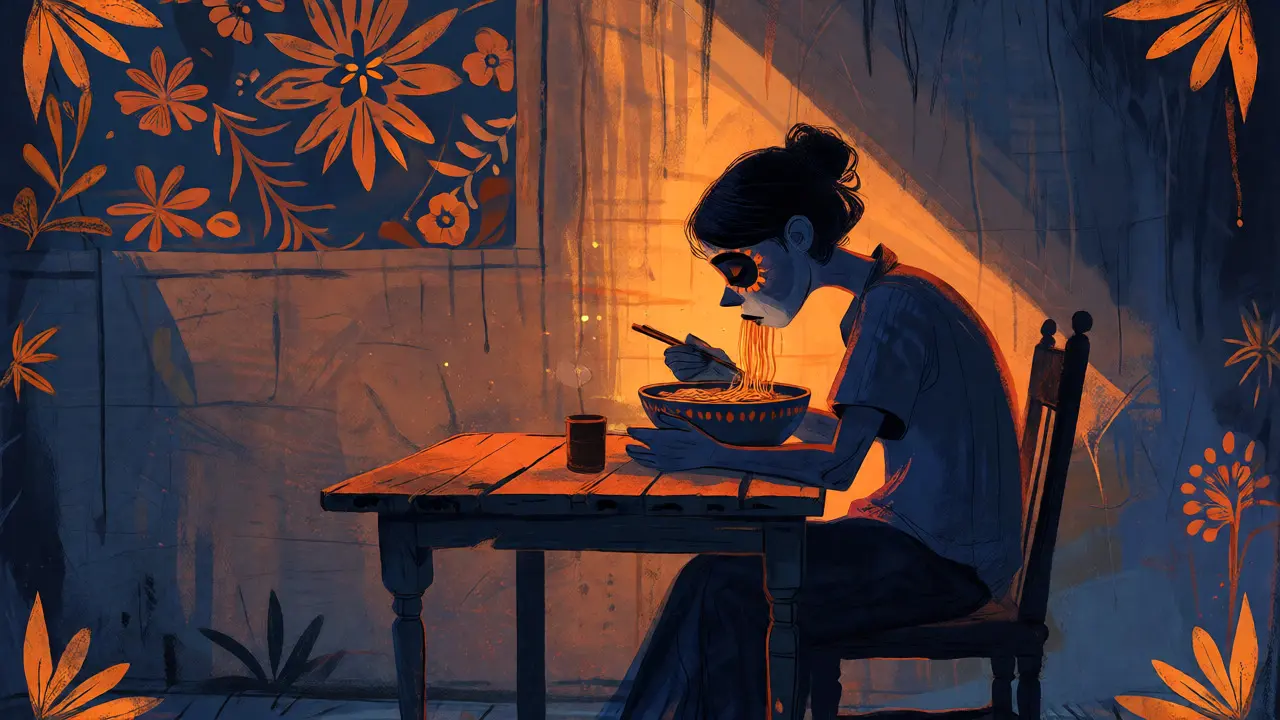
You know that feeling when you’re watching a movie, checking your phone every thirty seconds, waiting for the next explosion or plot twist? Now imagine sitting in a dark room for three hours, watching a single shot of a man eating noodles. No cuts. No music swelling to tell you how to feel. Just time passing. This is Slow Cinema, a movement defined not by what happens on screen, but by how long it takes to happen.
It’s polarizing. Some viewers call it boring; others call it profound. But if you’ve ever felt frustrated by fast-paced blockbusters, Slow Cinema offers a radical alternative. It challenges the modern habit of skimming through life. Instead of consuming images, you inhabit them. Let’s break down why directors like Béla Tarr and Apichatpong Weerasethakul choose silence over sound, and why your attention span might be the real enemy here.
What Actually Defines Slow Cinema?
There’s no official club with a membership card, but film scholars have identified clear markers. At its core, Slow Cinema is a mode of filmmaking that prioritizes real-time duration and minimal narrative action. Unlike traditional Hollywood editing, which chops reality into digestible bites, Slow Cinema lets scenes breathe.
Think about the average Marvel movie. The average shot length (ASL) is often under two seconds. In contrast, a film like Béla Tarr’s Sátántangó features shots lasting several minutes. Sometimes ten. This isn’t just an aesthetic choice; it’s a philosophical stance. By refusing to cut away, the director forces you to look at what usually gets edited out: the awkward pauses, the ambient noise, the weight of existence.
- Long Takes: Extended continuous shots that preserve temporal continuity.
- Minimal Plot: Events are sparse. A conversation might last twenty minutes with little advancement.
- Ambient Soundscapes: Silence or natural noise replaces musical scores.
- Static Framing: The camera often remains fixed, observing rather than guiding.
The Politics of Duration
Why make a film this way? Because time is political. In our current culture, efficiency rules everything. We speed up podcasts, skip ads, and scroll through feeds. Speed equals value. Slow Cinema rejects this. When a director holds a shot for five minutes, they are saying that this moment has inherent worth, regardless of whether it advances the plot.
This concept, known as Duration, refers to the subjective experience of time within the filmic space. It creates a different relationship between viewer and image. You stop predicting what comes next because there isn’t much coming next. You start noticing details. The texture of a wall. The shift of light across a face. The sound of rain hitting a tin roof.
| Feature | Hollywood Blockbuster | Slow Cinema |
|---|---|---|
| Average Shot Length | < 3 seconds | 60+ seconds |
| Narrative Driver | Plot points & Action | Atmosphere & Observation |
| Viewer Role | Passive Consumer | Active Observer |
| Editing Style | Rapid Montage | Continuity & Long Takes |
Stillness as a Narrative Device
If duration stretches time, stillness compresses emotion. In Slow Cinema, characters rarely move quickly. They sit, stand, walk slowly, or stare. This lack of kinetic energy shifts the focus from external action to internal state. You aren’t watching a character run from danger; you’re watching them decide whether to leave a room.
Consider Tsai Ming-liang’s work. His films often feature people wandering empty urban spaces or sharing meals in silence. There’s no dialogue explaining their loneliness. The stillness does the work. It invites empathy without manipulation. You don’t need a sad violin track to feel the isolation; you just need to watch someone eat alone for four minutes.
This approach demands patience. If you expect constant stimulation, you’ll bounce off these films. But if you can settle in, something interesting happens. Your brain stops looking for the "next thing" and starts processing the "current thing." It’s almost meditative. Some viewers report entering a trance-like state where the boundaries between self and screen blur.
Reclaiming Attention in a Distracted World
We live in an attention economy. Apps are designed to hijack your focus. Notifications ping every few seconds. Our cognitive capacity for deep focus is shrinking. Slow Cinema acts as a counterweight. It trains your attention muscles.
Watching a slow film is hard work initially. Your mind will wander. You’ll think about dinner, your job, the itch on your nose. That’s normal. The challenge is to bring your focus back to the screen without judgment. Over time, this practice can spill over into daily life. You might find yourself listening more carefully to friends, or noticing the changing light in your own home.
Philosopher Gilles Deleuze wrote extensively about the "time-image," arguing that modern cinema could show time directly, rather than subordinating it to movement. Slow Cinema realizes this theory. It doesn’t show you a character moving through time; it shows you time itself. This requires a different kind of intelligence-not analytical, but sensory.
Key Figures and Essential Films
To understand the theory, you need to see the practice. Here are three pillars of the movement, each offering a distinct flavor of slowness.
Béla Tarr is the Hungarian master of black-and-white despair. His film Sátántangó runs for seven hours. Yes, seven. It depicts the collapse of a collective farm in rural Hungary. The famous opening shot lasts eight minutes, following a cat walking through mud. It’s hypnotic, bleak, and undeniably beautiful.
Apichatpong Weerasethakul brings a Thai perspective, blending folklore with surrealism. His Palme d’Or winner Uncle Boonmee Who Can Recall His Past Lives uses static shots of jungles and ghosts. Time feels circular here, not linear. Death is not an end, but a transition.
Andrei Tarkovsky is often cited as the godfather of this style. Though he predates the term "Slow Cinema," his use of sculpted time in films like Stalker set the template. He believed cinema should capture the "pressure of time" on human consciousness.
How to Watch Without Boredom
If you’re new to this genre, diving into a seven-hour epic might be too much. Start smaller. Try one of these strategies to ease into the rhythm.
- Choose the Right Environment: Don’t watch on your laptop while working. Dim the lights. Put your phone in another room. Treat it like a museum visit, not background noise.
- Accept the Discomfort: Early on, you’ll feel restless. Acknowledge it. Don’t fight it. Let the boredom pass through you. Often, after the first hour, a second wind arrives.
- Focus on Sensory Details: Instead of asking "What is happening?", ask "What do I hear? What does the light look like?" Shift your goal from comprehension to observation.
- Start Short: Begin with films under two hours. Try Wendy and Lucy by Kelly Reichardt or Paterson by Jim Jarmusch. They offer gentle introductions to observational pacing.
The Future of Slowness
Is Slow Cinema dead? Far from it. As streaming algorithms push for faster content, independent filmmakers continue to resist. Recent hits like Parasite mix thriller elements with slower observational sequences, proving audiences can handle nuance. Directors like Celine Sciamma (Portrait of a Lady on Fire) use lingering gazes to build tension, borrowing from slow cinema techniques without abandoning narrative entirely.
The demand for depth hasn’t vanished; it’s just been buried under volume. People are tired of being entertained constantly. They want to feel something real. Slow Cinema offers that authenticity. It respects your intelligence enough to let you figure things out at your own pace.
Is Slow Cinema the same as art-house film?
Not exactly. While many art-house films are slow, not all slow films are art-house. Slow Cinema specifically refers to the formal technique of extended duration and minimal editing. Some mainstream dramas use slow pacing, but they usually retain conventional plot structures that Slow Cinema often abandons.
Why do slow movies feel so long?
Because they remove the cues that help us process time. Traditional editing hides the passage of time by cutting frequently. Slow Cinema exposes it. Without cuts, you become aware of every second. This heightened awareness makes time feel denser and longer, similar to how a boring meeting feels longer than a fun party, even if both last an hour.
Can I watch Slow Cinema on streaming platforms?
Yes, but availability varies. Criterion Channel and MUBI are excellent sources for curated slow cinema collections. Mainstream platforms like Netflix sometimes host titles like Marriage Story or The Irishman, which use long takes, though they are not pure Slow Cinema examples.
Does watching slow films improve concentration?
Many viewers report improved focus. By practicing sustained attention during a film, you train your brain to resist the urge to multitask. It’s akin to meditation. However, results vary individually. For some, it’s frustrating; for others, it’s restorative.
What is the difference between slow cinema and minimalist cinema?
Minimalist cinema focuses on reducing narrative complexity and dialogue. Slow cinema focuses on extending temporal duration. A film can be minimalist but fast-paced (like some thrillers), or slow but narratively complex. They often overlap, but the primary metric differs: one measures story density, the other measures time perception.