
You hit play on your favorite show, but the video buffers. Or worse, you try to join a multiplayer game lobby, only to get kicked out because of "connection issues." It’s frustrating, especially when your internet speed test says everything is fine. The culprit isn’t usually your ISP or your Wi-Fi signal strength. It’s often something hidden in your router’s settings: your NAT (Network Address Translation) type.
If you’ve ever seen terms like "Strict," "Moderate," or "Open" in your console or streaming device settings, you know they matter. An Open NAT is the gold standard for smooth streaming and gaming. But getting there can feel like deciphering an alien language. This guide cuts through the jargon. We’ll explain what NAT actually does, why UPnP (Universal Plug and Play) is your best friend, and how to configure your network so your devices talk to each other without friction.
What Is NAT and Why Does It Matter?
To understand why your connection feels blocked, you first need to know what NAT is a method used by routers to translate private IP addresses within a local network into a single public IP address shared with the outside world. Think of your home router as a busy receptionist at a corporate office. The public internet is the outside world, and your devices (TV, phone, laptop) are employees in different offices.
When data comes in from the internet, the router needs to know which specific device requested it. NAT keeps track of these conversations. If the router doesn’t have a clear rulebook for where to send incoming data, it blocks it for security reasons. This is where "NAT Types" come in.
- Open NAT: Your device can communicate freely with any other device on the internet. No restrictions. Best for gaming and high-quality streaming.
- Moderate NAT: Some ports are open, others are closed. You might connect to some people but not others. Occasional lag or dropped connections may occur.
- Strict NAT: Your device is heavily restricted. You can initiate outgoing requests, but incoming connections are mostly blocked. This causes major issues in peer-to-peer gaming and can disrupt adaptive bitrate streaming.
Most modern routers default to a stricter setting to protect your network from hackers. While this security is good, it often creates unnecessary barriers for legitimate traffic from streaming services like Netflix, Hulu, or Xbox Live.
The Role of UPnP in Simplifying Connectivity
Manually opening ports for every app and device you own is tedious. That’s where UPnP stands for Universal Plug and Play, a set of networking protocols that allows devices on a local network to automatically discover each other and establish functional network services enters the picture.
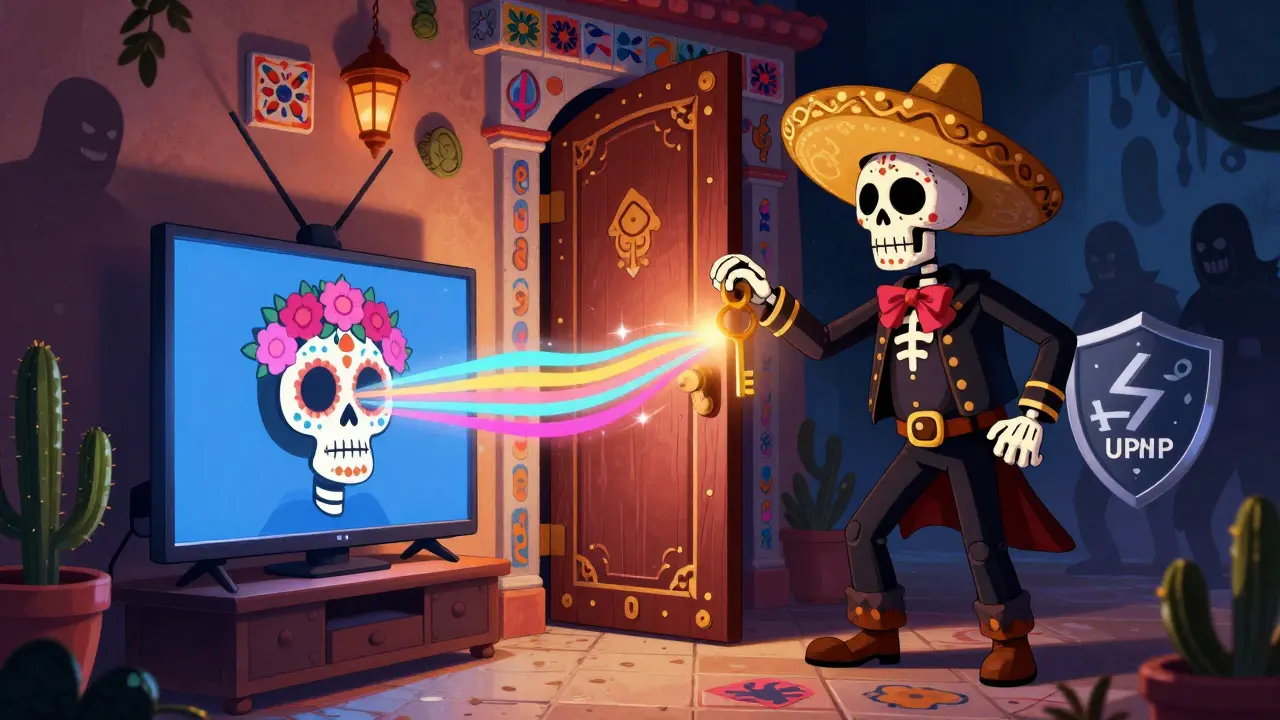
UPnP acts as an automated doorman. When your smart TV wants to stream 4K content, it sends a request to the router saying, "Hey, I need port 8080 open for this session." If UPnP is enabled, the router grants permission instantly. When the stream ends, the port closes again. This dynamic process ensures your device has the access it needs without you having to log into your router admin panel every time you install a new app.
For most home users, enabling UPnP is the easiest way to achieve an Open NAT status. However, it’s not perfect. Because it allows applications to open ports automatically, some security experts argue it introduces a slight vulnerability if a malicious program gets onto your network. For the average household, though, the convenience vastly outweighs the minimal risk, provided your antivirus software is up to date.
How to Check Your Current NAT Type
Before making changes, you need to know where you stand. The steps vary slightly depending on your device, but the concept is the same.
| Device | Navigation Path |
|---|---|
| Xbox Series X/S | Settings > General > Network settings > Advanced settings > NAT type |
| PlayStation 5 | Settings > Network > View Connection Status > NAT Type |
| Roku | Settings > Network > About > NAT Type (may require third-party apps or router check) |
| Windows PC | Command Prompt: type `netsh interface ipv6 show teredo` |
If your result is "Strict" or "Moderate," you’re likely experiencing the buffering or connectivity drops mentioned earlier. Don’t panic. This is almost always fixable with a few router adjustments.
Step-by-Step Guide to Achieving Open NAT
Getting an Open NAT involves three main strategies: enabling UPnP, using DMZ (Demilitarized Zone), or setting up Port Forwarding. Start with the easiest option first.
1. Enable UPnP on Your Router
This is the most user-friendly solution. Here’s how to do it:
- Find your router’s IP address: On Windows, open Command Prompt and type `ipconfig`. Look for "Default Gateway." On Mac, go to System Settings > Network > Details > TCP/IP. It’s usually something like 192.168.1.1 or 192.168.0.1.
- Log in to your router: Type that IP address into your web browser. You’ll need your admin username and password. If you never changed these, check the sticker on the back of your router. Common defaults are "admin/admin" or "admin/password."
- Locate UPnP settings: Navigate to the "Advanced," "WAN," or "Security" tab. Look for a checkbox labeled "Enable UPnP."
- Save and Reboot: Save the changes and restart your router. Wait for it to fully boot up, then check your NAT type again.
In many cases, this simple toggle switches your status from Strict to Open immediately.
2. Use DMZ for a Single Device
If UPnP doesn’t work, or your router doesn’t support it well, you can place a specific device in the DMZ. This essentially tells the router, "Ignore all firewall rules for this specific IP address."
Warning: Only use DMZ for one device at a time, preferably a dedicated gaming console or media server. Do not put your primary computer or smartphone in the DMZ, as it exposes them directly to the internet. To set this up, find the static IP of your device, enter it into the DMZ field in your router settings, and save.
3. Manual Port Forwarding
This is the most technical but also the most secure method. Instead of letting any app open any port (UPnP) or exposing a whole device (DMZ), you manually tell the router exactly which ports to open for specific services.
For example, if you’re hosting a Minecraft server, you’d forward port 25565. For general streaming, you typically need UDP ports 1935 and 8080 open. You can find the required ports for your specific service online. This method requires assigning a static IP to your device first so the forwarding rules don’t break if your device’s IP changes.

Common Pitfalls and Troubleshooting
Sometimes, even after following the steps above, your NAT remains Strict. Here are the usual suspects:
- Double NAT: This happens if you have two routers creating separate networks. For example, your ISP provides a modem/router combo, and you’ve plugged your own router into it. Both are trying to manage NAT. The fix? Log into the ISP-provided modem and switch it to "Bridge Mode." This disables its routing functions, letting your personal router handle the NAT exclusively.
- Carrier-Grade NAT (CGNAT): Some ISPs, particularly mobile broadband providers, share a single public IP among thousands of customers. In this scenario, no amount of router tweaking will give you an Open NAT because you don’t control the public IP. You may need to contact your ISP to request a public IP address, which sometimes incurs an extra fee.
- Outdated Firmware: Your router’s software might have bugs affecting UPnP. Check the manufacturer’s website for firmware updates. Updating can resolve compatibility issues with newer streaming protocols.
Security vs. Convenience: Finding the Balance
It’s natural to worry about security when opening ports or disabling firewalls. However, modern streaming protocols use encrypted connections (HTTPS/DTLS). Opening a port for Netflix doesn’t mean anyone can hack your bank account; it just means the router knows how to deliver the video packets to your TV efficiently.
The biggest risks come from outdated devices with known vulnerabilities. Ensure your smart TV, gaming console, and router are running the latest software. A strong, unique Wi-Fi password is still your first line of defense. By keeping your internal network secure, you can safely enable UPnP or port forwarding to enjoy seamless connectivity.
Is Open NAT safe for my home network?
Yes, generally speaking. An Open NAT simply means your router allows incoming connections that were previously initiated by your devices. As long as your router firmware is updated and you aren't exposing sensitive computers to the internet via DMZ, the risk is minimal. Most threats come from unpatched software on the devices themselves, not from the NAT configuration.
Why does my NAT type change randomly?
NAT types can fluctuate due to temporary network congestion, ISP-side routing changes, or if another device on your network is hogging bandwidth. Restarting your router often resets these temporary glitches. If it persists, check for Double NAT issues or contact your ISP.
Can I have Open NAT on Wi-Fi?
Absolutely. NAT type is determined by the router's configuration, not the physical connection method. Whether you use Ethernet or Wi-Fi, the router handles the translation. However, Ethernet is more stable for maintaining consistent performance during heavy data transfers.
What is the difference between UPnP and Port Forwarding?
UPnP is automatic; devices request open ports as needed. Port Forwarding is manual; you specify exactly which ports stay open for specific IP addresses. UPnP is easier for most users, while Port Forwarding offers more granular control and security.
Does upgrading my router help with NAT issues?
It can. Older routers may lack robust UPnP support or have buggy firmware. Modern routers with better processing power handle concurrent connections and NAT translations more efficiently, reducing latency and improving stability for multiple streaming devices.